
BookPicks: The Great War
Posted on March 29, 2016 4 Comments
This year is the centenary of the Battle of Jutland, the Royal Navy’s last great set-piece sea battle. Rarely has an engagement with the enemy been so controversial, misunderstood, written about, discussed and disputed. I know from my own naval wardroom conversations that this continues to this day. A number of excellent books on Jutland both contemporary and from a modern perspective are now available. Here’s a selection of these, along with two titles on other aspects of the ‘war to end all wars’, all published by Pen & Sword books and their imprints.
— ♥ —
The Jutland Scandal by Vice Admiral John Harper and Admiral Reginald Bacon
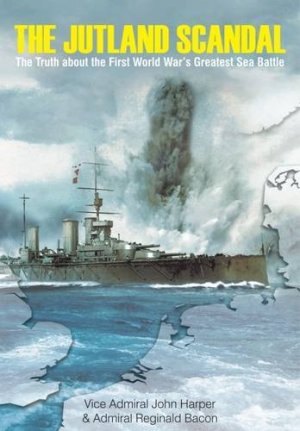 The Royal Navy had ruled the sea unchallenged for 100 years since Trafalgar. Yet when the Grand Fleet faced the German High Seas Fleet near Jutland the British battleships and cruisers were battered into a draw, losing more men and ships than the enemy. The Grand Fleet outnumbered and outgunned the German fleet so something clearly had gone wrong. The public waited for the official histories of the battle to be released to learn the truth, but months went by with the Admiralty promising, but failing, to publish an account of Jutland. Questions were raised in Parliament yet still no official report was produced, due to objections from Admiral Beatty. This led to Admiral Bacon producing his own account of the battle, called The Jutland Scandal in 1925. Two years later the man instructed to write the official report, Rear-Admiral Harper, published his account independently, under the title The Truth About Jutland. These two books are published as one volume for the first time, in this The Jutland Scandal.
Jutland: the Unfinished Battle by Nicholas Jellicoe
 This modern book not only re-tells the story of the battle from both a British and German perspective based on the latest research but it helps clarify the context of Germany’s inevitable naval clash. The author Nicholas Jellicoe is uniquely placed to tell the story of Jutland. His father served as First Lord of the Admiralty while his grandfather, Sir John Jellicoe commanded the Grand Fleet for the first two years in the war, from 1914 to 1916 including at Jutland, and was famously described by Churchill as being the only man who could have lost the war in an afternoon.
Voices from Jutland by Jim Crossley
 This new book examines the strengths and weaknesses of both navies and identifies some of the reasons for the disappointing performance of the Royal Navy in the battle. The German fleet performed magnificently and their ships proved extremely durable, but this was not enough to enable them to mount a serious challenge to superior British fire power and numbers. The book argues that the building of the High Seas Fleet was a strategic blunder on the part of the Germans, who could have forced Britain out of the war completely if they had instead concentrated on their submarine fleet and on mine-laying. And Admiral Jellicoe, commander of the British Grand Fleet, was in the unenviable position of having to give overriding priority to keeping his fleet intact, rather than inflicting a crushing defeat on the enemy. His steadfast pursuit of this objective was to lead to ultimate victory.
The Great War at Sea by Bob Carruthers
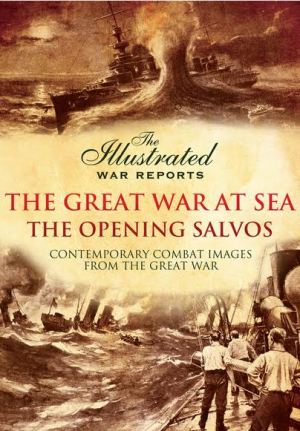 The photographic equipment in use during the Great War was cumbersome and bulky and the environment at sea and in the trenches was highly lethal. As a result it was extremely difficult to capture meaningful shots of the action. It was largely down to artists and illustrators to produce an accurate visual record of the fleeting moments the bulky cameras couldn’t reproduce. This collection of combat images is a vivid graphic record of life and death on the high-seas from 1914-18, as reported to contemporary audiences at a time when the events of the Great War were still unfolding.
British Submarines at War 1914-1918 by Edwyn Gray
 Originally published in 1970 and out of print for nearly thirty years, this book is a classic of submarine history, evoking the claustrophobic horror of war beneath the waves. Written with humanity and humour, it tells the story of Britain’s pioneer submarines during the 1914-1918 War and how their crews battled courageously in atrocious conditions against a skilled and ruthless enemy and an unforgiving sea. This second edition is a timely tribute to the gallant pioneers who created the legacy of dogged courage, determination, and standards of excellence of the Royal Navy’s submarine service.
Still looking for bookish inspiration?
You might also like to take a peek at my other BookPicks this year this year
And I have a very limited number of Signed First Editions, which I’m happy to inscribe with a personal message
Enjoy!
KyddFest-6: Mutiny
Posted on March 15, 2016 7 Comments
Over the coming months I’ll be celebrating the earlier titles in the Kydd Series, it’s Mutiny for this blog. I’d love to hear your thoughts on the book, either as a first-time reader or if you’re a re-reader and have read it more than once! It’s very gratifying for an author to be told that his work has inspired people to go back an read it again. And some of you have told me you have done this more than twice! Either reply to this blog or email me. Every respondent goes into the hat for a chance to win a special thank-you prize: a Kydd Cap and a leather bookmark

French edition of Mutiny
- ‘At the beginning of Mutiny, the fourth novel in Julian Stockwin’s brilliant Kydd Sea Adventures series, young Thomas Paine Kydd has reached the rank of master’s mate and has been posted to a different ship than his close friend Nicholas Renzi. For a while, during a perilous mission to retrieve a diplomat from Venice, they are reunited, but by the novel’s climax they are apart again and Kydd is swept up in the Great Mutiny, one of the most amazing events in British naval history. Kydd’s ship is caught in the mass mutiny at Nore, a secondary outbreak which began in sympathy with the original mutiny of the fleet at Spithead. The sailors have struck to win a much needed raise in wages, frozen during decades of inflation. Kydd’s warm heart and sense of fair play lead him to side with the sorely oppressed seamen. But the fierce logic of rebellion and reaction quickly outpace idealism, and our hero faces test after test of his loyalties. It is the nature of a series that we cannot seriously believe it will discard its hero, leaving him dangling from a yardarm; the challenge is to imagine how he can be disentangled from his latest predicament.
Although the drama at Nore is the centre of the novel and the emotional heart of the action, there are enough other strands to fill a novel by themselves. In addition to the Venetian mission, which offers a glimpse of that city in the final days of its long history as an independent republic, we are drawn into a ferocious fleet action, and find time to visit Gibraltar, where Kydd once more demonstrates that his understanding of young women has not advanced as rapidly as his seamanship. In Mutiny, author Stockwin turns a series of huge historical events into engaging tales that compel the speediest possible turning of pages.’– HistoricalNovels.info
The gondolas of Venice
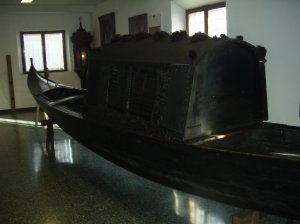
A gondola in Kydd’s day
When Kydd was in Venice the gondolas (some 14,000 compared to 500 or so today) were all painted black in deference to the sumptuary laws. Until the early 20th century gondolas were often fitted with a ‘felze’, a small cabin, to protect the passengers from the weather or from onlookers. Their windows could be closed with louvred shutters and black curtains, perfect for secret meetings and assignations as Renzi discovered…
The gondola is propelled by the gondolier, who stands facing the bow and rows with a forward stroke, followed by a compensating backward stroke. The oar rests in an elaborately carved wooden rest, the forcola, shaped to project from the side of the craft so as to allow the slight drag of each return stroke to pull the bow back to its forward course. Because of the vessel’s flat bottom it may also be ‘drifted’ sideways when required. The gondola is never poled like a punt as the waters of Venice are too deep.
Sheerness, one winter…
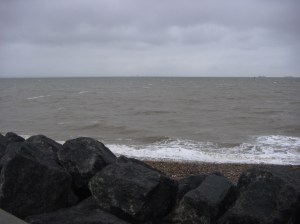
The Nore today
In the course of this book I revisited Sheerness, the bleak setting of this most awesome of mutinies. As I looked out over the cold, drab wilderness of the Nore one particularly raw winter’s day, seeing back into time to those great events, into my mind, too, came remembrance of myself as a very small boy looking out from that very spot to low, grey shapes slipping out to sea, disappearing over the horizon and taking my imagination with them. You can still walk out at low tide over the mud-flats and find clay pipes of Kydd’s time, but he had quite a different experience – this was where he first set foot on the deck of a man-o’-war, and as well crossed a threshold to meet his future.
Minor character spotlight: Richard Parker
In the Kydd books there are a number of real characters from the historical record. In Mutiny, we meet Richard Parker, leader of the mutineers during the 1797 Nore mutiny. A complex man, he has been the subject of speculation as to his motives – but one thing is certain: he deeply loved his wife. Parker was born in Exeter in the English county of Devon. He received a good education and at the age of twelve went to sea as a midshipman, becoming a master’s mate. He gave up a career at sea when he married Anne McHardy and the couple moved to Scotland, where Parker unsuccessfully speculated in business in Edinburgh. Too embarrassed to ask his wife’s family for help when financial difficulties arose he panicked and decided to take the King’s bounty and become a common sailor.
Previous blog on Mutiny : Divided loyalties
Mutiny has been published in the UK/US in English, French, German and Japanese and in ebook, large print and audiobook. The cover of Mutiny is also available as a superb Limited Edition print
Buy on Amazon or The Book Depository (free postage worldwide!) Also available at most bookstores
Detailed list
KyddFest-5: Quarterdeck
Posted on March 8, 2016 7 Comments
Over the coming months I’ll be celebrating the earlier titles in the Kydd Series, it’s Quarterdeck for this blog. I’d love to hear your thoughts on the book, either as a first-time reader or if you’re a re-reader and have read it more than once! It’s very gratifying for an author to be told that his work has inspired people to go back and read it again. And some of you have told me you have done this more than twice! Either reply to this blog or email me. Every respondent goes into the hat for a chance to win a thank-you prize: two Kydd Series paperbacks of your choice.

Quarterdeck reader, Tom Morga, a California based stunt man
- ‘At the battle of Camperdown, Thomas Kydd was promoted to acting lieutenant. Quarterdeck starts right at the examination to confirm his rank. As it turns out, he has a champion on the examining board. However, this is but the first of many obstacles. Kydd is from humble origins, but to become an officer he must now also become a gentleman. If not, he will spend the rest of his career as a tarpaulin officer. And Renzi, his friend, is of course a natural choice to train him in manners and the art of conversation.
So, in Quarterdeck Kydd and his particular friend Renzi set sail in Tenacious for the North American station. The young United States is in dispute with revolutionary France. Kydd soon finds himself seconded as a naval observer to the new-formed United States Navy.
Returning to the squadron in Halifax, Kydd participates in a hydrographic survey, and makes a chance acquaintance with a mysterious, beautiful young woman whom he invites as his companion to an official function in Halifax. As it turns out, this invitation has a number of consequences Kydd was totally unable to foresee!
I found Quarterdeck very interesting. In addition to the action in this book, Stockwin also puts his finger to some of the important differences in class and class culture between the foremast and quarterdeck, and illustrates these differences and their consequences very nicely.’ – Leserglede
Quarterdeck Ebook Offer for American readers!
For a limited time Quarterdeck is free to download for US readers on Amazon, Apple, B&N, Google, Kobo etc.
Tenacious
Tenacious was of a type of ship rapidly facing obsolescence – the 64 gun two-decker. Already showing her age in the American War, she was nevertheless classed as a ship-of-the-line and was therefore at least theoretically expected to take her place in the battle line at great fleet actions such as Trafalgar. Yet she had a serious weakness: where the standard 74 sported the ship-smashing 32 pounders of a three-decker Tenacious had only 24 pounders. The 64 was an unpopular command for an ambitious captain for they were kept away from the main strategic battle fleets.
She could still be useful: looking like her bigger brethren from a distance a cruise off an enemy port could keep quantities of frigates bottled up. Any important convoy escorted by a ‘ship-of-the-line’ could sail on untroubled, and when there was a colonial expedition mounted, a 64 was sure to be included as we saw in the Cape of Good Hope action in Conquest when three were sent. Nelson’s favourite ship Agamemnon was a 64 and in one famous action took on and defeated four frigates at the same time!
For her ship’s company a 64 was roomier than a frigate and for her officers was more comfortable also, her fitments harking from the earlier more leisurely and colourful years of the eighteenth century.
Prince Edward and Julie
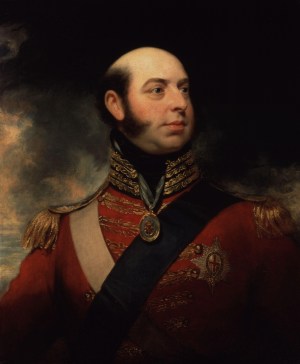
Prince Edward
The Prince Edward, Duke of Kent and Strathearn was the fourth son and fifth child of King George III and the father of Queen Victoria. Therese-Bernardine Mongenet was his long-term mistress. Known as Madame de Saint-Laurent, she used the forename Julie. She devoted herself to Edward for nearly twenty-eight years before she was set aside.
Edward was the first member of the royal family to reside in North America for a prolonged period. His North American career is remembered in the name of Prince Edward Island, adopted in 1799. He was instrumental in shaping Halifax’s military defences, protecting its important Royal Navy base, as well as influencing the city’s and colony’s socio-political and economic institutions.
Minor character spotlight: Fanny Kydd

‘Julie’
Previous blog on Quarterdeck Aft Through the Hawse-Hole
Quarterdeck has been published in the UK/US in English, in translated editions, and in ebook, large print and audiobook. The cover of Quarterdeck, an original painting by Geoff Hunt RSMA, is also available as a fine Limited Edition print
Buy on Amazon or The Book Depository (free postage worldwide!) Also available at most bookstores.
Detailed list
Copyright notices
Image of Prince Edward, William Beechey [Public domain], via Wikimedia Commons
Image of Julie [Public domain], via Wikimedia Commons
Every effort is made to honour copyright but if we have inadvertently published an image with missing or incorrect attribution, on being informed of this, we undertake to delete the image or add a correct credit notice
KyddFest-4: Betrayal
Posted on March 1, 2016 5 Comments
Over the coming months I’ll be celebrating the earlier titles in the Kydd Series, it’s Betrayal for this blog. I’d love to hear your thoughts on this book, either as a first-time reader or if you’re a re-reader and have read the book more than once! It’s very gratifying for an author to be told that his work has inspired people to go back an read it again. And some of you have told me you have done this more than twice! Either reply to this blog or email me. Every respondent goes into the hat for a chance to win a special thank-you prize of a Kydd cap and a leather bookmark.
- ‘Stockwin’s 13th novel of Napoleonic naval warfare featuring the redoubtable Captain Thomas Kydd of the Royal Navy features more high-seas adventure, ocean battles, bloody melees, and general villainy. After capturing the Cape Colony in South Africa in Conquest, Kydd and his crew are anxious for action. It’s 1806 and Kydd is the captain of the frigate HMS L’Aurore. When Commodore Popham decides to sail his small British squadron to South America to foment revolt against the Spanish, Kydd agrees to support the wild scheme without knowing that Popham plans to start a deadly war without the proper authority; the plan is ill-conceived, poorly supported, and doomed by treachery. Though the British capture Buenos Aires, the locals don’t rise against the Spanish, as had been expected, and while Popham achieves his objective, Kydd and the crew are beset by massive enemy forces and surprising betrayals. Neither Kydd’s imaginative determination, nor the courage of his men, seem likely to prevent disaster. Stockwin, who based this tale on a factual debacle easily overlooked by history, is a master of Napoleonic-era atmosphere and rich descriptions of the military, politics, and society.’– Publishers Weekly
Special Kindle Deal for March for UK readers!
A Kindle Monthly Deal, the ebook of Betrayal will be just 99p from today until the end of March, on Amazon UK and other online retailers.
St Helena

Late 18th century engraving of St Helena
‘St Helena lifted above the horizon, a rumpled grey shape set against deep blue seas with eager white horses as far as the eye could see. A vast azure heaven was populated with gambolling fluffy clouds, the warmth of the sun grateful to the skin. After their time of testing, the ships of the fleet had found one another and now proceeded in proper formation.‘ – chapter five BETRAYAL
En route to South America, Kydd stops briefly at St Helena, one of the most isolated islands in the world.
Only ten miles by six, St Helena is 1,200 miles from Africa, 1,800 miles from South America. By the late 17th century, island was known as a welcome landfall on the long journey home from the East Indies – a respite from the ocean, where fresh water and provisions could be purchased. There was the chance, too, that other sailors might be there, with news and gossip.

Captured colours of the 71st Highlanders now on display at Santo Domingo church, Buenos Aires
From about 1770, the island enjoyed a lengthy period of prosperity. Captain James Cook visited the island in 1775 on the final leg of his second circumnavigation of the world. Sir Arthur Wellesley, later to become the Duke of Wellington, stayed in 1805, and the famous naturalist William Burchell also arrived that year. During the 18th century, buildings and forts were improved and the historic Main Street of the town was constructed, only to be later destroyed and requiring rebuilding in the middle of the 19th century after white ants from wood used from a captured slave vessel ravaged the town.
In 1815 the British government selected St Helena as the place of detention of Napoleon Bonaparte. He was brought to the island in October 1815 and lodged at Longwood, where he died on 5 May 1821.
And Charles Darwin visited in 1836 on his round the world voyage in Beagle.
Minor character spotlight: Stirk

Signing BETRAYAL
Tobias Stirk hails from Hythe on the Channel coast, and a fishing family. He became impatient with the back breaking work of fisherfolk with their small boats on the rough shingle, and disappeared into the notorious Romney Marsh to join a smuggler’s crew. His luck ran out when he was caught by the press gang in the last year of the American war. However he took to the life and volunteered for the Navy on discharge. His talents as a gunner were noted in Alcide in action on the Barbary Coast and again in San Fiorenzo in the West Indies. After a spell in the sloop Terrier in Burma he returned to England to serve (ironically) in a Revenue cutter looking for Cornish smugglers. He was transferred into Duke William for service in the North American station but at the likelihood of war with the French she was sent to England and the Nore. He has the rate of gunner’s mate in Betrayal and appears in a number of the Kydd titles.
Previous blog on Betrayal The Tide Turns
Betrayal has been published in the UK/US in English, in translated editions and in ebook, large print and audiobook.
Buy on Amazon or The Book Depository (free postage worldwide!) Also available at most bookstores.
Detailed list
Copyright notices
St Helena image: By Thornton, engraver, fl. 1790 (themaritimegallery.co.uk) [Public domain], via Wikimedia Commons
Colours image: By Duche de Cleves [CC BY-SA 3.0 (http://creativecommons.org/licenses/by-sa/3.0)%5D, via Wikimedia Commons
Every effort is made to honour copyright but if we have inadvertently published an image with missing or incorrect attribution, on being informed of this, we undertake to delete the image or add a correct credit notice
BookPicks: An Easter Selection
Posted on February 28, 2016 8 Comments
With an early Easter coming up next month why not forget the chocolate eggs and Simnel cake and buy a book – either for yourself or to give to a friend. A book will bring hours of pleasure and be lasting reminder in itself of someone putting thought into a gift. Here’s my easter bookpicks – with hopefully something for everyone. They all have a salty connection of some kind!
— ♥ —
Able Seaman Simon by Lynne Barrett-Lee
 Simon is discovered in the Hong Kong docks in 1948 and smuggled on board H.M.S Amethyst by a British sailor who takes pity on the malnourished kitten. Amethyst is ordered to sail up the Yangtze and the ship comes under fire. A number of the crew are killed and Simon is among those who are seriously wounded. Despite his injuries the plucky feline keeps up morale aboard. Delightfully told in Simon’s voice!
The Seven Years War by Martin Robson
 The Seven Years War (1756-1763) was the first global conflict and became the key factor in creating the British Empire. Part of the excellent History of the Royal Navy Series this title looks at Britain’s maritime strategic, operational and tactical success (and failures), through a wide-ranging history of the Royal Navy’s role in the war.
On the Road with Wellington by A.L.F. Schaumann
 A remarkable memoir that captures the life and adventures of a junior officer as he endures the drama and agonies of the fierce struggle in Spain, Portugal, and southern France between 1808 and 1814. The book features an introduction by Bernard Cornwell.
A Confederate Biography by Dwight Sturtevant Hughes
 From October 1864 to November 1865, the officers of the CSS Shenandoah carried the Confederacy and the conflict of the Civil War around the globe through extreme weather, alien surroundings, and the people they encountered. In the words of one noted admiral, this book is: ‘a biography of a ship and a cruise, and a microcosm of the Confederate-American experience.’
Churchills Greatest Fear by Richard Doherty
 The Battle of the Atlantic was arguably the pivotal campaign of the Second World War. Using official records, personal accounts and a wealth of historical research, this work gives the reader a splendidly concise yet broad account of the course of the campaign, the men who fought it on both sides and the critical moments and analysis of the outcome.
Lusitania R. E. X. by Greg Taylor
 Winner of the inaugural M.M. Bennett Award for Historical Fiction in 2015, Lusitania R.E.X is an historical fiction account of the sinking of Lusitania with a new theory as to why the ship was a target. A tale replete with spies and secret societies, super weapons, millionaires and martyrs!
Sailors on the Rocks by Peter C. Smith
 A fascinating insight into the malevolent power of the sea and storms over man’s creation and dominion, chronicling some of the most dramatic shipwrecks ever to have occurred in our seas.
The Sailing Frigate by Robert Gardiner
 The author cleverly uses models from the Collections of the National Maritime Museum to tell the story of the evolution of the cruising ship under sail. Superbly illustrated, this new paperback edition will appeal to ship modellers and all those with an interest in ship design and development.
Jutland. The Naval Staff Appreciation edited by William Schleihauf
 Transcribed from a long-hidden and controversial critique of the Royal Navy’s performance at the largest sea battle of the First World War, this also contains an expert modern commentary and explanatory notes.
Still looking for bookish inspiration?
You might also like to take a peek at my other BookPicks this year this year
And I have a very limited number of Signed First Editions, which I’m happy to inscribe with a personal message
Enjoy!
KyddFest-3: Seaflower
Posted on February 23, 2016 12 Comments
Over the coming months I’ll be celebrating the earlier titles in the Kydd Series, it’s Seaflower for this blog. I’d love to hear your thoughts on this book, either as a first-time reader or if you’re a re-reader and have read the book more than once! It’s very gratifying for an author to be told that his work has inspired people to go back an read it again. And some of you have told me you have done this more than twice! Either reply to this blog or email me. Every respondent goes into the hat for a chance to win a special thank-you prize: a CD set of the unabridged audiobook of Seaflower, superbly read by Christian Rodska..

At the careening capstan, English Harbour, Antigua
‘Seaflower is the third novel in Julian Stockwin’s series devoted to the nautical adventures of the fictional Thomas Paine Kydd. This time the setting is the Caribbean Sea, where Kydd and his friends have been hustled on account of their inconveniently truthful depositions at a court martial. Now they must face the new challenges of hurricane and yellow fever as well as the familiar danger of war at sea against the French foe. For some time Kydd and his good friend Renzi are parted by the exigencies of war, and we learn fresh details about the latter gentleman’s family background, and even his real name, richly deserved even according to the exacting eighteenth-century classifications. As their journeys weave back and forth between Barbados and Port Royal, with stops at Antigua and an assortment of French islands on the way, we overhear tales of the old days of piracy and learn a bit about the slave economies of the sugar-producing islands. There are also a couple of surprising family reunions along the way. As this tale reaches its climax, our friends find themselves on a mission to deliver a prestigious emissary with urgent news about the war. The obstacles soon become overwhelming, and only the knowledge that the series will continue hints that they will prevail against long odds.

Part of the Georgian Dockyard, English Harbour
With this third novel Stockwin seems fully at ease with his voice, more assured in his decisions to summarize and leap forward in time rather than maintain an unbroken tempo. Or perhaps he is simply one of those happy companions on a long journey with whom one feels increasingly comfortable as time makes his ways familiar. Stockwin is certainly a narrator whose amiable manner wears well, and one whose storytelling decisions grow easy to trust. Seaflower offers an eventful Caribbean cruise with a bit more terror and despair than usual, but it ends with prospects looking good for its upwardly-mobile hero.’
– HistoricalNovels.info
Deeply interesting past

Like this reader’s style!
As I said in the Author’s Note to this book I am a visile – I have to ‘see’ things in my mind’s eye before I can write about them. Away from the gaudy tourist haunts in the Caribbean there are many tactile relics of rousing times past, unwittingly bequeathed to us by men whose concerns of the hour did not include a care for posterity. Henry Morgan’s Port Royal slid into the sea a century before Kydd arrived, but the bones of the dockyard still exist, albeit in a parlous state. More rewarding is English Harbour in Antigua, where Kydd suffered and loved, and which remains much as he would remember – an undisturbed and uniquely preserved jewel of naval history.
There are many who care about the Caribbean’s past, and I think especially of Reg Murphy of Antigua dockyard, who told me the story of the deadly confrontation on the quayside, which I faithfully retell in this book, and Desmond Nicholson whose encyclopaedic knowledge so enriched my visit. In Barbados, the staff of the museum were especially kind, enabling me to find Karl Watson at an archaeological dig of the eighteenth century; he then provided me with an embarrassment of material. In Jamaica, John Aarons at the National Library proved a fascinating source of his country’s deeply interesting past.
Minor character spotlight: Caird
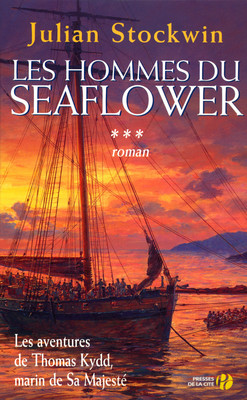
The French Edition of Seaflower
In Seaflower, we meet Zachary Caird as he leads the small dockyard party to inspect the storm-damaged Trajan when she arrives in Antigua. Born and brought up in Wapping, the boy Caird was no stranger to the colourful world of docklands around the great Pool of London, the biggest port in the world. Thrilled by tales of the seven seas told by seamen from every corner of the globe, he longed to go to sea. But his hard father, a brewery drayman, swore that Zachary should not be a common sailor but have a proper trade, and Zachary was bound apprentice to the Royal Dockyard in Deptford.
The lad promised his father he would not disappoint him. There were many temptations, but he always kept faith. After his apprenticeship was over and he started work as a shipwright’s sidesman he continued his habits of moderation and self-control, unusual among his hard-bitten workmates.
As a journeyman shipwright he had occasion to repair a Bethel – a floating chapel for seamen. There, he was touched by the selfless devotion of the lay workers. Later, he answered a need for skilled craftsmen for the dockyard at Antigua in the Caribbean, and among the slaves in this exotic locale, he, too, found himself called to become a lay preacher.
Dedications
It’s always an enjoyable task – choosing a dedication for the book before sending it out into the world. Kydd had a dedication to Jack Tar, Nelson’s famous quote – ‘Aft the more honour, Forward the better man‘; for Artemis it was ‘to the mistress of my heart‘ (Could this be soul-mate Kathy – or the sea? I’ll leave it to you to decide…)
One of my favourites out of all the dedications for the sixteen titles to date is the one I selected for Seaflower, the old sea toast:
- “To the wind that blows
a ship that goes
and the lass that loves a sailor“
Previous blog on Seaflower :
Turquoise water, deadly perils
Seaflower has been published in the UK/US in English, in French, German and Japanese and in ebook, large print and audiobook. The cover of Seaflower is also available as a Limited Edition print
Detailed list
KyddFest-2: Artemis
Posted on February 16, 2016 49 Comments
Over the coming months I’ll be celebrating the earlier titles in the Kydd Series, it’s Artemis for this blog. I’d love to hear your thoughts on this book, either as a first-time reader or if you’re a re-reader and have read the book more than once! It’s very gratifying for an author to be told that his work has inspired people to go back an read it again. And some of you have told me you have done this more than twice! Either reply to this blog or email me. Every respondent goes into the hat for a chance to win a very special thank-you prize: a limited edition print of the cover of Artemis.
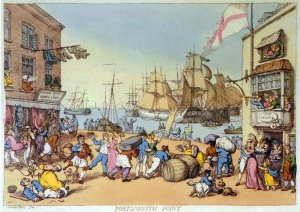
The riotously exuberant Portsmouth Point
‘It’s remarkable how quickly the interest in colourful naval adventure has grown in recent years. Foremost among able practitioners is Julian Stockwin and his book, Artemis, which builds on the solid achievements of the much-acclaimed Kydd; here again is the same flinty characterisation, stunning narrative skills and (most of all) considerable imaginative skill in evoking the wind-lashed atmosphere of the best nautical novels: full of sharp detail and keenly evoked atmosphere.
It’s the great age of fighting sail, when the seven seas are stalking grounds for prey and prize money. Aboard the crack frigate HMS Artemis, life can be invigorating – and short. Now a fully fledged Jack Tar, Stockwin’s doughty hero Kydd returns to Portsmouth and a hero’s welcome after cutting a bloody swathe through French ships. But urgent family matters force him to return to Guildford where he finds himself less able to cope than he was at sea. Soon, land-bound life is chafing him, and Kydd is happily back on Artemis setting out for the Far East, and encounters with some lethal opponents. After a grim encounter with slavers, Kydd finds himself facing his own mortality in the waters of the Great Southern Ocean. Stockwin’s particular ability (among so many) is his fastidious evocation of life aboard a sailing ship and the tensions that exist between the men locked into this dangerous life. The dialogue may take a little getting used to, but it’s quickly apparent that this is one of the author’s key strengths: this, you feel, is how these men really spoke. Most of all, though, it’s the exhilarating recreation of the sailing life and its attendant dangers that keeps the reader transfixed.’
– Barry Forshaw, broadcaster and critic
My Sea Artefacts
As I wrote in the Author’s Note to Artemis, at my desk is a length of rope from the 74 gun ship-of-the-line HMS Invincible that two centuries ago struck on the sands off Selsey Bill. The rope still smells of sea and Stockholm tar. I have other relics, too; a seaman’s tankard, a gunlock flint – an Admiralty issue clerk’s writing kit – each one bringing that far-away world straight into my consciousness. This I value above all things – as the one thing that I would most like the reader to take away from my books is a perception of the reality of Kydd’s world.
The Kydd Collection
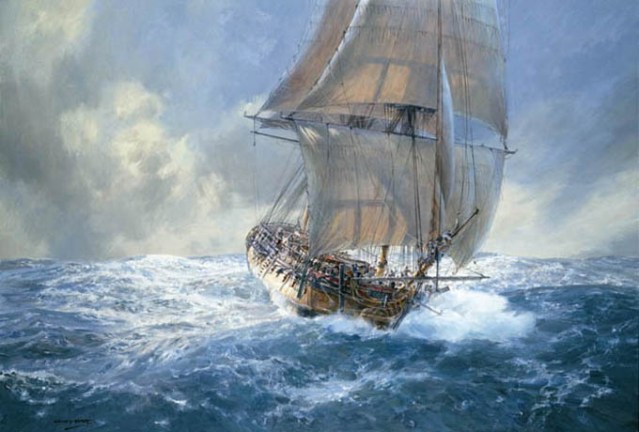
Superb Limited Edition Print prize!
Superb limited edition prints of the first eight of the Kydd series book covers, based on original paintings commissioned from Geoff Hunt RSMA, are available from Art Marine. All respondents to this blog (and emails about the blog) go into the hat for a chance to win a print of Artemis. Deadline: Monday 22 February. I have the prints framed and hanging in my Devon home and they all draw admiring comments but Artemis has always been my favourite! There’s something about the movement of the frigate and the power of the Great Southern Ocean that is very compelling.
Minor character spotlight: Quashee
In Chapter one of Artemis, Kydd joins his mess and is introduced to Quashee: ‘If yer wants to raise a right decent sea-pie, he’s your man…’ Quashee’s ancestors were Akan-speaking Ashanti, sold into slavery by Arabs and eventually brought to Jamaica. A revolt by a kinsman, Cudjoe, resulted in a treaty with the British that established the Maroons, escaped slaves who had set up their own settlements in the mountains, as free people. Quashee’s easy nature came from his family; his mother was renowned for her peach-fed iguana while his father’s talent at gaily decorated yabba pots and gourds ensured they would not have to toil for long in a grung (smallholding).
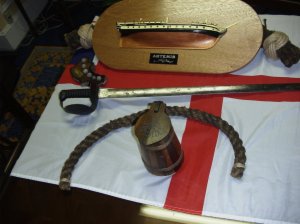
A wonderful half-model of Artemis presented to me by Bob Squarebriggs
As a young man Quashee tired of the posturing of the proud Maroon youth and shipped out in a coaster trading with Charleston in the US. There, to his dismay, he was several times mistaken for a notorious escaped slave, and to avoid this had to sign on as a cook in a humble Honduran mahogany drogher. War came to the Caribbean, and the Port Royal naval base filled with men-o’-war. Quashee was quite taken with the pomp and ceremony, and offered his services to a large frigate where he was told that a cook in the Royal Navy was a warrant officer, but that if he volunteered as a landman he would soon make a fine sailor. The frigate sailed for home and paid off in England, her company turned over into HMS Artemis.
Previous blog on Artemis
ARTEMIS: Sailing seven seas
Artemis has been published in the UK/US in English, French, German and Japanese and in ebook, large print and audiobook.
Buy on Amazon or The Book Depository (free postage worldwide!) Also available at most bookstores.
Detailed list
BookPick: A History of the Royal Navy: Empire and Imperialism
Posted on January 12, 2016 5 Comments
This book is part of the eminently readable ongoing History of the Royal Navy Series published by I.B.Tauris, in association with the National Museum for the Royal Navy. The series, when complete, will consist of three chronologically themed books covering the sailing navy from the 1660s until 1815; the navy in the nineteenth century from the end of the Napoleonic Wars; and the Navy since 1900. These core volumes are complemented by titles on particular wars or specific aspects of the Service. All the books are standalone titles and taken together will provide a very comprehensive and accessible history of the Royal Navy from its beginnings to the present day. Six titles have been published to date.
 This latest volume reveals how the Royal Navy was central to the rise of imperial Britain. The British Empire, the largest in history, was fundamentally a maritime one. Britain’s imperial power was inextricably tied to the strength of the Royal Navy, the ability to protect and extend Britain’s political and economic interests overseas, and to provide the vital bonds that connected the metropole with the colonies. This book examines the Navy’s expansionist role on land and sea and also the ideological and cultural influence it exerted for both the coloniser and colonised. The Navy’s voyages of discovery created new scientific knowledge and inspired art, literature and film. Using the model of the Royal Navy, colonies began to develop their own navies, many of which supported the Royal Navy in the major conflicts of the twentieth century.
The book is divided into seven chapters and includes useful footnotes to each chapter, a bibliography and index, as well as illustrations and tables.
This study of probably the greatest ornament to British history is colourful, insightful and an absorbing read and this reviewer has no hesitation in recommending it to newcomer and old salt alike.
Daniel Owen Spence A History of the Royal Navy
Published by I B Tauris. ISBN ISBN978 1 78076 543 3
And to being the first BigJules blog of 2016, may I wish you all Happy New Year!
Mega Contest!
Posted on November 10, 2015 5 Comments
Thought we’d have a little bit of fun with this one! For a chance to win a copy of Tyger, The Silk Tree & Stockwin’s Maritime Miscellany (plus a mystery prize) email me with a response to this question (in not more than 100 words)
Imagine you’re in a room with a visitor from an alien world. He asks you what you like to read and you decide to tell him about Julian Stockwin — what do you say?
- Please include your postal address. Contest open worldwide. Deadline: November 30. Winner will be the entry judged the most apt and original.
Tyger

- ‘Having joined the British Royal Navy when only fifteen, Julian Stockwin’s adept nautical know-how shows in his novels. We are treated to travel alongside the sailors and experience life on a fighting-sail vessel. The combat scenes, with their elements of surprise, heroism, and horror, have an authenticity about them. These, combined with the political intrigue, particularly in the Baltic Sea countries, and the descriptions of societal norms of that period make this a truly interesting historical novel. It is the sixteenth instalment in the Kydd series… and this reviewer believes that this is one of the best Kydd books thus far. Highly recommended.’
Historical Novel Society
The Silk Tree

- ‘Much of the story in The Silk Tree turns on circumstance and chance as well as the wild good luck that is seldom seen outside of far fetched adventure stories. It is a testament to the quality of the writing that the reader’s credulity or patience is never taxed and Nicander and Marius do end up in Seres but not in the manner that they had planned. Now all they have to do is uncover the secret and bring it home…
If you like books that are full of the names and legends of far away places, histories of cultures that are rarely mentioned today and impossible tales of derring-do than this is certainly the novel for you. The travels and travails that Nicander and Marius go through are tough and unrelenting but they never give up and never give in. Their journeys are legendary but their trials are rewarded in the end. What is really rewarding is that the characters are fully fleshed out and there is a lot of humour in the book. The Silk Tree is an enjoyable, adventurous romp and time spent in the company of Nicander and Marius is no trial at all.’
Waterford Today
Stockwin’s Maritime Miscellany: A Ditty Bag of Wonders From the Golden Age of Sail
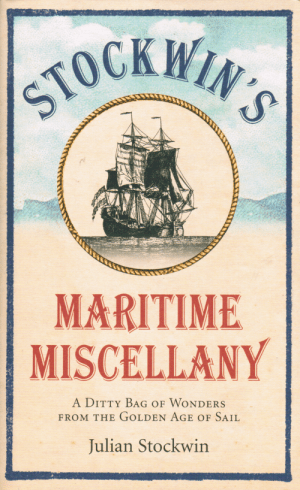
- ‘This book is a delight and a labour of love. The author has been involved with the sea all of his life, serving in the Royal Navy and the Royal Australian Navy. Through his working life and his more recent career as a writer, he has collected a huge amount of information. From this fund of knowledge, he has selected a collection of facts and anecdotes, details of events and museums, insights into the life of seaman during the golden period of sail. The diversity of information and the fascinating explanations of the background to commonly used words and phrases, such as high and dry and first rate, will appeal to a very wide readership.’
Firetrench Reviews
BookPick: Two Historic Ships
Posted on November 3, 2015 5 Comments
The history of Great Britain is inextricably linked to the sea and sea power. Invaders – Romans, Danes, Vikings and others – came by sea as did trade from the Mediterranean and beyond. Dominance of the sea between the seventeenth to early twentieth centuries led to the building of a great imperial empire. While some of our seafaring instinct and tradition may have ebbed, we are still an island nation with a rich appreciation of all things maritime. The two titles in this BookPick celebrate HMS Trincomalee, the oldest British warship afloat – and HMS Pickle, the second smallest British ship in Nelson’s fleet at the battle of Trafalgar.
HMS Trincomalee
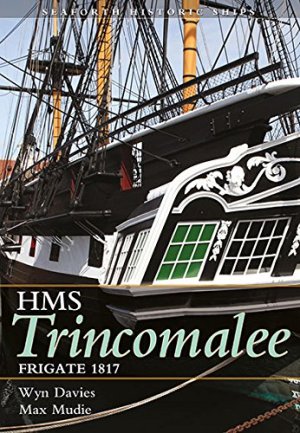 This book is part of the excellent Seaforth Historic Ships Guides series. Trincomalee belongs to a class of 38-gun Fifth Rates, the Royal Navy’s foremost frigate type in the Napoleonic Wars. She is now beautifully restored at Hartlepool, the last of the Nelson era frigates.
She’s had a long life. Built in Bombay of teak, in 1817, the Napoleonic wars were over however by the time she arrived in England in 1819. She was placed ‘in ordinary’ – demasted, in reserve. Her active service as a Royal Navy fighting frigate began with her first commissison from 1847-1850 under Captain Richard Laird Warren on the North American and West Indies Station. Her second commission from 1852-1857 under the command of Captain Wallace Houston was on the Pacific station. On her return to Britain she spent a number of years as a Royal Naval Reserve drill ship. In 1987 an extensive restoration was begun to restore her to her 1852 configuration. The result is considered one of the finest composite restorations in the world.
One of the aspects of this book that particularly appeals is the stunning photography by Max Mudie, and he deservedly gets equal billing on the cover with the author. Mudie’s love of tall ships is evident in the beauty and majesty of his images. The book also contains well-chosen historic images and reference diagrams of deck layout – a splendid production all round.
HMS Pickle
 A few years back I was honoured to be guest speaker at a Pickle Night dinner at HMS Collingwood, the Royal Navy’s largest training establishment. (Pickle Night is the Warrant Officers and Chief Petty Officers equivalent of Trafalgar Night.) The evening was a splendid affair. A mock ship had been recreated in the Warrant Officers and Senior Rates Mess and Kathy and I were piped aboard, over a gangway! The fare would have done Kydd proud – Bosun’s Deepwater Trawl, Gunpowder Gruel and Cannonball Dumplings, Below Deck Duff & Rum Ration Sauce, Pusser’s Store Mousetrap & Hardtack and Yankee Wet Stuff & Mouth Shutters. During the evening dispatches about HMS Pickle’s famous voyage were read out and much good cheer abounded. A right roaratorious night!
Although only a tiny vessel, a topsail schooner, Pickle has earned enduring fame as the ship that carried Lord Collingwood’s dispatch announcing the death of Nelson and the victory at Trafalgar.
Pickle set off on October 26th 1805 and took 9 days to reach Britain after facing a gale off Cape Finisterre. She anchored in Falmouth Bay on November 4th and her captain John Lapenotiere started his journey to London, a trip that usually took a week was covered in 37 hours with 19 horse changes.
Peter Hore’s fascinating and well researched tome describes the ship’s beginnings as a civilian vessel called Sting, through conversion with 10 guns and her role with Admiral Cornwall’s Inshore Squadron for French reconnaissance in 1803. Pickle was also involved in the rescue of the crew of HMS Magnificent in 1804 and further reconnaissance missions. The book details other colourful episodes including a single-ship action against the French privateer Favorite in 1807. Pickle was wrecked in July 1808 when she was grounded as she entered Cadiz harbour but without loss of life.
A colourful story of one small ship and the courage and resolution of her crew.
 Julian Stockwin