
Listen to any good books lately?
Posted on December 14, 2018 5 Comments
The audiobook market continues to grow by leaps and bounds. Spending on audiobooks has more than doubled in the past five years, and demand continues to increase. I have been very fortunate to have had Christian Rodska as the ‘reader’ of the Kydd series right from the beginning. A multi-talented actor/narrator, he has a truly superb range of voices – and a real feel for stories about the sea. Kathy and I, along with many fans, have listened to the entire series several times.
The Kydd Series is now available as audio downloads worldwide. As a Kydd audiobook offers over 11 hours’ listening time, with 21 books out now that’s over 230 hours’ entertainment! Or nearly a month listening every day for 8 hours!
The latest audiobook, A Sea of Gold, is generating rave reviews; here’s three recent ones:
Julian Stockwin is like the gift that just keeps giving. This is an excellent series that I suspect I will just never grow tired of listening to and this is one of the very best of the recent books. There is lots of action, intrigue and for me no little learning about the period in which it is set. It’s hard to believe that this series has been going so long but when Stockwin can keep the like of Kydd, Renzi, Stirk and co. so fresh and introduce new and vibrant characters like the somehow dourly swashbuckling Cochrane to the scene, and Rodska can bring them all to life so authentically, a prognosis for a long and happy life for the series seems sound.
Amazing, can’t wait until the next adventure! Rodska is perfect in his narration.
Patrick O’ Brian’s Aubrey is excellent, C S Forester’s Hornblower is slower but very good, but Julian Stockwin’s Kydd Series is the best, I would recommend this to anyone of any age – it has the lot, historic and naval facts but best of all a darn good copper-bottomed yarn. I must also say that Christian Rodska has brought the whole series to life in a way that I can not see bettered.
(There’ve been a few rights issues with several of the latest titles in the US but I’m pleased to confirm that the whole Kydd Series is now available as audio downloads in the States.)
Where can I buy the audiobook?
In the UK : Audio downloads are available via Amazon UK
The Series is also available via iTunes
(Library users in the UK can borrow the audiobooks in CD format, but the latest titles are not offered for retail sale at the moment.}
In the US
Audio downloads are available via Amazon US
It is also available via iTunes
 Christian Rodska had this to say: ‘It’s always a pleasure when my agent calls to say I have another Kydd adventure by Julian Stockwin to record… His research is impeccable, his knowledge and understanding of the sea and those who spend their lives upon it unparalleled and I look forward to the next one!’
So, on this the last blog for 2018, it just remains to wish you all a wonderful Christmas and Happy New Year from Team Stockwin!
Bookpick: Seven Selections for Santa’s Sack
Posted on December 4, 2018 5 Comments
I’m a bit of a bah humbug creature when it comes to the commercialisation of Christmas – but there’s one thing that I fervently believe: a book is a present that, if well chosen for the recipient, will give hours of pleasure and be a lasting reminder in itself of someone putting thought, not just money, into a Yuletide gift. So do consider adding some of these fine books – all with a maritime theme – to your gift-buying list. Hopefully, there’s something for everyone in this somewhat eclectic selection.
— ♥ —
 The Two Battles of Copenhagen by Gareth Powers
The Danish capital of Copenhagen was the site of two major battles during the Napoleonic Wars – the first Battle of Copenhagen in 1801, one of Nelson’s great victories – and the second, the British army’s assault on the city in 1807 (which I feature in Inferno). Interestingly, Powers describes these two major events from both the British and Danish perspectives, showing well how they fitted into the politics of this region during this turbulent phase of European history.
The History of Navigation by Dag Pike
 The author first went to sea aged 16 on tramp ships and experienced his first shipwreck two years later. Thereafter he had a long and varied marine career and is a regular contributor to maritime magazines worldwide. Charting both successes and failures, this is a fascinating account of mankind’s quest to explore his world from the earliest time, five millennia ago, to the present day.
Raiders From the Sea by John Lodwick
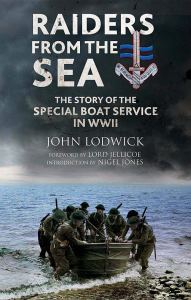 The Special Boat Service was a small force during World War II, never more than about 300 men. Strong, determined individuals, together the men of this elite commando unit formed a deadly, cohesive fighting force which contributed much to the war in the Mediterranean. This reprint edition is a vivid account of one man’s experiences of war – and a fitting tribute to the colleagues he fought alongside in the SBS.
A Marine Artist’s Portfolio by Susanne Fournaise Grube
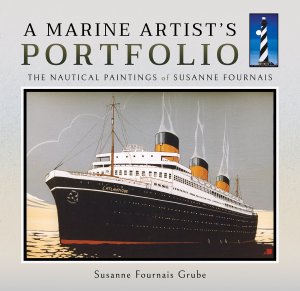 The author, a Dane by birth, has long held a love and fascination for the sea. She paints in Acrylics, not only ships and small craft, but also the architecture of marine buildings and light houses. This volume gathers together a varied selection of her work, presented in six sections – liberty ships; tug boats, ferries & pilots; ocean liners; super tankers; lighthouses; and wooden boats & yachts. A visual delight.
The Trafalgar Chronicle by Peter Hore
 The Trafalgar Chronicle has established itself as a prime source of information about the Georgian navy. This year’s edition spotlights women at sea and reveals many fascinating stories in another absorbing journal from the 1805 Club. A selection of well-chosen colour plates and black and white photographs, together with comprehensive notes on each of the contributor’s papers, enhance the value to the reader. An important contribution to scholarship of the period – and a damn good read!
World Naval Review 2019 Edited by Conrad Waters
 Now in its tenth year, the Review is rightly recognised as an authoritative summary of global naval developments over the past 12 months. As well as regional surveys, important articles from various experts are offered, such as an assessment in this latest volume (which I found of particular interest) of modern naval communications by Norman Friedman. Essential reading for anyone – enthusiast or professional – interested in contemporary maritime affairs.
Submarines of World War II by Erminio Bagnasco
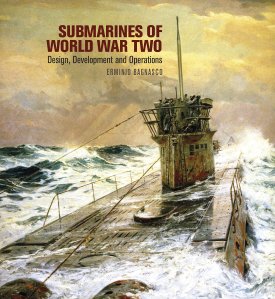 Submarines came into their own, playing a significant strategic role in the war at sea in the years 1939-45, and this major reference book describes all the classes of vessel that were deployed by the eighteen combatant nations during those years. First published in English in 1977, this classic work has been redesigned and updated to include more of the author’s superb collection of photographs. Sadly out of print for a number of years, this new edition will appeal to a wide new audience.
Still looking for bookish inspiration?
You might also like to take a peek at my other BookPicks this year this year
And I have a very limited number of Signed First Editions, which I’m happy to inscribe with a personal message
Enjoy!
Four More Kydds!
Posted on November 27, 2018 15 Comments
I’m delighted to have signed a contract with Hodder & Stoughton for four more Kydd titles. To the Eastern Seas, the first of these, will be published in October next year in hardback, ebook and audio download. Thereafter, another Kydd tale will be launched approximately every nine months. This will bring the total to 25, but rest assured, I have plans for further adventures for Kydd, Renzi and all the doughty crew after that!
Here’s a taster of To The Eastern Seas:
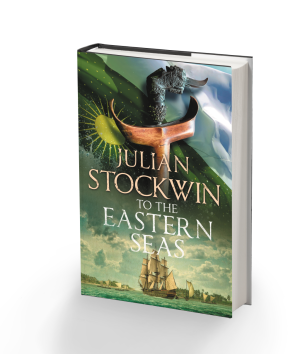 With Bonaparte held to a stalemate in Europe, the race to empire is now resumed. Britain’s ambitions turn to the Spice Islands, the Dutch East Indies, where Admiral Pellew has been sent to confront the enemy’s vastly rich holdings in these tropical islands. Captain Sir Thomas Kydd joins reinforcements to snatch these for the British Crown.
The two colonial masters of India and the East Indies face each other in mortal striving for the region – there can be only one victor to hold all the spoils. The colonial genius, Stamford Raffles, believes Britain should strike at the very centre of Dutch spice production, the Moluccas, rather than the fortresses one by one but is fiercely opposed. Kydd, allying himself to this cause, conspires to lead a tiny force to a triumphant conclusion. Subsequently, a battle for Java and an empire in the East stretches Kydd and Tyger‘s company to their very limits.
A Collectors Set will be offered for this title, with details released in the New Year.
BookPick: Salty Memoirs
Posted on October 12, 2018 1 Comment
This Autumn Selection brings together a collection of true life nautical adventures, both above and below the waves. There’s a diving trilogy, one woman’s 18,000 mile epic journey of self discovery across the Atlantic and back – and a poignant portrayal of life at sea and ashore in the 1900s. Delightful reads for both arm-chair sailors and those at sea on their own salty adventures. And, highly recommended for anyone venturing into Neptune’s Kingdom, another excellent guide from Paul Boissier, this time on the nautical rules of the road.
— ♥ —
Recollections of an Unsuccessful Seaman by Leonard Noake
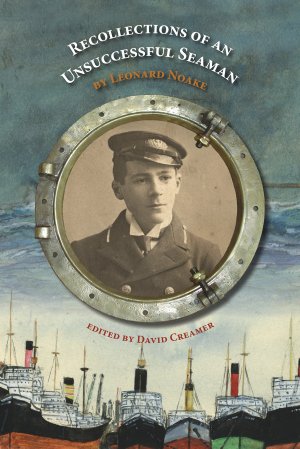 Noake joined the nautical training establishment, H.M.S. Conway, in 1903 and served an apprenticeship at sea until 1908 when his detailed memoirs commence with him signing on as a second officer in the European/West African trade. During the First World War he sailed in a number of ships carrying horses, grain and coal. He survived not only being torpedoed in the English Channel, but also making 112 trips between England and Europe on a ship transporting war materials. Noake went on to a number of other adventures but sadly his seagoing career ended when he was diagnosed with tuberculosis. Penned with warmth and humour, this is an engaging tale of one of the genuine war heroes of the age – one of those unknown seamen who signed on for voyage after voyage into war-torn seas to quite literally save Britain.
Into the Abyss by Rod Macdonald
 Re-issued as the first volume in ‘The Diving Trilogy‘, this book chronicles diving adventures from the author’s long and varied career. It follows his progression from novice diver in the 1980s through the dangers of the deep air diving era and on to trimix diving in the 1990s where divers began to use commercial mixed breathing gases as the sport of technical diving was born. This opened up vast, previously inaccessible, swathes of the seabed, ushering in a great era of discovery of virgin shipwrecks. ‘The Darkness Below‘ and ‘Deeper into Darkness‘ complete the trilogy and together take the reader on a spell-binding journey beneath the waves.
In Bed with the Atlantic by Kitiara Pascoe
 Although never having stepped on a yacht, the author, with her partner, embarks on an epic sail of over 18,000 miles across the Atlantic, around the Caribbean, and then back. At first, she was dogged by doubt and throughout the voyage must overcome challenges and hardship. But sailing back to the UK after three years she realises the difference sailing has made to her life and understanding of the world: how easy it is not to do something, to protect ourselves from risks and ridicule and everything that makes us uncomfortable – but only when we take chances do we get reward and connect not just with the world at large, but with ourselves.
Learn the Nautical Rules of the Road by Paul Boissier
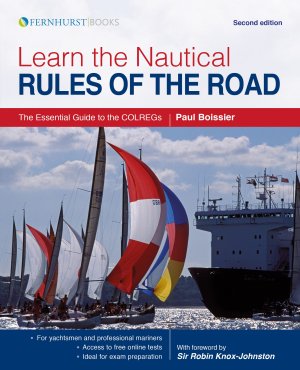 You’re inward bound to a snug harbour from a boisterous sea in filthy weather; you’re delayed and night has fallen. Just as you’re over the bar into calmer waters, from out of a rain squall you see looming two white lights, one above the other and a confusing three reds around the higher and it’s coming up fast. You’re going to have to put about to get around the point – you decide to cross astern of the vessel after it passes. Too late you remember that what you’ve just seen are the lights of a ship Restricted in her Ability to Manoeuvre – and the heavy line of her tow brings your voyage to an unhappy end.
Learning, understanding and remembering the International Regulations for Preventing Collisions at Sea (COLREGs) is essential for anyone venturing onto the water. This book is aimed at both yachtsmen and professional mariners. Author Paul Boissier has spent much of his professional life at sea in the Royal Navy in a wide variety of vessels – and is also a very experienced yachtsman. Anecdotes and detailed explanations throughout this book make the nautical rules of the road very clear, as do the well conceived diagrams. A timely, readable and absolutely essential guide.
Still looking for bookish inspiration?
You might also like to take a peek at my other BookPicks this year this year
And I have a very limited number of Signed First Editions, which I’m happy to inscribe with a personal message
Enjoy!
Cover Story: A Sea of Gold
Posted on September 13, 2018 13 Comments
A book’s cover is basically the face of the work, reflecting its genre and what a reader might likely expect inside. These days it’s also important for a cover to look good as a thumbnail so that ebook browsers can readily spot what they’re interested in. I’ve been very fortunate in the covers of the Kydd Series – initially painted by the renowned marine artist Geoff Hunt, and now created by the very talented digital artist Larry Rostant, who’s been behind the book jackets of Clive Cussler, Simon Scarrow, Con Iggulden and many other famous authors.
So just how was the stunning ‘face’ of A Sea of Gold created? A big thank-you to Assistant Editor Thorne Ryan for taking us behind the scenes of my latest Kydd tale.
Over to Thorne. . .
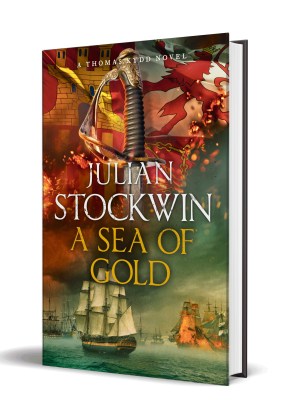
‘Julian is a wonderful author to work with in all regards, but especially concerning cover briefs. He always sends over clear instructions for what he wants on the cover of his books, from the positioning of the ships to the flags that should be used at the top. I put these instructions into a briefing form and email it to the art department. It then goes into the monthly briefing meeting that is attended by various people including our MD, Sales Director, Head of Sales and Art Director. They discuss the brief and, if approved, the cover is signed off.
Sarah Christie, the designer who always handles Julian’s titles, works with Larry Rostant to put the cover together, and then sends it over to Julian’s editor, Oliver Johnson, for approval. He passes this on to Julian for his comments. Once everyone has approved, the full cover layout is circulated three times, at which point any corrections to blurb, author biography etc. are made. When the cover has been signed off as final, a ‘wet proof’ (a mock-up of the final cover, including final finishes such as foil, embossing, spot UV etc.) is produced to make absolutely sure the cover looks as wonderful as it should – and it always does! Finally, the cover goes to press.’
Larry Rostant elaborates on his role. . .
 ‘My work is created from photographic images that are combined and manipulated to create the final image.
The process starts with a very precise brief from Hodder’s design manager, and a lot of technical input from the author, then it’s a question of finding imagery that works, either from my own library or from online photo libraries. Searching – or indeed shooting – the source images takes as long as combining them, especially as there are limited images available of appropriate ships; I often have to combine several ships to create the final one in order to get round this. Once I have all the images that I need, I can begin the process. This can take a day or two but when I finally have all of the elements roughly in place, I can send the image over to the publisher and the author for approval. As the image and reference are so well briefed, there are often very few alterations needed . . . happily! I then make any changes required and finesse the art for the final cover.
The series changes gradually as we continue in order to keep it looking fresh. Note that we no longer use two weapons crossed over the flag and I’ve started adding sparks and smoke to give more of a sense of atmosphere.’
Avril McCready, who deals with the production side of the Kydd books, explains this process. . .
‘Our cases (hardback covers), covers (paperback covers) and jackets are printed at the same supplier as the interiors. In some cases, and depending on the complexities in the finishes, some of the finishes may have to go out to another specialised supplier.
The printer works from files which are digitally produced to suit the presses that we will be using and the materials that we will be printing on. The covers or jackets are mainly printed in four colours: Cyan, Magenta, Yellow and Black – or CMYK. So, every colourful image is broken down into four different combinations of dots or pixels to create a printed reproduction of the original. For some of the covers, we may print with an additional fifth colour if we cannot reproduce a colour using the CMYK colours. This colour is selected from the Pantone swatch catalogue. This is very rare, and we get a very good representation from printing in four colours due the advancement in inks, colour-matching profiles and printing technology these days.
When the covers or jackets are printed, they go through the press and all four inks hit the paper at once. The ink is dried instantly as the paper passes through the machine. The sheets are automatically collated and then rested to allow the paper to settle before they go the finishing stages. The finishing stages can consist of foil stamping, UV varnishing or embossing etc.
For the Kydd covers, we apply a foil to the dried printed sheet. The foil is a very thin layer of metallic pigment sheeting and very similar to the foil used in gilt edging. It is an expensive process and used only on a handful of our titles. The foil is heat-transferred by stamping the foil with a brass block which shows the text in reverse, so that the words appear on the cover in the right reading order. This is then allowed to cool before a clear film lamination is added. The lamination is either matt or gloss, and is applied over the foil to protect it from damage or scuffing. If we add a spot-gloss varnish, the cover or jacket is put through the press again to have this added, so we have to re-register the position of fine or small type on a laminated sheet post-printing and post-lamination, which can be very challenging.
For the hardback edition, we select an imitation cloth and a foil for stamping from an approved range to create our cases. These are made to our specification for each title. While we’re doing this, the interiors are printed, folded, sewn and then trimmed for the hardback or left untrimmed for the paperback. The hardback case is then added to the case board on the binding line and then moved onto another machine to have the jacket applied. For the paperback edition, the interior sheets and printed, laminated covers are put on the binding line together and then the pages are trimmed flush in one hit.’
And, fittingly, my editor Oliver Johnson has the last word. . .
‘Accuracy is a key factor in briefing Julian’s jackets — historical fiction devotees, and particularly fans of novels set in the Age of Fighting Sail, are sticklers for detail and any error will be swiftly pointed out. When I took over Julian’s books I was excited to learn that Larry Rostant was the cover artist as he was someone whose work I knew well and admired tremendously. We deliberately established the briefing process set out above. I cannot think of any other author where the detail is so fine and the process so streamlined. And, of course, where the end result (Larry’s work) is so widely admired!’
Do you have a favourite Kydd cover? I’d love to hear your thoughts.
A Sea of Gold is published in the UK on November 1 in hardback, ebook and audiobook (read by the inimitable Christian Rodska). It will be simultaneously available in ebook and audio-download in Australia, Canada, the States – and elsewhere around with world – with the hardback available in those countries a month or two later.
Readers outside the UK might like to know that the title can be pre-ordered at the Book Depository https://www.bookdepository.com/Sea-Gold-Julian-Stockwin/9781473641075 and will be shipped out on the UK publication date, with free postage worldwide!
BookPick
Posted on August 11, 2018 1 Comment
In this trio of recommendations each book focuses on an aspect of defence at sea – and they range in time from the Victorian era through the Second World War to the Cold War. The authors all have a different writing style but bring to their chosen subject much illuminating insight. Regular readers of my blog will know I have much respect for the integrity of American naval historian Norman Friedman. Richard Woodman, a fellow naval fiction author, brings great scholarship and his own sea experiences to his work. And Eric Thompson is to be commended for his remarkable revelations about the secret world of nuclear submarines.
— ♥ —
British Battleships of the Victorian Era by British Battleships of the Victorian Era
 A companion volume to ‘British Battleship 1906-1946’ this book completes Friedman’s study of the Royal Navy’s capital ships. Beginning with the earliest installation of steam machinery in ships-of-the-line, Friedman traces the technological revolution that saw the introduction of iron hulls, armour plate, shell-firing guns and the eventual abandonment of sail as auxiliary propulsion. Friedman explains why as well as how and when these advances were made, and locates British ship design firmly within the larger context of international rivalries, domestic politics and economic constraints. A comprehensive gallery of photographs with in-depth captions is accompanied by specially commissioned plans and a colour section featuring the original Admiralty draughts. A must-read for all serious students of the Royal Navy.
On Her Majesty’s Nuclear Service by Eric Thompson
 I’ve always had a fascination for submarines and at one stage in my naval career seriously considered joining the Submarine Service.
During the Cold War, nuclear submarines performed the greatest public service of all: prevention of a third world war. History shows that they succeeded; the Cold War ended peacefully, but for security reasons, only now can the compelling story behind it be told. Thompson provides a fascinating insight into what is was like to have your finger on the nuclear trigger button!
Arctic Convoys by Richard Woodman
 For the later four years of the Second World War, the Western Allies secured Russian defences against Germany by supplying vital food and arms. The plight of those in Murmansk and Archangel who benefited is well known, but few are aware in full detail of the courage, determination and sacrifice of the men of the Allied merchant ships, which withstood unremitting U-boat attacks and aerial bombardment in desperately cruel conditions to maintain the lifeline to Russia. In the storms, fog and numbing cold of the Arctic, the sinking of a 10,000 ton freighter was equal to a land battle in terms of destruction and continuing without pause to the last day of the war the losses sustained were the greatest pro-rata of any wartime service. The author deploys vivid description and first-hand anecdote to bring rarely achieved atmospherics to this work and re-released this year, it is a moving tribute to the vital role of the Merchant Navy in wartime.
Still looking for bookish inspiration?
You might also like to take a peek at my other BookPicks this year this year
And I have a very limited number of Signed First Editions, which I’m happy to inscribe with a personal message
Enjoy!
A Sea of Gold Collectors Set
Posted on July 26, 2018 15 Comments
 This year there will be two Kydd titles are being released; the first, The Iberian Flame, was out in June. The second, A Sea of Gold, will be launched in November. As usual, I will be offering Collectors Sets. These signed, numbered and embossed First Edition Sets are strictly limited in number to 500 only. I’m happy to write a short dedication on request. The Subscription List for The Iberian Flame filled rapidly and is now closed but there are still some unreserved Sets for A Sea of Gold.
Here’s what two of my editors have said of the manuscript of A Sea of Gold:
‘First, many congratulations – this is a simply terrific addition to the Kydd oeuvre. I could hardly bear the suspense that evolved around Kydd foray into Lloyd’s. Those passages are brilliantly written (as is the rest) – I really felt for him. And I was so relieved when everything turned out fine for him in the end – one of the most satisfying endings ever, I think! There are, of course, some magnificent passages at sea, and the fire-ships episode: will Kydd get off the burning ship in time? He did, of course, but his precarious emotional state is so well portrayed that it began to seem doubtful. I enjoyed the historical politics too, in which you bring well-known figures from the past so vividly to life, and, of course, Renzi’s continuing career in the shadows of government. Another fabulous yarn.’
‘Many congratulations once more on a fine book. It was great to have Cochrane appear ‘on screen’ as it were… The Basque Roads was in my view the finest battle scene I have read of yours (real seat-of-the pants tension and incredibly complex tactical decisions); I thoroughly enjoyed the excursions into the early nineteenth century stock market and Lloyds (very illuminating) and of course the double blow and resolution to Kydd’s fortunes was masterfully done: bravo!’
And here’s a taster of the story:
1809. After his heroic actions during the retreat to Corunna, Captain Sir Thomas Kydd is the toast of London society. Here he falls in with the legendary frigate captain, Lord Thomas Cochrane.
So begins a relationship, professional and personal, that will be unlike any that Kydd has known: a relationship that will lead him, almost simultaneously, to first glory, then ruin.
The French fleet is massing in the Basque Roads in a near impregnable position. The Admiralty orders Cochrane to command an attack, to the chagrin of more senior officers who object to being overlooked by Cochrane’s reputation for daring. Cochrane insists that his new friend, Kydd, is in the forefront of the assault armada, a motley collection of rocket, bomb and fire-ships that will set the anchorage ablaze – this despite Kydd’s almost pathological fear of fire.
The fallout from what follows will see Kydd financially ruined, with only his former shipmates, his oldest friend of all, Nicholas Renzi, and the whisper of hidden Spanish treasure promising the sea of gold that he needs to save himself.
More Summer Selections!
Posted on June 29, 2018 2 Comments
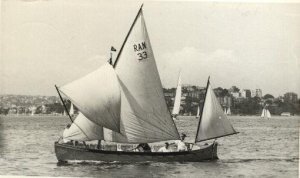
Summer is a great time to be out on the water in a small boat. I have very fond memories of helming a navy whaler in Sydney harbour and also sailing my first boat in Tasmanian waters when on leave. There have been many books written about sailors and their craft – and these often appeal to landlubbers as much as mariners. From iconic figures such as Robin Knox-Johnston to a tribute to Arthur Ransome, to the lives and loss of those who never returned I’ve chosen three books from my library. And no sailor can ignore the weather – a bonus title in this selection is a useful guide to just what’s behind the winds, clouds and sea state at any given time.
— ♥ —
Knox-Johnston on Seamanship & Seafaring by Robin Knox-Johnston
 On 14th June 1968 Robin Knox-Johnston set sail from Falmouth to take part in the Sunday Times Golden Globe Race – the first, non-stop, single-handed sailing race around the world. He was an unknown 29-year old Merchant Navy Officer. Ten and a half months later he sailed back into Falmouth, the only finisher in the race and the first man to complete a non-stop solo circumnavigation. Since then he has had an illustrious sailing career, with three further circumnavigations, including the fastest circumnavigation and last racing solo round the world in 2007, aged 68. Few people have sailed as many miles as Robin! Now, 50 years since setting out on the Golden Globe Race, one of the world’s greatest yachtsmen shares his thoughts on seamanship and seafaring.
Racundra’s Third Cruise by Arthur Ransome, edited and compiled by Brian Hammett
 Most people know Arthur Ransome as the author of the classic children’s sailing tale ‘Swallows & Amazons‘ Before he wrote this book Ransome was a journalist for the Daily News, based in Russia. He is reputed to have played chess against Lenin and he married Trotsky’s secretary. Ransome cruised extensively in the Baltic in the 1920s on board his beloved ‘Racundra‘. His account of his first cruise on that boat was ‘Racundra’s First Cruise‘. A second cruise was spoilt by bad weather, but a third cruise was special – it was his honeymoon. Ransome intended to publish the account of this cruise, but never finished it. Ransome enthusiast Brian Hammett, using the unpublished manuscript and Ransome’s hand-written notes, diaries, logbooks and photographs, compiled this delightful little tome, out now in paperback.
Last Voyages by Nicholas Gray
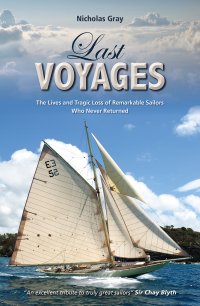 This collection of eleven moving accounts of tragic final voyages is also a celebration of achievement and the courageous human spirit. Included are world-renowned racers, like Eric Tabarly and Rob James, highly experienced cruisers and adventurers, like Peter Tangvald and Bill Tilman, and the notoriously ill-prepared Donald Crowhurst. All the men and women described in the book were friends with or known to the author who himself competed in several short-handed long distance races, where he met and raced against many of these fascinating characters. A number of black and white photographs showcase the sailors and their yachts in this poignant tribute.
The Sailor’s Book of the Weather by Simon Keeling
 This book introduces the key principles that influence the weather and gives the sailor – or landlubber venturing forth on the water – the tools to forecast from observations and make the most of available information. Wind, clouds and knowledge of weather patterns and local conditions all contain ample hints to allow the informed forecaster on the high seas to accurately predict the weather. Illustrated with charts and over 100 photographs, this book is written in straightforward language with the science presented in an easy-to-digest manner.
Still looking for bookish inspiration?
You might also like to take a peek at my other BookPicks this year this year
And I have a very limited number of Signed First Editions, which I’m happy to inscribe with a personal message
Enjoy!
Summer Selections
Posted on May 24, 2018 2 Comments
With summer well underway in the Northern Hemisphere one of the great pleasures of this time of year is relaxing outdoors with a good book – and a chilled beverage. This BookPick features three engrossing reads for the beach or patio plus two additional offerings, one on knots, splices and whippings; the other providing the means to construct a complete paper fleet of the Battle of Trafalgar. And last but not least, my favourite recipe for rum punch is thrown in!
— ♥ —
The Battle of Trafalgar by Florian Richter and Peter Dennis
 With just a craft knife and glue you can form line of battle once again for the iconic engagement that saw both victory for England and the tragic death of Admiral Lord Nelson. This book will appeal particularly to wargamers but also to all those looking to more fully appreciate the genius of Nelson. Several companion books are recommended by the authors including the excellent ‘The Trafalgar Companion’ by Mark Adkin, which was one of the many references I consulted when writing my Kydd title, Victory.
Knot Know-How by Steve Judkins and Tim Davison
 This compact little volume begins with the ten knots everyone should know then describes over 40 other knots. You will learn how to seize (sew or bind two ropes together); whip (stop the end of a rope unstranding); and splice (join ropes permanently together). Knots are often difficult to follow in pictures but these are exceptionally clear and easy to follow in their multi-colour detail. With very clear step-by-step diagrams, modern-day sailors will find much of interest, and students of the age of sail can practice some of the knots that every ordinary seaman in Kydd’s day had to learn.
Seafurrers by Philippa Sandall
 Sailors often have a soft spot for felines and through much of history cats have been found aboard both naval and merchant ships, not just to keep the rodent population in check, but as much-loved companions. This delightful little book presents thirty-eight true tales of furry shipmates, including Trim (who circumnavigated Australia); Tom (the sole feline survivor of the sinking of USS ‘Maine’) and Simon (a veteran of the Yangtze Incident). Charmingly illustrated with the most original and entrancing of creations I’ve seen, the book is also chock full of maritime trivia. It will be right there by me for my next sea trip.
Purrfectly heartwarming…
The Grey Wolves of Eriboll by David M Hird
 The surrender on Loch Eriboll of the German U-boat fleet at the end of World War II was perhaps the principal event in the war’s endgame which signified to the British people that peace really had arrived. This revised, updated and expanded new edition gives career details of not only the 33 commanders who accompanied their boats to Loch Eriboll but also of a further 23 previous commanders of those U-boats. It also provides a wealth of historical insights and personal memories of those who witnessed the events and is a remarkably interesting read. A definitive account of a secret mass surrender of interest to all students of naval history.
And now for the rum recipe:
Stockwin’s Rum Punch
One part sour (lemon or lime juice)
Two parts sweet (sugar or syrup)
Three parts strong (dark rum)
Four parts weak (water)
Grated nutmeg to taste
Serve well chilled with ice
Be warned; they’re addictive!
Still looking for bookish inspiration?
You might also like to take a peek at my other BookPicks this year this year
And I have a very limited number of Signed First Editions, which I’m happy to inscribe with a personal message
Enjoy!
The Iberian Flame: Reader Reviewers Wanted!
Posted on April 24, 2018 3 Comments
The Iberian Flame is the next book in the Kydd series, out in June. Five Early Copies will be up for grabs for reader reviewers! For a chance to win one just email julian@julianstockwin.com with ‘Iberian Flame Reviewer’ in the subject line. Please include your full postal address. Deadline: May 7. The first five drawn out of the hat will be the winning copies and will go out mid-May.

Here’s a taster of the book:
1808. With the Peninsula in turmoil, Napoleon Bonaparte signs a treaty to dismember Portugal and put his brother, Joseph, on the throne of Spain. Meanwhile, Nicholas Renzi, the Lord Farndon, undertakes a deadly mission to stir up partisan unrest to disrupt this Napoleonic alliance with Spain.
Thrust into the crucible of the uprising, Captain Sir Thomas Kydd is dismayed to come up against an old foe from his past – now his superior and commander – who is determined to break him. Kydd will soon face the greatest decision of his professional career. Bonaparte, incensed by the reverses suffered to his honour, gathers together a crushing force and marches at speed into Spain. After several bloody encounters the greatly outnumbered British expedition have no option other than make a fighting retreat to the coast. Only the Navy can save them.
But the flame of insurrection has been lit – and the Peninsular War has begun.
‘Quarterdeck’ featured the book in the latest issue:
‘The Iberian Flame is classic Stockwin, driven by a gripping pace that begs the reader to turn page after page to learn what happens next. As with previous titles in the canon, the writing is strong, creating a delightful and ever-expanding historical canvas.’
(Download the magazine)

