
Blogging away, blogging away – more thoughts…
Posted on July 2, 2015 7 Comments
 First, I must thank you again for all the feedback and comments on my blogs.

Being an author can be a pretty isolated life so it’s always great to hear from readers! And while I thoroughly enjoy writing the Tom Kydd series – and my other historical fiction – it’s a pleasant diversion to put pen to paper (metaphorically) outside the confines of the structure of a novel.
As well as regular blogs via BigJules for the past two years, I’ve been honoured to be invited to write guest blogs a number of times.
Here’s some you may have missed —
English Historical Authors site
The literary magazine Upcoming4.me
Related Blogs
Do send me any suggestions you might have for future blogs, either in the form of a question for ‘Ask BigJules’ or a general topic you’d like to see covered. I’ll pop a special thank-you gift in the post to any that I take up.
Good thing Kathy’s a hard taskmaster about the number of words I write each day, or I might just get a bit carried away with blogs…
I’m also on Facebook, Twitter and Pinterest and I welcome new Friends and Followers. But now, I really must get back to the work in progress…
And you can keep up to date with all the latest reviews and interviews via the News Page of my website.
BookPick: Rigging Period Fore-and-Aft Craft
Posted on June 30, 2015 2 Comments
Employing clear draughtsmanship this book explores the rigging of typical period fore-and-aft vessels, those like Seaflower, the tops’l cutter in which Kydd sailed around the Caribbean.
 Author Lennarth Petersson deploys three typical eighteenth-century types – an English cutter, a three-masted French lugger and an American schooner – to represent variations. Illustrations for these ships include full profile and deck plan, belaying plan, topmast shrouds and jib in a complete working examination of these craft.
The American schooner section has the most illustrations, reflecting the complexity of this vessel.
The author is a professional illustrator and amateur model maker. His first book, Rigging Period Ship Models concentrated on the three masted square sail ship rig and it seems fitting to follow this with fore-and-afters.
Joseph Conrad wrote, in The Mirror of the Sea, of their special beauty:
- ‘A fleet of fore-and-afters at anchor has its own slender graciousness. The setting of their sails resembles more than anything else the unfolding of a bird’s wings; the facility of their evolutions is a pleasure to the eye. They are birds of the sea, whose swimming is like flying…’
Rigging Period Fore-and-Aft Craft features some 200 diagrams showing where each item of standing and running rigging is fitted, led and belayed.
The book brings a visual clarity to the complexities of period rigging and will delight anyone with an interest in the rigging of traditional fore-and-aft craft. It’s not just for modellers but a boon to traditional seafarers and readers of historical fiction also. I know I’ve consulted Petersson’s earlier title many times, and this one will as well take its respected place on my reference shelves.
Lennarth Petersson Rigging Period Fore-and-Aft Craft
Published by Seaforth Publishing. ISBN 978 1 84832 218 9
Contests: A Trio of Goodies!
Posted on June 23, 2015 2 Comments
We all love a chance to win and I hope there’s something to tempt everyone here with not one but three prizes on offer! The contests close on July 20 and you may enter all for which you’re eligible. (The Silk Tree contest is restricted to UK residents; the other contests are open worldwide.) Best of luck!
The Silk Tree
 Last week the paperback of The Silk Tree was officially launched in the UK. The influential book recommendation site Lovereading says of this novel:
My publisher Allison & Busby has launched a competition to win a stunning unique leather notebook (with the map of the heroes’ route as the cover) plus a copy of the book. Enter the contest here.
Advance Reading Copies of Tyger
 Tyger is the next book in the Kydd series, out in the UK and US in October. Twelve Advance Reading Copies are up for grabs!
The greatest naval trial in the Georgian period is underway at Portsmouth with the court martial of Sir Home Popham, Captain Sir Thomas Kydd’s commanding officer in the doomed occupation of Buenos Aires. Kydd has some sympathy for Popham’s unauthorised action but his support for his former commander leaves him athwart some very influential people in the Admiralty.
With his frigate L’Aurore unfit for sea, Kydd is given a commission that some hope will destroy his career. Tyger has recently mutinied but instead of having her company dispersed around the fleet as is customary, the ship is pressed into immediate service in the North Sea. Kydd faces a crew still under some malign influence. Enemies aboard and on the high seas are just the start of the problem…
If you would like the chance to secure an Early Reading Copy of Tyger, several months before it is officially published, email admin@julianstockwin.com with ‘Advance Reader’ in the subject line and your full postal address in the body of the email.
Stockwin’s Maritime Miscellany
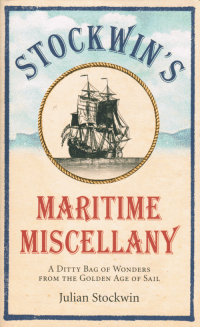 A Ditty Bag of Wonders From the Golden Age of Sail
– Firetrench Reviews
Would you like the opportunity to win a copy? Email admin@julianstockwin.com with ‘Miscellany’ in the subject line and your full postal address in the body of the email.
BookPick: Britain’s Heritage Coast Exmouth to Plymouth
Posted on May 26, 2015 4 Comments
Kathy and I moved to Devon a dozen years ago and we know we’re privileged to live in one of the nation’s loveliest regions, with superb coastal and maritime vistas at almost every turn. The regular tweeted photographs from @GaryHolpin rarely fail to brighten my day, especially those with a salty bent. Says Gary: ‘I’m an amateur photographer who loves the South West of England and is more than a little addicted to walking its coastline with my camera.’ Gary has written a delightful little volume about the history, folklore and outstanding beauty of the South Devon coast. It’s superbly illustrated with a selection of his photographs as well as historic images – and because it’s a compact little volume it’s ideal to bring along on your seaside holiday…
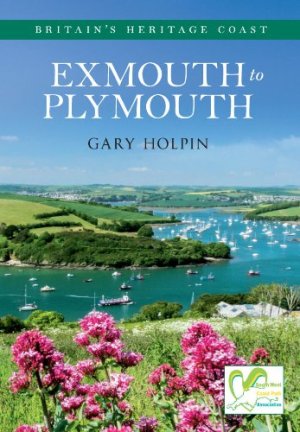 The book’s first two chapters give the reader a useful overview of the region’s varied geology and human settlement. The sea was at the centre of its history for centuries. Superb natural anchorages and sheltered estuaries put South Devon’s ports to the forefront in defending the nation and enabling the growth of global trade. And of course famous explorers, such as Sir Francis Drake and Sir Walter Raleigh were true sons of Devon!
The rest of the book takes the armchair reader on a journey along the South Devon heritage coast, beginning at Exmouth. The oldest seaside town in Devon, Exmouth sits at the mouth of the River Exe and is the gateway to the Jurassic Coast.

Sunset at the mouth of the River Erme
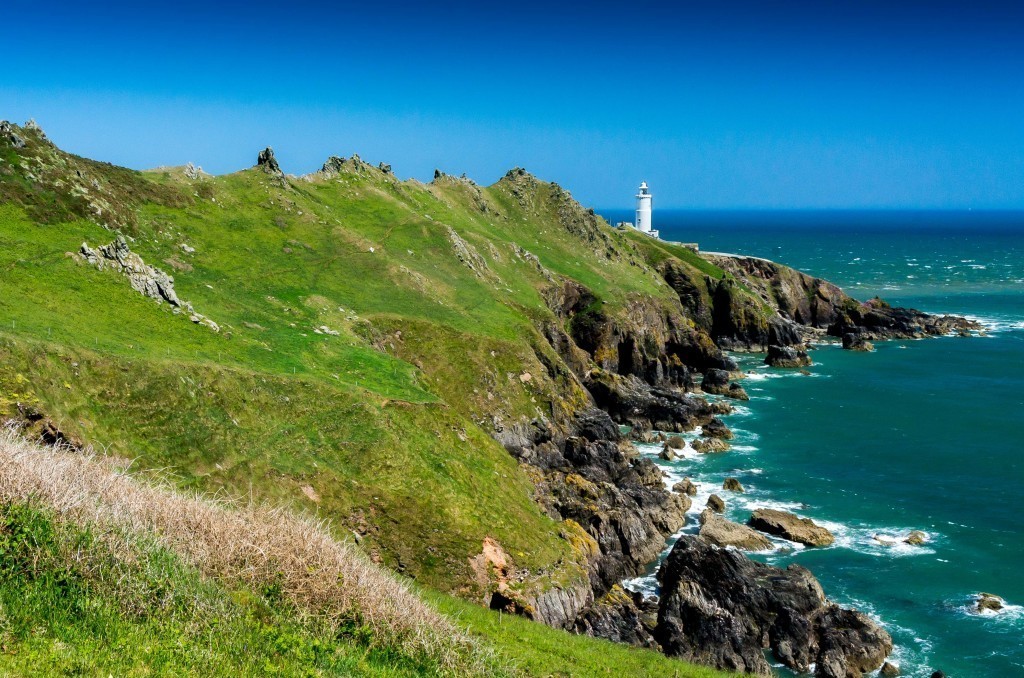
The dramatic headland of Start Point
The spectacular scenery of the South Devon coast can be enjoyed on foot along the South West Coast Path †, part of which Kathy and I have walked. It is a wonderful way to explore the beauty and history of the region. I also had the privilege of spending time in many of the little coastal settlements during research for my Kydd book The Admiral’s Daughter.
Among the references at the back of Exmouth to Plymouth are details of some 80 websites for readers wishing to go further into some aspect covered in the text.
Gary’s book is a must-read for anyone visiting Devon and serves as a reminder of Neptune’s bounty on our doorstep for those of us lucky enough to live in the region.
† The South West Coast Path with a length of 630 miles, follows the entire coastline of England’s South West Peninsula.
Gary Holpin Exmouth to Plymouth
Published by Amberley Publishing ISBN 978 1 4456 2151 7
Copyright notices
Photographs © Gary Holpin, used with his kind permission
Every effort is made to honour copyright but if we have inadvertently published an image with missing or incorrect attribution, on being informed of this, we undertake to delete the image or add a correct credit notice
BookPick: Support for the Fleet
Posted on May 19, 2015 1 Comment
The author of this monumental work is Jonathan Coad, a former Inspector of Ancient Monuments. He is a Vice-President of the Society for Nautical Research and a former President of the Royal Archaeological Institute of Great Britain and Ireland. Support for the Fleet traces the architectural and engineering works in the Royal Navy’s shore bases at home and overseas and the political imperatives and technologies that helped shape them up to the First World War.
 Based on 45 years’ detailed research, the book concentrates on the remarkable legacy of surviving structures. These bring to vivid life the varied requirements of the sailing navy and its steam-driven successor, and are reflected in successive dockyard remodellings and expansions throughout the world, a remarkable number of which survive to this day to be discovered by the interested reader. Revealed as well are the close links that developed with a rapidly industrialising Britain at the end of the eighteenth century, showing contributions of figures such as Samuel Bentham, Thomas Telford and James Watt.
The influence of the Royal Engineers is traced from early beginnings in the 1700s to their major role in the dockyard expansions from the late 1830s into the twentieth century. The architectural development of victualling and ordnance yards, naval hospitals, schools and coaling stations are all described, together with their key contributions to Great Britain’s long naval supremacy.
To give an idea of the extent of the coverage in this splendid volume, for the prospective reader I’m going to list the chapter headings –
- 1 The Royal Dockyards in Great Britain, 1700-1835
2 The Royal Dockyards in Great Britain, 1835-1914
3 Planning and Building the Royal Dockyards to 1795
4 Planning and Building the Royal Dockyards, 1795-1914
5 Engineering Works of the Sailing Navy, 1700-1835
6 Buildings of the Sailing Navy
7 Dockyard Housing, Offices and Chapels
8 Buildings and Engineering Works of the Steam Navy, 1835-1914
9 Growth of Empire: The Overseas Bases of the Sailing Navy, 1700-1835
10 Heyday of Empire: The Overseas Bases, 1835-1914
11 The Mediterranean Bases: Buildings and Engineering Works, 1700-1914
12 The West Indies and North American Bases: Buildings and Engineering Works, 1700-1914
13 South Atlantic and Australian Bases: Buildings and Engineering Works, 1700-1914
14 Feeding the Fleet: The Royal Victualling Yards
15 Naval Ordnance Yards
16 Care of the Sick and Wounded: Naval Hospitals
17 Barracks and Training Establishments
Support for the Fleet is copiously illustrated with maps, plans and photographs. Although an expensive volume, this lively and informative work to my mind stands to the forefront as the definitive guide to the importance and workings of the Royal Navy bases and has to be the ‘go to’ source for this other half of naval life for many years to come. It is highly recommended.
Jonathan Coad Support for the Fleet
Published by English Heritage. ISBN 978-1-84802-055-9
Copyright notices
Every effort is made to honour copyright but if we have inadvertently published an image with missing or incorrect attribution, on being informed of this, we undertake to delete the image or add a correct credit notice
HMS Victory – 250 this month!
Posted on May 12, 2015 6 Comments
There’ve been many famous ships in Britain’s proud maritime history – Mary Rose, Golden Hinde, Cutty Sark, to name but three… but one ship stands head and shoulders above the rest – HMS Victory, now currently undergoing major restoration in Portsmouth Historic Dockyard to ensure her preservation for future generations
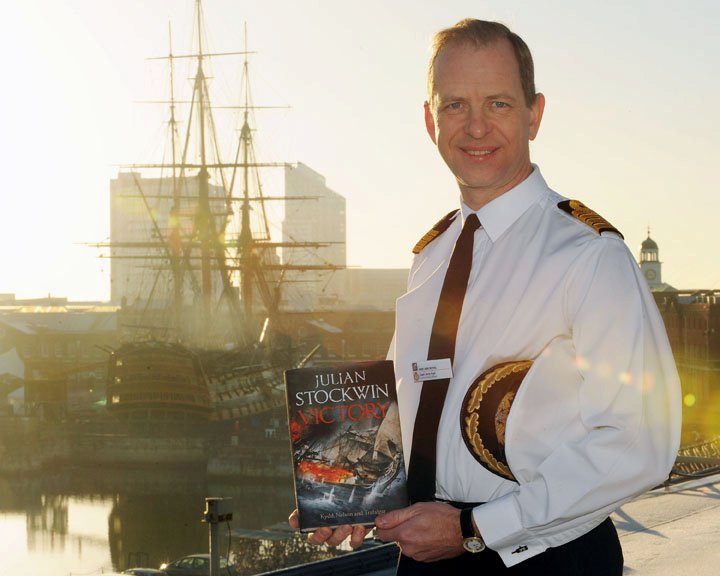
Captain Kyd, former CO of HMS Ark Royal with Victory in front of Victory
Once in the water the task of fitting out could begin, transforming a hollow planked frame into a living, breathing fighting ship. From her steering gear to masts, hatches to capstans, pumps to officers cabins. And of course her guns – 104 of them on three gun-decks, from 12 pdrs to massive 42 pdrs.
This iconic ship already had a quite a number of years’ service before her most famous role as Nelson’s flagship at the Battle of Trafalgar, October 21, 1805.
In 1797 she returned to England, 32 years old, scarred and battle-weary. Late in that year, considered unfit for service, it was ordered she be converted into a hospital ship and eventual disposal. But fate intervened – as it would several times in her career – and when the first rate Impregnable was lost in Chichester Harbour there was an urgent need for another three- decker for the Channel Fleet. Victory was to be given a new lease of life! Refitting commenced at Chatham Dockyard in late 1800.
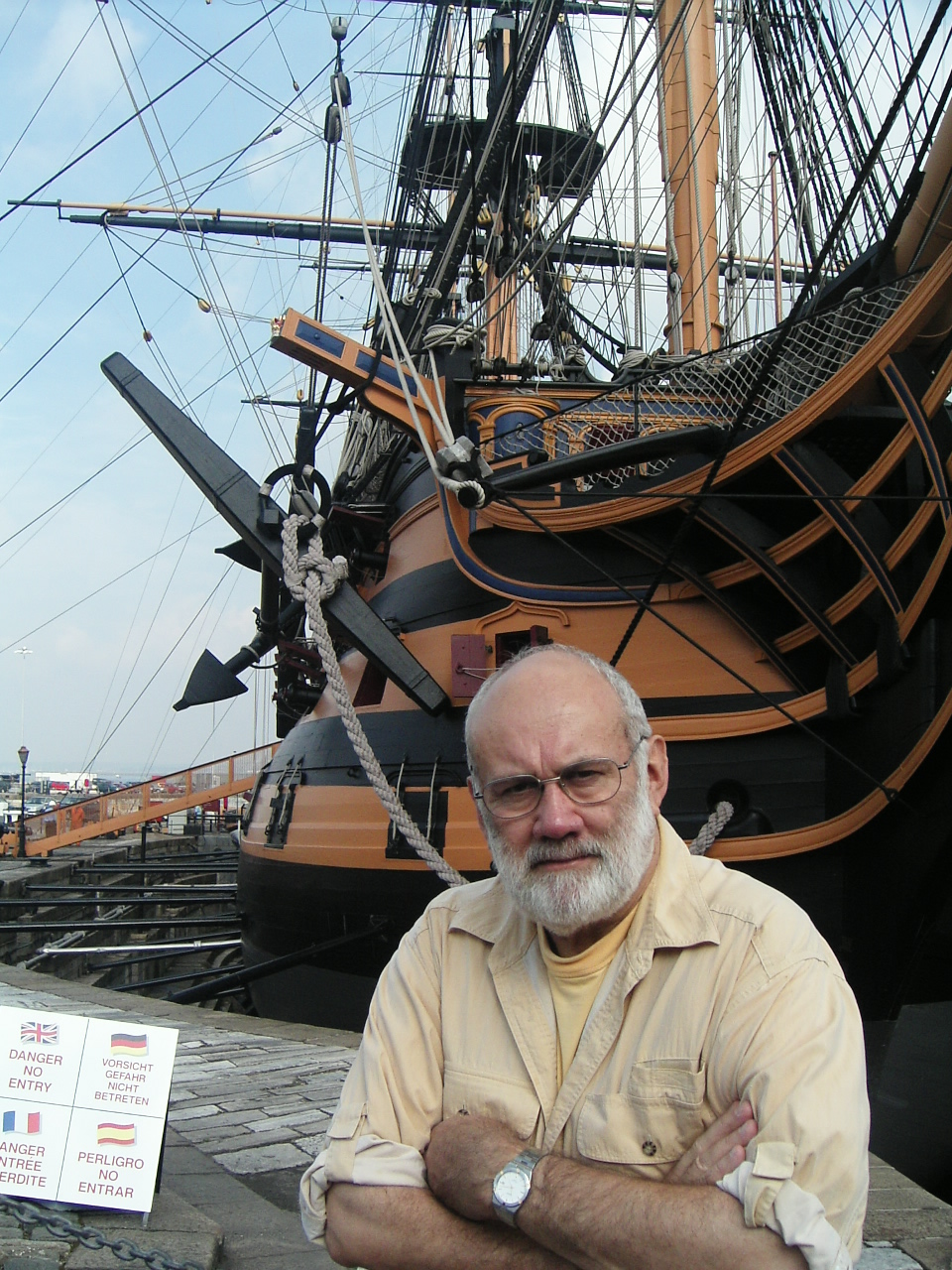
One of my many visits to Victory
A ship of the line like Victory required a great deal of timber for her construction; around 6000 trees were felled, mainly oak from the Wealden forests of Kent and Sussex. Her statistics are impressive: the vast amount of canvas that could be set meant a sail area a third larger than a football pitch; if laid end for end, cordage used for her rigging would stretch 26 miles.
Despite her age, she once stayed at sea for two years and three months without once entering port.

Victory’s figurehead
When I began writing the Kydd Series I came across some incredible statistics. In the bitter French wars at the end of the 18th century, there were, out of the six hundred thousand or so seamen in the Navy over that time, only about 120, who, by their own courage, resolution and let’s face it, brute tenacity, made the awe inspiring journey from the fo’c’sle as common seaman to King’s officer on the quarterdeck. This meant they changed from common folk; they became gentlemen. And that was no mean feat in the eighteenth century. Of those 120, just over 20 became captains of their own ship – and a miraculous 3 became admirals! After Nelson and Hardy, the two most important men aboard Victory at Trafalgar were cut from this cloth, both originally common seamen – John Quilliam, first lieutenant and John Pascoe, the signal lieutenant.

Victory and one of the ship’s upper deck guns
In 1831 Victory was listed for disposal but when the First Sea Lord Thomas Hardy told his wife that he had just signed an order for this, Lady Hardy is said to have burst into tears and sent him straight back to the Admiralty to rescind the order. Curiously, the page of the duty log containing the orders for that day is missing.
Victory was permanently saved for posterity in the 1920s by a national appeal led by the Society of National Research.
To this day Victory is manned by officers and ratings of the Royal Navy and now proudly fulfils a dual role as flagship of the First Sea Lord and a living museum of the Georgian navy.
It was my great privilege to have been given virtually unlimited access to the ship when I wrote my book Victory. Of course this was by no means my first visit, I must have made pilgrimage at least a dozen times before!
The official website
( A longer version of this article appears in the latest issue of Quarterdeck magazine A .pdf of that article is available on request to admin@julianstockwin.com )
Copyright notice
Every effort is made to honour copyright but if we have inadvertently published an image with missing or incorrect attribution, on being informed of this, we undertake to delete the image or add a correct credit notice
BookPick: British Campaigns in the South Atlantic 1805-1807
Posted on May 5, 2015 1 Comment
This non-fiction book covers the subject matter of Conquest and Betrayal and would be of interest to readers of those titles whose curiosity is piqued and wish to delve deeper, as well as students of military history in general. Between 1805 and 1807 the British mounted several expeditions into the South Atlantic aimed at weakening Napoleon’s Spanish and Dutch allies. The targets were the Dutch colony on South Africa’s Cape of Good Hope, which potentially threatened British shipping routes to India, and the Spanish colonies in the Rio de la Plata basin, now parts of Argentina and Uruguay.
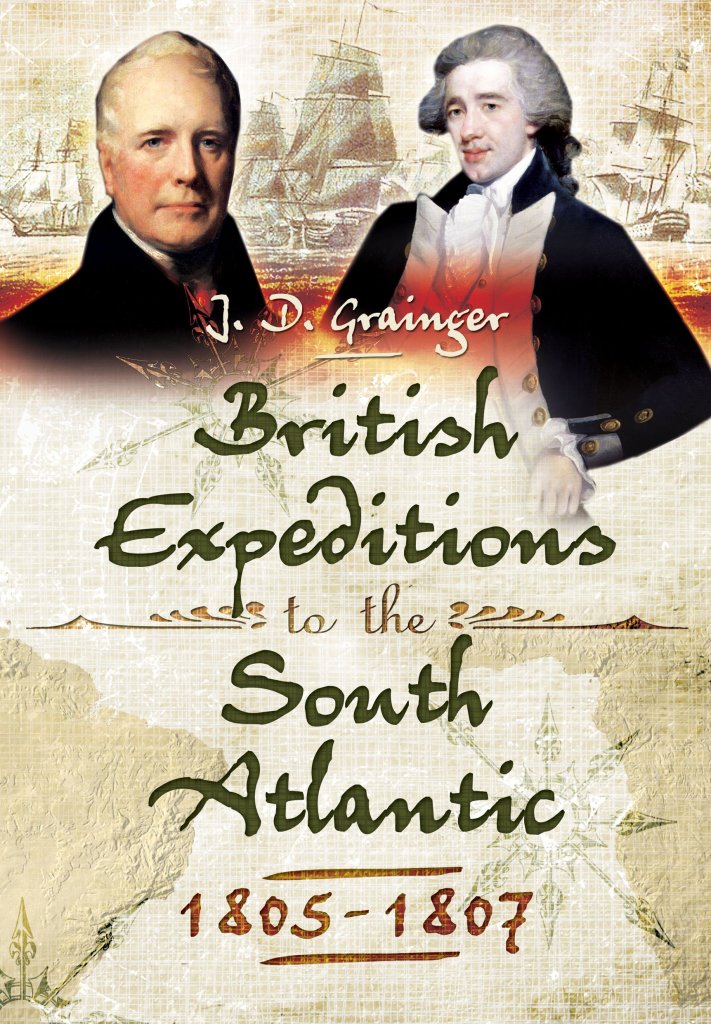 In 1805 an army of around 6,000 men was dispatched for the Cape commanded by General David Baird. They were escorted and assisted by a naval squadron under Commodore Home Riggs Popham. The Cape surrendered in January 1806. Popham then persuaded Baird to lend him troops for an attack on Buenos Aires. The city was taken in July but the paltry British force (around 2,400 men) was then besieged and forced to surrender in August. Popham was later court martialled for exceeding his orders.
In Feb 1807 Montevideo was taken by a new (officially sanctioned) British force of 6,000 men. Whitelocke, the British Commander then attempted to retake Buenos Aires but was defeated by unexpectedly fierce resistance stiffened by armed creoles and slaves. After heavy losses he signed an armistice, surrendering Montevideo and withdrawing all his forces. He too was court-martialled.
One of the themes of Grainger’s book is the strong Scottish connection – Baird was a Scot, and the 71st Highlanders made up the main force in the Cape and Popham’s adventure. Another is the unlooked-for consequences of these actions. The arrival of Scottish Calvinist ministers in the Cape influenced the eventual development of apartheid, while successful resistance to the British, with little help from Spain, shaped and accelerated the independence movement in South America.
It’s pleasing to see historians undertaking treatments such as this on some of the less well known British campaigns during the Napoleonic wars.
John D Grainger British Campaigns in the South Atlantic 1805-1807
Published by Pen & Sword. ISBN 1783463643
Copyright notices
Every effort is made to honour copyright but if we have inadvertently published an image with missing or incorrect attribution, on being informed of this, we undertake to delete the image or add a correct credit notice
A Cat Called Kydd
Posted on April 28, 2015 2 Comments

Kydd
I recently heard from Teresa Reis, one of my readers, that she had named her cat in honour of my books. The feline in question looks a real character and as a life-long cat lover I was rather chuffed. Teresa is a professional photographer who lives in Portugal. Her handsome cat answers to ‘Kydd’ – just one small thing to mention; since being awarded this august name, he has been discovered to be a she. Teresa says, however, that she’s sticking to Kydd! But this is not the only tribute my readers have paid to my work in a number of wonderful and unusual ways…

Kydd

I was gob-smacked when reader John Thompson told me he wanted to build a model of Teazer, Kydd’s first command – and present it to me! The superb model even gained the royal seal of approval, here being viewed by HRH The Princess Royal
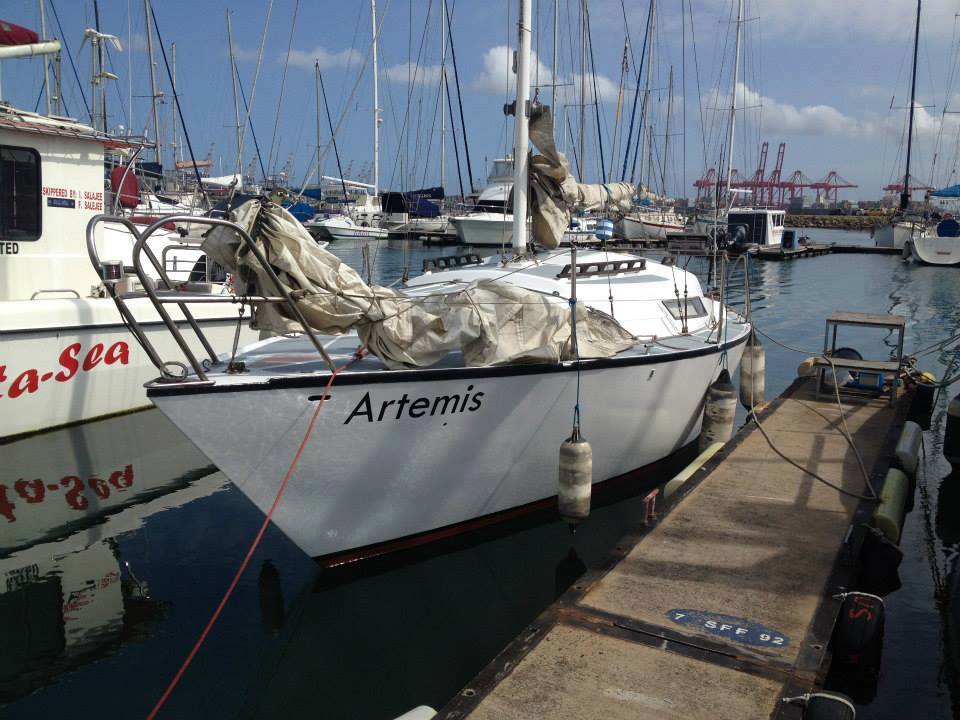
Marius Moolman christened his beautiful yacht Artemis after the second book in the Kydd series. Perhaps his vessel does not roam the seas after prey and prizes, but she has lovely lines, just like her namesake!

Imagine my surprise when I was contacted by a salty mariner claiming to be a petty officer from HMS Teazer! No, it wasn’t the Teazer that Kydd knew and loved but a Royal Navy destroyer of yore that CPO Vince Hart served in. Sadly, she is no more but Vince presented me with his treasured Teazer cap tally
 |
 |
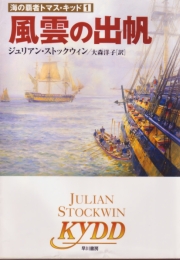 |
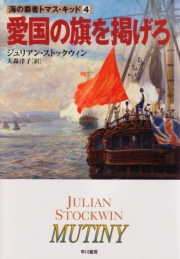
And, perhaps most touching of all – I learned that a reader in Japan left instructions in his will that he be buried with his treasured copies of Kydd books
Copyright notices
Kydd: Teresa Reis Photography; Artemis: Marius Moolman
Every effort is made to honour copyright but if we have inadvertently published an image with missing or incorrect attribution, on being informed of this, we undertake to delete the image or add a correct credit notice
Ten Cool Facts: Topkapi Palace
Posted on April 20, 2015 3 Comments

The Topkapi Palace
Another in a series of blogs spotlighting some of the marvels I’ve come across as I’ve travelled the world researching my books. The Topkapi Palace in Istanbul, Turkey, is situated on Seraglio Point, a promontory overlooking the Golden Horn and the Sea of Marmara. It’s a truly memorable complex with the haunting mystery of sultans and harems still about it, and I made it the centre for Renzi’s exotic adventure in Pasha. Istanbul is a magical city with many splendid sights but one of my most vivid memories of my visit there is standing on a wing of the sultan’s private quarters in the Topkapi looking out at the vista. To the left is Europe, to the right Asia. Directly in front is the Bosporus leading to Russia. Turn around and there’s the Sea of Marmara leading to Mediterranean and western world. And at your feet the Golden Horn..

The Topkapi Palace
-
1. The Topkapi Palace was the primary residence of the Ottoman sultans for approximately 400 years of their 624-year reign.
2. Topkapi is the largest and oldest palace in the world to survive to modern times.
3. The palace was the heart, brain and centre of the Ottoman Empire. As well as the residence of the sultan, it was the centre of administrative affairs and the highest educational institution of the empire.

Sultan Selim III (who features in Pasha) holding an audience in the Second Courtyard
5. The palace is located directly behind Hagia Sophia, and was built on the same spot where the acropolis of the ancient Greek city of Byzantium stood.
6. The Imperial Mint, located in the Topkapi Palace, produced Ottoman coins and later, coins of the Turkish Republic, right up until 1967.
7. As many as 300 concubines lived in the Harem of the palace.
8. In the early days white eunuchs were guardians of the harem, but black eunuchs sent as gifts by the Ottoman governor of Egypt later took control. As many as 200 eunuchs lived in the harem.
9. The 1000-strong palace kitchen staff prepared 6,000 meals a day.
10. When the sultans moved to the Dolmabahce Palace in 1853 Topkapi lost its importance as the official royal residence. It was transformed into a museum in 1924 upon the order of Ataturk
The Museum is open between 0900 and 1700 every day except Tuesday. It is also closed on some religious festivals.
 The paperback of Pasha is published on May 7 by Hodder & Stoughton. ISBN: 978-1444785418.
For a chance to win one of five paperbacks of Pasha email julian@julianstockwin.com with “Pasha paperback” in the subject line. Please include your full postal address. Deadline: April 30.
Copyright notices
Topkapi Palace: © José Luiz Bernardes Ribeiro /, via Wikimedia Commons
Audience with Selim III: By Konstantin_Kapidagli_001.jpg: Konstantin Kapıdağlı derivative work: Isl@m (Konstantin_Kapidagli_001.jpg) [Public domain or Public domain], via Wikimedia Commons
Every effort is made to honour copyright but if we have inadvertently published an image with missing or incorrect attribution, on being informed of this, we undertake to delete the image or add a correct credit notice
Juggling all the balls…
Posted on April 15, 2015 5 Comments
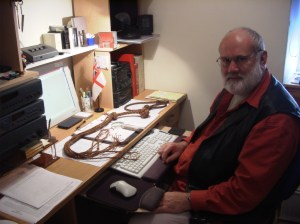
At my desk
More and more these days an author must be involved in promotion and marketing of his or her books. As well as participating in the social media scene maintaining an up-to-date website is essential. This year has been a busy year for me in terms of reviews, interviews and guest blogs. I always enjoy meeting readers and chatting about my books but it’s often a bit of a balancing act between promotional activities and research/writing. Fortunately, I have a literary partner, Kathy, who keeps an eagle eye on my work in progress and the daily word count…
Here’s three recent online pieces you may have missed:
The Buchanan Interview
Guest blog for Writing Historical Novels
The Story Behind the Kydd Series
As well, I’ve been the subject of a number of features in the online magazine Quarterdeck. Check out back issues here
You can keep up to date with all the latest reviews and interviews via the News page of my website.
Copyright notices
Every effort is made to honour copyright but if we have inadvertently published an image with missing or incorrect attribution, on being informed of this, we undertake to delete the image or add a correct credit notice
 Julian Stockwin