
The Year Ahead!
Posted on February 4, 2015 8 Comments

Slaving away for you all…
2015 looks set fair to be another busy year for Team Stockwin. On January 1, I delivered the manuscript of the next Kydd book, Tyger, to my publisher. It will come out in October and I was delighted to hear back from my editor Oliver Johnson:
Another wonderful book. I especially liked the poetic descriptions of the Arctic Seas and the frigate action at the end was engrossing, visceral and brilliant. Bravo!
But there’s no time for resting on one’s laurels, I’m now hard at work on next year’s book.
The publishing calendar for 2015 is shaping up as follows:—
March 1
Pasha Audiobook released in CD format.
The digital download is already available via Audible.co.uk and Audible.com
May 7
Publication of the paperback of Pasha, UK
June 18
The Silk Tree
Publication of the paperback
Publication of the audiobook
Publication of the large print edition
(the next title in this series of books focusing on a pivotal point in history will be out in 2016)
October 1
Publication of the US paperback of Pasha
October 8
Publication of Tyger, the next title in the Kydd Series, in hardback and ebook in the UK. Tyger will also be available as a digital download and in CD format.
December 1
Publication of the hardbook and ebook of Tyger in the US
Copyright notices
image: Jean Le Tavernier [Public domain], via Wikimedia Commons)
Every effort is made to honour copyright but if we have inadvertently published an image with missing or incorrect attribution, on being informed of this, we undertake to delete the image or add a correct credit notice
Poetry of the Sea: Part 1
Posted on January 30, 2015 20 Comments
They that go down to the sea in ships, and occupy their business in great waters. These men see the works of the Lord; and his wonders in the deep…
— Psalm 107
Some of the English language’s finest poetry has been written about the sea. Here’s five of my favourites, some are excerpts due to length.
— ♥ —
Childe Harold’s Pilgrimage by Lord Byron
- Dark-heaving, boundless, endless, and sublime.
The image of Eternity…
Full Fathom Five by William Shakespeare (Tempest)
- Full fathom five they father lies;
Of his bones are coral made;
Those are pearls that were his eyes;
Nothing of him that doth fade,
But doth suffer a sea change
Into something rich and strange.
Sea nymphs hourly ring his knell;
Ding dong.
Hark! Now I hear them –
Ding dong, bell!
Crossing the Bar by Lord Tennyson

Alfred Lord Tennyson
- Sunset and evening star,
And one clear call for me!
And may there be no moaning of the bar,
When I put to sea
But such a tides as moving seems asleep,
Too full of sound and foam,
When that which drew from out the boundless deep
Turns again home
Twilight and evening bell
And after that the dark!
And may there be no sadness of farewell
When I embark
For tho’ from out our bourne of Time and Place
The flood may bear me far
I hope to see my Pilot face to face
When I have crost the bar
Sea Fever by John Masefield
- I must down to the seas again,
to the lonely sea and the sky
and all I ask is a tall ship,
and a star to steer her by;
And the wheel’s kick and the wind’s song
and the white sails shaking,
And the grey mist in the sea’s face,
and a grey dawn breaking.
I must go down to the seas again,
for the call of the running tide
Is a wild call and a clear call
that may not be denied;
And all I ask is a windy day
with the white clouds flying,
And the flung spray and the blown spume,
and the seagulls crying.
I must go down to the seas again,
to the vagrant gypsy life,
To the gull’s way and the whale’s way
where the wind’s like a whetted knife
And all I ask is a merry yarn
From a laughing fellow rover,
and quiet sleep and a sweet dream
when ere the long trip’s over
Rime of the Ancient Mariner by Samuel Taylor Coleridge

Samuel Taylor Coleridge
- The fair breeze blew, the white foam flew,
The furrow followed free;
We were the first that ever burst
Into that silent sea.
Down dropt the breeze, the sails dropt down,
’Twas sad as sad could be;
And we did speak only to break
The silence of the sea !
All in a hot and copper sky,
The bloody Sun, at noon,
Right up above the mast did stand,
No bigger than the Moon.
Day after day, day after day,
We stuck, nor breath nor motion ;
As idle as a painted ship
Upon a painted ocean.
Water, water, every where,
And all the boards did shrink ;
Water, water, every where,
Nor any drop to drink.
— ♥ —
Do you have a favourite sea poem? I’d love to hear from you.
Copyright notices
Coleridge image: By Artist unidentified (Google Books) [Public domain], via Wikimedia Commons
Tennyson image: Julia Margaret Cameron [Public domain], via Wikimedia Commons
Every effort is made to honour copyright but if we have inadvertently published an image with missing or incorrect attribution, on being informed of this, we undertake to delete the image or add a correct credit notice
Contest: Win Kydd Series Audiobooks Sets!
Posted on January 22, 2015 2 Comments

Audiobooks are on the up! According to Michele Cobb, President of the Audio Publishers Association, who spoke on a panel at Digital Book World 2015 in New York City recently, the past few years have seen an exponential growth both in audiobook sales and in the volume of titles released into the market.
 On a personal note, Kathy and I are greatly enjoying re-listening to our audiobooks of the Kydd series. We’re working our way through and treat ourselves to but 30 minutes each day of actor Christian Rodska’s superb renditions (or the new book won’t get written…)
There are seven sets up for grabs in this contest. All the Kydd books are standalones in their own right, but each audiobook set prize will comprise two consecutive titles. Click on the link of any individual book below to hear a sample!
And as an extra bonus there’s 20% off all Kydd titles at Whole Story Aubiobooks for the next two weeks. Click on the special Kydd Series Banner and just add the discount code ‘KYDD’ at the checkout.
The contest
 To enter, email Julian saying, in no more than 25 words, why you would like to win a set. Please include your postal address. The seven entries judged the most apt and original will win a set of two audiobooks, chosen at random from the list above.
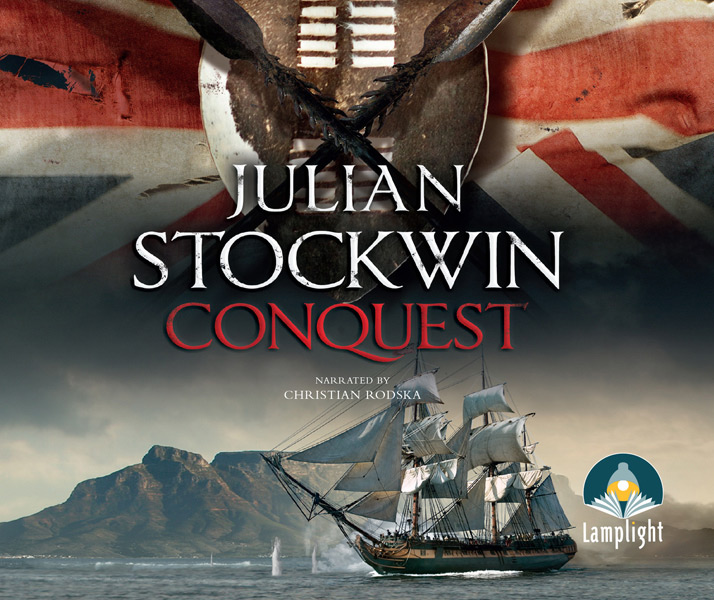
Deadline: February Feb 5
The Kydd series audiobooks are also available as audio downloads via Amazon UK and Amazon US
More Stockwin Audiobooks coming soon!
The unabridged CD set of Pasha will be available in UK on March 1.
The unabridged CD set of The Silk Tree will be available in the UK/Commonwealth excluding Canada in June.
Building an Age of Fighting Sail Reference Library, Part 1
Posted on January 15, 2015 4 Comments
It’s a question I’m quite often asked – what books do I suggest would be useful to acquire in order to learn more about the period I write about. It was hard to make a selection from the vast range of wonderful titles that have been published over the years, so I’ve decided it warrants several blog posts – here’s the first clutch I plucked from my shelves that I think readers wanting to delve deeper into the fascinating Age of Fighting Sail might find useful. I regret that as some are now out of print they can be pricey.
— ♥ —
Nelson’s Navy; The Ships, Men and Organisation, 1793-1815 by Brian Lavery
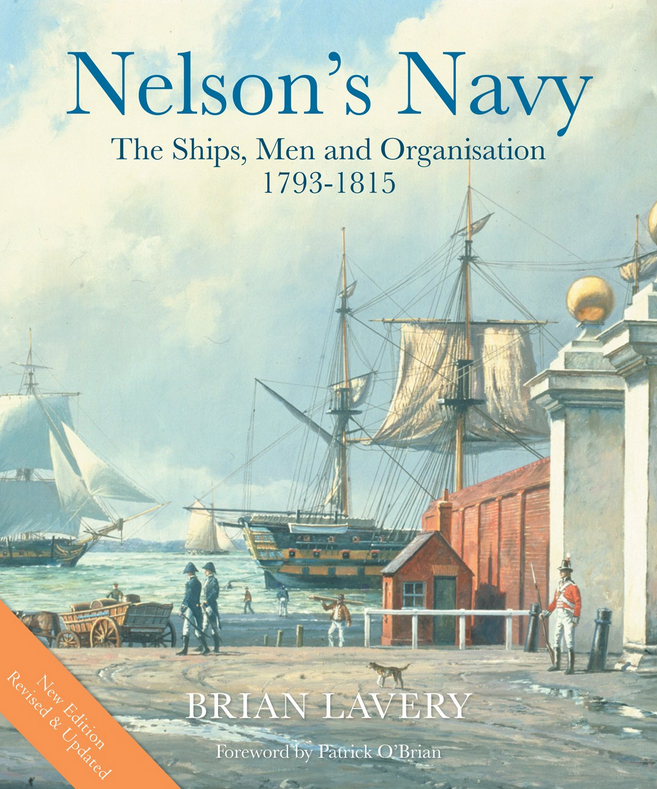 This work, written over ten years ago (and reprinted many times), deservedly remains a classic. Beginning with a background on the wars with France and naval administration, Lavery covers the design and construction of ships, training and organisation of officers and men and life at sea. It is in the latter that Lavery excels in his description of a world far removed from the hardships and cruelty that is often attributed to life on the lower deck.
Seamanship in the Age of Sail by John Harland
 This book partners well with Lavery’s Nelson’s Navy for any serious student of the period. Seamanship in the Age of Sail came out in 1984, and is a classic of its type. Every aspect of handling a man-of-war is detailed and illustrated with superb line drawings by Mark Myers and the book is designed by Geoff Hunt. A definitive guide as to how the ships of Kydd’s day were actually sailed.
Falconer’s Marine Dictionary by William Falconer
 One of the enduring classics that have come down to us from Nelson’s time, wonderfully recreated from the original in its full detail. It contains marine technology, data on technical aspects of shipbuilding, fitting and armaments, and the Navy’s administrative and operational practices.
Empire of the Seas by Brian Lavery
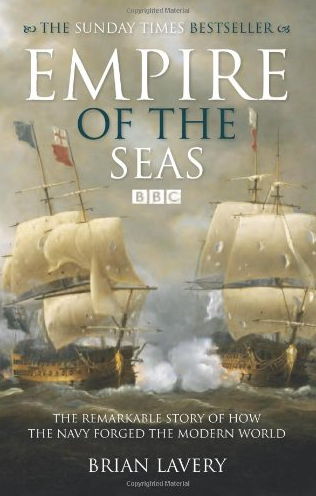 This book, produced to accompany a BBC television series, tells the story of how the Royal Navy expanded from a tiny force to become the most complex industrial enterprise on earth. It explores themes such as the Navy’s relationship with the State and the British people and the tactics and initiatives that created such decisive sea victories.
Jack Tar: Life in Nelson’s Navy by Roy and Lesley Adkins
 A fascinating age of sail compilation from husband-and-wife writing team Roy and Lesley Adkins. With their backgrounds in archaeology they dug deep into the historical archives to find personal letters, diaries and other manuscripts of the times that shed light on their chosen subject matter: the ordinary sailors who manned the ships of the Georgian navy. We see Jack Tar at work and play – through his own words.
The Seafaring Dictionary by David Blackmore
 This book is an alphabetical compendium of more than 9000 nautical terms, some quite short, some more lengthy, covering the earliest days of seafaring right up to the twenty-first century. A useful appendix includes tables that cover such items as wind and wave measurement, date and time notation, phonetic alphabets, maritime signals, navigation rules and the process of boxing the compass. There are a number of nautical dictionaries available; this one gets my thumbs-up for its overall treatment.
Ten Cool Facts: Hagia Sophia
Posted on January 11, 2015 1 Comment
The first of a series of blogs spotlighting some of the marvels I’ve come across as I’ve travelled the world researching my books. There’ll be a contest with each blog so watch out for a chance to win book prizes!

The Hagia Sophia
The glorious Hagia Sophia in Istanbul (formerly Constantinople) is regarded by many as the eighth wonder of the world. No-one visiting this icon of antiquity will fail to be overwhelmed with its atmosphere of ageless beauty and astonishing dimensions.
1.
- Hagia Sophia dominated the Constantinople skyline for near a thousand and a half years and could be seen from many miles out to sea, a breath-taking vision in marble. It remains a major landmark to this day.
2. Originally dedicated to the Wisdom of God (the Logos, the second person of the Holy Trinity), Hagia Sophia translates from the Greek as ‘sacred wisdom’. In Latin it was known as the Church of Sancta Sapientia.
3. The current basilica is the third holy structure to stand on the site. The first and second ones burned to the ground.
4. Hagia Sophia was completed in 537 AD; at that time Constantinople was the world’s largest city.

Interior of Hagia Sophia
5.
- Its creators were two of the most respected minds of their day: Anthemius of Tralles, an engineer and a mathematician and Isidorus of Miletus, an architect.
6. The dome, curving 110 feet from east to west, soars 180 feet above the marble floor. The sixth century historian Procopius marvelled that ‘it does not appear to rest upon a solid foundation, but to cover the place beneath as though it were suspended from heaven by the fabled golden chain.’
7. Commissioned by the great Emperor Justinian I, Hagia Sophia was built in just six years. One hundred master builders supervised 10,000 workers in its construction.
8. Justinian wished to build an edifice to rival the legendary Solomon’s Temple. When he finally entered the finished building he uttered the words, ‘Solomon, I’ve surpassed you!’
9. For hundreds of years Hagia Sophia was the largest shrine in the world; today its dome is the fourth largest in the world after St Paul’s in London, St Peter’s in Rome and Florence’s Duomo.
10. In the twenty-first century Hagia Sophia entwines the beliefs of medieval Christianity, the Ottoman Empire, Islam and modern secular Turkey.
Hagia Sophia is now the Ayasofya Museum, open every day except Mondays.
My historical epic The Silk Tree is set in the time of Justinian. For a chance to win a signed copy, email julian@julianstockwin.com with the name of Justinian’s wife.

First two correct entries drawn on Feb 1 win!

Copyright notices
Hagia Sophia external image: By Arild Vågen (Own work) [CC BY-SA 3.0 (http://creativecommons.org/licenses/by-sa/3.0)%5D, via Wikimedia Commons; Hagia Sophia internal image: By Ronan Reinart (Own work) [CC BY-SA 3.0 (http://creativecommons.org/licenses/by-sa/3.0)%5D, via Wikimedia Commons
Every effort is made to honour copyright but if we have inadvertently published an image with missing or incorrect attribution, on being informed of this, we undertake to delete the image or add a correct credit notice
BookPick: The British Navy in the Baltic
Posted on December 28, 2014 2 Comments
 The Baltic is not usually popularly associated with activities by the Royal Navy – yet it was arguably the most vital sea highway to Britain in the last few centuries. This book covers the activities of the British navy in the Baltic Sea from the earliest times until the twentieth century. It traces developments from Anglo-Saxon times, through the medieval period, when there were frequent disputes between English kings and the powerful Hanseatic League, through the seventeenth-century wars with the Dutch, and Britain’s involvement in the Northern Wars in the early years of the eighteenth century.
Of particular interest to me was the major period of British involvement in the Baltic during the Napoleonic Wars, when the British navy fought the Danes, Napoleon’s allies, and was highly effective in ensuring Sweden’s neutrality and Russia’s change of allegiance. I have long held Sir James Saumarez in high regard (I believe he was unfairly overshadowed by others during the period) and both his 1808 expedition and later involvement up to 1815 are appropriately covered.
As well as discussing specific British naval actions in the Baltic the author looks at the impact of patterns of trade, wider international politics, and geographical factors such as winter sea ice and the shallow nature of the Baltic Sea, revealing a continuing fascinating and complex strategic interplay between political and commercial imperatives.
John D. Grainger is the author of numerous books, including Dictionary of British Naval Battles and The First Pacific War: Britain and Russia, 1854-56.
The Boydell Press is to be congratulated on another fine publication, as is the Swedish Society for Maritime History and the Sune Ortendahl Foundation for their support in bringing this book to fruition.
John D. Grainger The British Navy in the Baltic
Published by Boydell Press. ISBN 978 1 84383 947 7
2014: the year in review
Posted on December 23, 2014 12 Comments
Another year draws to its close – and what a year it’s been for Kathy and me!
 As well as Pasha, the latest in the Kydd series, I brought out a historical standalone, The Silk Tree, which was launched at a splendid party in London in October.
Signing events took me far and wide across the Southwest and to London and I was particularly chuffed to take part in the Books Are My Bag Day a few months back.
Location research trips necessitated travel to Denmark and the Iberian peninsula, the former in the depth of winter, the latter at the height of summer! In Denmark it was an added bonus to be able to catch up with some of my colleagues from my days in the Navy.
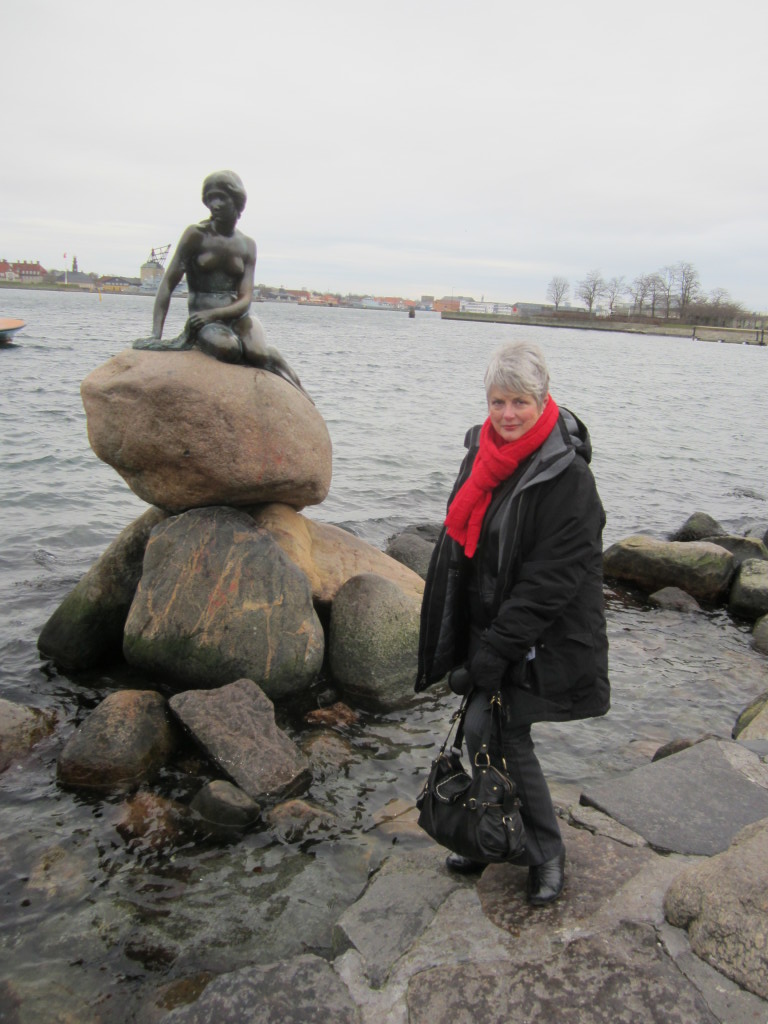 Among them was Orlogskaptajn Tonny Larsen, who sadly passed away this month. He shall be sorely missed by family and friends, and trained in square sail and on the other side in the Iceland Cod War, was the man who taught me why Danes and their nation are deservedly great.
One of the pleasures for me of being a writer is meeting readers of my books at various events and through online activities. I’ve also enjoyed learning more about Kydd fans around the world via my website Readers of the Month, a feature we hope to continue in the future. Glancing through this year’s lineup makes me realise how privileged I am to have such a wonderful spectrum of readers:
Lin-Marie Milner Brown
Kate Ross
Graham Cooke
Tom Rogers
Joe Ongie
John Askew
Sybil Galbraith
Rod Redden
Marcus Brandenborg Bjorn
Martha Berry
 It was fun taking part in the Christmas Party Blog Hop with 25 fellow authors. Their varied contributions make fine festive reading and a number are offering prizes so do take a read of their offerings.
On January 1, I send off the manuscript of my next book to my publisher. The title is under wraps at the moment but I think I can promise you a few surprises… As usual, I will be offering a Collectors Set, strictly limited to 500 sets – and further details will be on the website early in the New Year.
It just remains to wish you all a happy and peaceful Christmas and New Year.
BookPick: A Christmas Double Helping
Posted on December 9, 2014 1 Comment
Kathy always tells me men are hard to busy presents for – so here are two suggestions for Christmas gifts for males with an interest in the maritime world: Early Ships and Seafaring and The Royal Navy and the War at Sea 1914-1919. The former covers the earliest days of water transport up to the fifteenth century; the latter, the First World War.
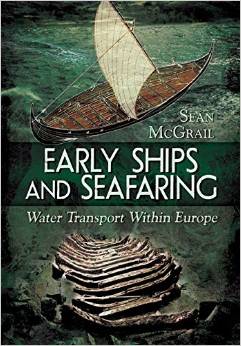 The study of water transport is a relatively new branch of archaeology and Sean McGrail, formerly chief archaeologist at the National Maritime Museum in Greenwich, is well qualified to expound on what is now known of early European boat-building and use in the Mediterranean and Atlantic Europe. Having visited the Viking museum at Roskilde earlier this year, I was particularly interested in the sections in this book on the Nordic boats with their advanced keel and clencher build, which is not so very far from the actual techniques I used in my graduation test job on a whaler in the course of becoming a naval shipwright. This interesting 2014 volume is bang up to date with recent exciting discoveries of post-glacial European craft, by implication pushing back early voyaging thousands of years, and which must necessarily now inform current studies of cultural diffusion across the continent. The book opens with a substantial section on concepts and techniques that describe the advantages and drawbacks of differing builds which provides accessibility to those with little or no knowledge of the subject. There is a useful glossary and suggestions for further reading. Highly recommended for those with a curiosity and passion for maritime origins.
 Skip quite a few centuries on for the next book, which highlights just how much naval activity there was across the globe during the First World War. This book reproduces the despatches of the admirals and captains who led the Royal Navy’s operations during the War as they grappled with the unforeseen consequences of the dizzying revolution in technologies. They present a unique and atmospheric record of how commanding officers saw things at a time when there were no rules or traditions in deploying their new and awesome weapons. It’s worth highlighting that the fighting did not end for the Navy in 1918. Britain supported the White Russians in the Russian Civil War and the Navy was heavily involved in the Baltic and the White Sea until almost the end of 1919. The book contains a fascinating collection of black and white action photographs from the time that for this reviewer are seen for the first time.
Sean McGrail Early Ships and Seafaring
Published by Pen & Sword. ISBN 978 1 78159 392 9
John Grehan & Martin Mace The Royal Navy and the War at Sea 1914-1919
Published by Pen & Sword. ISBN 978 78159 317 2
Bonjour, Brittany!
Posted on December 6, 2014 5 Comments
Kathy and I have just returned from a location research trip to France. Whenever possible I like to travel by sea and we sailed from Plymouth to St Malo in the good ship Bretagne, the Brittany Ferries flagship. Sadly, the sea was pretty calm throughout the crossing and I didn’t get a repeat of the Force 9 Gale on our last trip but Kathy has her views…
Gratifyingly I came upon one of my French translated editions in a bookstore there in St Malo and had a great chat in broken French with the owner which led to an invitation to address an international maritime convention later in the year.

The Cape Horners museum
As usual, much of our work was done in local museums, academic institutions and actual location reconnaissance.
Of particular interest was The Cape Horner’s International Museum in St Malo, dedicated to the intrepid Cape Horners of the 17th and 19th centuries. The tower in which the museum is housed was built in the 14th century. The ground floor of the museum tells the story of their long-haul sea voyages, starting with the Dutch discovery of Cape Horn in 1616. The second floor is dedicated to the actual ships, their sailing conditions, the kinds of cargo they carried. The museum also houses some fascinating model ships, engravings, navigational instruments, logbooks, and the trinkets created by sailors to wile away the time during long weeks at sea.

Lovingly crafted by some sailor long ago
One such trinket was an opaque glass rolling pin decorated with salty images including the Star of Tasmania. She was an Aberdeen clipper, of 632 tons, belonging to the White Star Company. The vessel was shipwrecked in1868, in New Zealand. Most of those on board survived but one wonders whether the sailor who crafted this artefact was among them – or did he perish in the sea?

Kathy on the ramparts, St Malo
After taking in the exhibits, climbing up on to the roof of the tower is well worth the effort as you are rewarded by a magnificent panorama of the town, one of the most picturesque in the region.
One aspect that I spent some time investigating was the iron-bound coast of Brittany and the incredible dangers to shipping that this posed in Kydd’s today. The Admiralty Pilot tells of subsea granite reefs without number, tides of more than thirty feet that produce fast and treacherous cross-currents at different states of the tide: from our apartment window in the ramparts at high water there are three offshore islands visible. At low water springs there are eighteen!

On board Bretagne, look what I found in the bookstore!
The Malouin matelot must have been a right oragious seaman. And of course he was: the explorer of Canada, Jacques Cartier, the ocean corsair Surcouf and the privateer turned royalist Admiral of the Fleet Duguay-Trouin are all St Malo natives.
All too soon it was time to return to the UK and collect our two much-loved Siamese from the cattery then download the many, many digital photographs I took and write up my research notes.
Copyright notices
Every effort is made to honour copyright but if we have inadvertently published an image with missing or incorrect attribution, on being informed of this, we undertake to delete the image or add a correct credit notice
BookPick: The Animal Victoria Cross
Posted on November 23, 2014 6 Comments
 Nearly seventy animals to date have won the Dickin Medal, the highest award for animal bravery. Many of their inspiring stories are told in a delightful book, The Animal Victoria Cross.
The Animal Victoria Cross, as it came to be called, was the brain-child of animal lover Maria Dickin. Its official name is the Dickin Medal and it is awarded to animals who display outstanding loyalty, bravery and courage.
Dogs, horses, pigeons and one cat, Simon, have been honoured.
The story of Simon has special resonance to me as I am both a cat adorer and ex-Navy. Simon was the ship’s cat aboard HMS Amethyst which was bombarded by shore batteries as she sailed up the Yangtze river in 1949. Simon, although wounded, heroically protected the ship’s meagre supplies by catching rats and boosted the morale of the crew during the months the ship and crew remained trapped by the communists. Finally, they made a successful daring escape bid but sadly when they returned to England Simon died in quarantine. He was only four years old and is buried in the People’s Dispensary for Sick Animals (PDSA) cemetery in Ilford. A Union Jack was draped over his little coffin as the gallant little animal was laid to rest.
The majority of Dickin Medal awards have been related to war service and the conflicts include the Second World War, Korea, Iraq, Yugoslavia and Afghanistan. The Al-Qaeda attack on the Twin Towers as well as the Blitz saw great courage exhibited by animals such as Rip, the dog who saved many lives. In addition to British animals, there are American, Canadian, Australian and Egyptian winners of this unique award.
This book will be treasured by animal lovers everywhere. It’s ideal to dip into, perhaps with a familiar furry friend at your feet…
 Julian Stockwin