
Mega Contest!
Posted on November 10, 2015 5 Comments
Thought we’d have a little bit of fun with this one! For a chance to win a copy of Tyger, The Silk Tree & Stockwin’s Maritime Miscellany (plus a mystery prize) email me with a response to this question (in not more than 100 words)
Imagine you’re in a room with a visitor from an alien world. He asks you what you like to read and you decide to tell him about Julian Stockwin — what do you say?
- Please include your postal address. Contest open worldwide. Deadline: November 30. Winner will be the entry judged the most apt and original.
Tyger
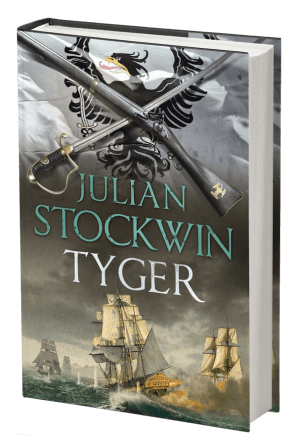
- ‘Having joined the British Royal Navy when only fifteen, Julian Stockwin’s adept nautical know-how shows in his novels. We are treated to travel alongside the sailors and experience life on a fighting-sail vessel. The combat scenes, with their elements of surprise, heroism, and horror, have an authenticity about them. These, combined with the political intrigue, particularly in the Baltic Sea countries, and the descriptions of societal norms of that period make this a truly interesting historical novel. It is the sixteenth instalment in the Kydd series… and this reviewer believes that this is one of the best Kydd books thus far. Highly recommended.’
Historical Novel Society
The Silk Tree

- ‘Much of the story in The Silk Tree turns on circumstance and chance as well as the wild good luck that is seldom seen outside of far fetched adventure stories. It is a testament to the quality of the writing that the reader’s credulity or patience is never taxed and Nicander and Marius do end up in Seres but not in the manner that they had planned. Now all they have to do is uncover the secret and bring it home…
If you like books that are full of the names and legends of far away places, histories of cultures that are rarely mentioned today and impossible tales of derring-do than this is certainly the novel for you. The travels and travails that Nicander and Marius go through are tough and unrelenting but they never give up and never give in. Their journeys are legendary but their trials are rewarded in the end. What is really rewarding is that the characters are fully fleshed out and there is a lot of humour in the book. The Silk Tree is an enjoyable, adventurous romp and time spent in the company of Nicander and Marius is no trial at all.’
Waterford Today
Stockwin’s Maritime Miscellany: A Ditty Bag of Wonders From the Golden Age of Sail
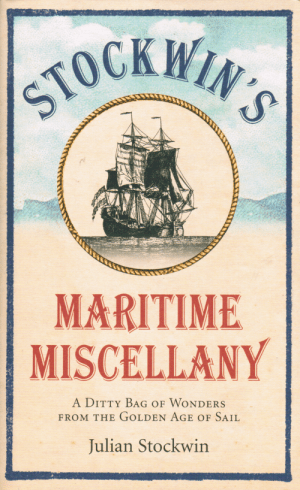
- ‘This book is a delight and a labour of love. The author has been involved with the sea all of his life, serving in the Royal Navy and the Royal Australian Navy. Through his working life and his more recent career as a writer, he has collected a huge amount of information. From this fund of knowledge, he has selected a collection of facts and anecdotes, details of events and museums, insights into the life of seaman during the golden period of sail. The diversity of information and the fascinating explanations of the background to commonly used words and phrases, such as high and dry and first rate, will appeal to a very wide readership.’
Firetrench Reviews
BookPick: Two Historic Ships
Posted on November 3, 2015 5 Comments
The history of Great Britain is inextricably linked to the sea and sea power. Invaders – Romans, Danes, Vikings and others – came by sea as did trade from the Mediterranean and beyond. Dominance of the sea between the seventeenth to early twentieth centuries led to the building of a great imperial empire. While some of our seafaring instinct and tradition may have ebbed, we are still an island nation with a rich appreciation of all things maritime. The two titles in this BookPick celebrate HMS Trincomalee, the oldest British warship afloat – and HMS Pickle, the second smallest British ship in Nelson’s fleet at the battle of Trafalgar.
HMS Trincomalee
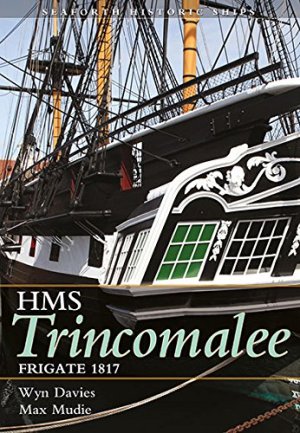 This book is part of the excellent Seaforth Historic Ships Guides series. Trincomalee belongs to a class of 38-gun Fifth Rates, the Royal Navy’s foremost frigate type in the Napoleonic Wars. She is now beautifully restored at Hartlepool, the last of the Nelson era frigates.
She’s had a long life. Built in Bombay of teak, in 1817, the Napoleonic wars were over however by the time she arrived in England in 1819. She was placed ‘in ordinary’ – demasted, in reserve. Her active service as a Royal Navy fighting frigate began with her first commissison from 1847-1850 under Captain Richard Laird Warren on the North American and West Indies Station. Her second commission from 1852-1857 under the command of Captain Wallace Houston was on the Pacific station. On her return to Britain she spent a number of years as a Royal Naval Reserve drill ship. In 1987 an extensive restoration was begun to restore her to her 1852 configuration. The result is considered one of the finest composite restorations in the world.
One of the aspects of this book that particularly appeals is the stunning photography by Max Mudie, and he deservedly gets equal billing on the cover with the author. Mudie’s love of tall ships is evident in the beauty and majesty of his images. The book also contains well-chosen historic images and reference diagrams of deck layout – a splendid production all round.
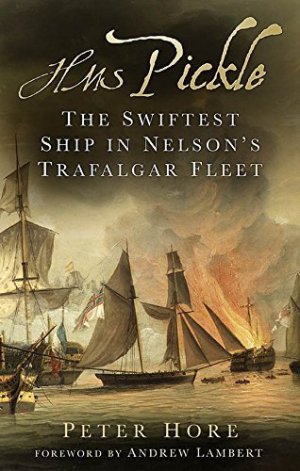
HMS Pickle
 A few years back I was honoured to be guest speaker at a Pickle Night dinner at HMS Collingwood, the Royal Navy’s largest training establishment. (Pickle Night is the Warrant Officers and Chief Petty Officers equivalent of Trafalgar Night.) The evening was a splendid affair. A mock ship had been recreated in the Warrant Officers and Senior Rates Mess and Kathy and I were piped aboard, over a gangway! The fare would have done Kydd proud – Bosun’s Deepwater Trawl, Gunpowder Gruel and Cannonball Dumplings, Below Deck Duff & Rum Ration Sauce, Pusser’s Store Mousetrap & Hardtack and Yankee Wet Stuff & Mouth Shutters. During the evening dispatches about HMS Pickle’s famous voyage were read out and much good cheer abounded. A right roaratorious night!
Although only a tiny vessel, a topsail schooner, Pickle has earned enduring fame as the ship that carried Lord Collingwood’s dispatch announcing the death of Nelson and the victory at Trafalgar.
Pickle set off on October 26th 1805 and took 9 days to reach Britain after facing a gale off Cape Finisterre. She anchored in Falmouth Bay on November 4th and her captain John Lapenotiere started his journey to London, a trip that usually took a week was covered in 37 hours with 19 horse changes.
Peter Hore’s fascinating and well researched tome describes the ship’s beginnings as a civilian vessel called Sting, through conversion with 10 guns and her role with Admiral Cornwall’s Inshore Squadron for French reconnaissance in 1803. Pickle was also involved in the rescue of the crew of HMS Magnificent in 1804 and further reconnaissance missions. The book details other colourful episodes including a single-ship action against the French privateer Favorite in 1807. Pickle was wrecked in July 1808 when she was grounded as she entered Cadiz harbour but without loss of life.
A colourful story of one small ship and the courage and resolution of her crew.
Wyn Davies & Max Mudie HMS Trincomalee
Published by Seaforth. ISBN 978 1 84832 221 9
Peter Hore HMS Pickle
Published by The History Press. ISBN 978 0 7509 6435 7
Behind the Lines at McBooks Press
Posted on October 27, 2015 7 Comments
As a former print journalist and magazine editor Kathy was delighted to take on the assignment of interviewing McBooks Press. She recently spoke with Publisher Alex Skutt and Art Director Panda Musgrove. But first a bit of bio on Alex and Panda.

Alex Skutt and Panda Musgrove
Now over to Kathy
I first asked Alex about McBooks’ publishing philosophy. Like many readers of naval fiction, Alex got hooked on Patrick O’Brian’s Aubrey/Maturin series. Next he read Alexander Kent’s Bolitho novels. But, it was probably Captain Frederick Marryat’s books that turned him into a publisher of historical nautical fiction. Despite having a little difficulty with some of Marryat’s archaic language, he realized that he had found a British sea-going Mark Twain.
Between Captain Marryat, Alexander Kent, and shortly thereafter Dudley Pope, Alex had discovered three outstanding sea novelists whose books were not in print in the United States. Though McBooks Press already existed—mostly publishing books about Upstate New York and healthy living—nautical fiction began to fill the catalogues.
The books sold well and McBooks Press began acquiring rights to other historical fiction writers – mostly British authors whose works were not available in the United States.
Says Alex (as I smile smugly):
- ‘Of course one of our best finds was Julian Stockwin – whose Kydd series is perhaps the finest historical fiction currently being written!’
I then suggested we talk about how McBooks’ publishing schedule differs from the UK publisher of the Kydd series.
Alex explained the process:
- ‘Since our goal is always to release the Kydd books on the same date in the US as in the UK, this can be a challenge. Our partners, Hodder in the UK and Independent Publishers Group in the US each have their own schedule and those schedules aren’t coordinated. Practically this means that we don’t know ahead of time what our portion of the production schedule will look like – or even which tasks we may need to do in order to get a book out. For example, we always attempt to use the handsome British cover art, but it is almost always difficult to secure it by the time our distributor needs it for early marketing materials and they don’t like us to send them a temporary cover that is just for that purpose. So, for several weeks each spring we annoy the heck out of Hodder asking repeatedly for art that they don’t yet have while simultaneously begging our distributor to p-l-e-a-s-e give us another week to procure it. During this time when we are unsure whether we will get cover art the wait can become a little stressful on this end. But, truth be told, Panda always loves getting the opportunity to make a Kydd cover—even if it means she has to do it at the last minute!’
- ‘The text files are another matter. Although these days we tend to make our ARC (the uncorrected book that goes to reviewers) from Hodder’s layout, we have in the past typeset a book twice—once for our ARC and then again after we receive a final file. If Hodder’s text files are not available by the date that we need them we have also sometimes needed to proofread the manuscript in Word before we typeset it. If we are lucky enough to get the final, final manuscript from Hodder by the time we need it then Panda Americanizes the punctuation while simultaneously typesetting the book. Once the book is in pages we always send a printed copy of the layout to one of our proofreaders.’
Asked why he feels the sea tale is still relevant and appealing to McBooks readers Alex responded:
- ‘The adventures of a frigate captain who leads several hundred men halfway around the world on a heroic mission where he must single-handedly decide how to deal with the innumerable surprises that he is sure to encounter is thrilling! The sea story will be relevant so long as we are interested in the problems of command, the mysteries of interpersonal relations, the beauty and power of the natural world, and the desire for excitement and adventure.’
Then I put him on the spot and asked him to pick a favourite Kydd title:
- ‘I think Julian’s writing has become even more remarkable and vivid as the series progresses. Each new book becomes my favorite. It has been great fun to see Kydd and Renzi grow, to watch them learn about life, take on new roles and to watch their friendship mature. Reading the more recent books, it’s important to remember that Kydd was originally just a pressed landsman. The later Kydd, who has developed into such a masterful naval leader had modest beginnings. But, from the start you also could see that he possessed strong character.’
Asked whether he would like to add anything to the interview Alex said:
- ‘One of the rewards of working at McBooks Press has been the good fortune we have had by becoming friends with George Jepson – the voice behind Quarterdeck, our free bi-monthly e-newsletter. George is a huge fan of historical nautical and military fiction, a great writer, and a friend to many of the authors and key figures in that genre so it is no surprise that Quarterdeck has been a great way to keep our customers aware of current events.’
Reader praise
Many American readers have emailed very kind comments about Tyger. Here’s just three:
- ‘All the elements of action, surprise, disappointment, horror and elation were woven by you into a sea story for the ages. It is one of the best Kydd books to date!’
- ‘I was impressed from the beginning, and all through, by the variety and frequent change of scene and action in the smoothly continuous plot. But what really took me by surprise was how strongly my emotions were swept away by complete empathy with those of Kydd and his Tygers through those last 54 pages!’
- ‘I don’t know how you do it but Tyger is better than your last book. The character descriptions are strong … The action scenes are real heart pounders. The political shenanigans read so true and gossipy. It could have been a dull recitation but you made it very lively.’
And this is what The Toledo Blade newspaper had to say about Tyger
McBooks Press has kindly donated two copies of Tyger for a draw (open to US residents). Just email julian@julianstockwin.com with your postal address and ‘Tyger draw’ in the subject line. Two winners will come out of the hat on Nov 2
The Nelson Quiz – How Did You Go?
Posted on October 23, 2015 1 Comment
Here’s the answers to the Nelson quiz in my last blog:
1. Where is purportedly the largest collection of Nelson memorabilia in the western hemisphere?
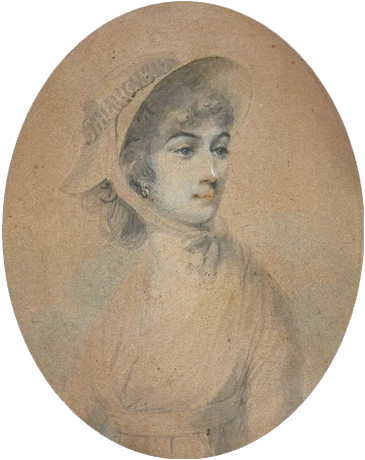
Frances Nisbet
- The Horatio Nelson Museum, Nevis. Nelson had a number of associations with the Caribbean, especially in his early naval career, and married a young Nevis widow, Frances Nisbet, there in 1787.
2. How many siblings did Nelson have?
- Nelson’s parents had eleven children, of whom three girls and five boys survived. Nelson was the third boy.
3. In what year was Nelson’s Column erected in Trafalgar Square?
- 1843. Almost forty years after Nelson’s death!
4. Which French admiral attended Nelson’s funeral?
- Villeneuve. After the Battle of Trafalgar he was taken on board Euryalus. In England he was placed in open confinement in Bishop’s Waltham in Hampshire, but was given leave to attend Nelson’s funeral. Later that year he was returned to France following a formal exchange of prisoners, but only a few days after his arrival he was found dead in his hotel room in Rennes, stabbed through the heart. The official story was that he committed suicide, but rumour has it that he was murdered on Napoleon’s orders.
5. What was the origin of Nelson’s term ‘Band of Brothers’?
- The famous Agincourt speech in Shakespeare’s King Henry V. Nelson used this phrase to describe the close relationship that existed between himself and his captains at the Battle of the Nile. By extension it has come to encompass all those officers who were particularly close to Nelson.
6. At which recorded public event was the toast ‘The Immortal Memory’ first used?
- Each year Nelson is remembered with a special toast, ‘The Immortal Memory’, at naval Trafalgar Night dinners. Although the word immortal was often applied to Nelson even when he was alive, the first recorded public event at which it occurred was at a dinner held on Trafalgar Day in 1811, at the Green Man public house near Greenwich. The toast was slightly longer than today: ‘The immortal memory of Nelson and those who fell with him.’
7. What wound did Nelson receive on 12 July, 1794?
- While directing his ship’s guns set up in a shore battery during the siege of Calvi a French shot struck the battery rampart in front of him and he was struck in the face with a shower of gravel. Nelson subsequently lost the sight in his right eye; the eye itself remained intact and he never wore an eyepatch.
8. What was unusual about Nelson’s coat of arms?
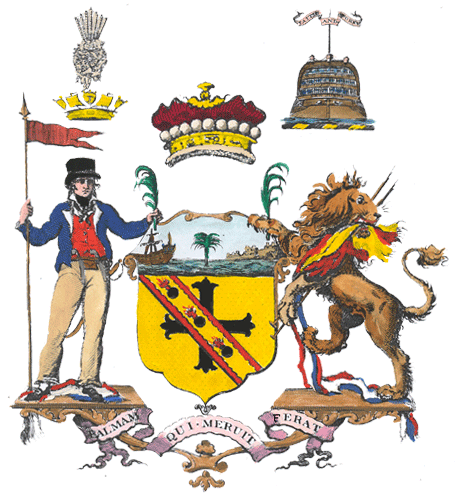
Contemporary drawing of Nelson’s coat of arms at Trafalgar
- Nelson’s family already had a coat of arms but Nelson’s knighthood entitled him to supporters on either side of the shield. Nelson insisted on having Jack Tar as a supporter – this was a heraldic innovation and set a precedent, which has been followed by a number of naval knights and peers since.
9. In which English county was Nelson born?
- Norfolk. He was born at Burnham Thorpe, close to the coastal town of Great Yarmouth on 29 September, 1758. His father was rector of the parish and the Nelson family lived in the parsonage, now no longer standing.
10. From which English county were the greatest number of sailors in Nelson’s Trafalgar fleet?
- Devon, where I now live. Nelson’s men at Trafalgar included over 1,100 men born in Devon.
11. How tall was Nelson?
- The popular image of Nelson is that he was quite a small man. However, modern research has established that he was about five feet, six inches (around the average male height in the eighteenth century).
12. What was Nelson’s nickname as a child?
- Horace.
13. How many men and officers served in Victory at Trafalgar?
- Her full complement was 850, however at Trafalgar it was only 820.
14. Name Nelson’s first command.
- In 1784, Nelson was given command of the 28-gun Boreas and assigned to enforce the Navigation Act in the vicinity of Antigua in the Caribbean. Shortly after his marriage to Frances Nisbet he returned home to England in Boreas.
15. Who was Josiah Nisbet?
- Nelson’s step-son. In 1793 Nelson took Josiah to sea with him in HMS Agamemnon but their relationship deteriorated with Nelson’s infatuation with Emma Hamilton. Despite this, Nelson used his influence to have Josiah made a post captain at the early age of twenty. He was not fit for this responsibility, however, and left the sea shortly thereafter. He became a successful businessman and after the war ended moved to Paris. Nisbet died in 1830 and was buried in the churchyard at Littleham in Devon, where, just eleven months later, his mother was laid beside him.
16. How was Nelson’s body preserved after his mortal wounding at Trafalgar?
- Brandy and spirits of wine – not rum! Nelson’s body was placed in a large cask that was filled with brandy and lashed to Victory’s mainmast, guarded by a sentry night and day. The popular nickname for rum, ‘Nelson’s blood’, originates from the sailors’ tall tale that Nelson’s body was preserved in rum, and then after the body had been removed, the alcohol was issued to all of Victory‘s Jack Tars!
17. How did the inn called ‘The Wrestler’s Arms’ find a place in Nelson lore?
- When the landlady asked Nelson if she might change the inn’s name to ‘The Nelson’s Arms’ he delightedly told her that the name would be absurd, as he only had one.
18. Which of Nelson’s captains was the only one killed at the Battle of the Nile?
- Captain George Westcott, a Devon man, the son of a baker. After Westcott’s death Nelson made a special visit to his widow and presented her with his own Nile medal.
19. Who is Anna Tribe?
- Nelson’s closest living relative. She is Nelson’s (and Emma Hamilton’s) great-great-great granddaughter. Mrs Tribe is also Life Vice President of the Nelson Society.
20. During his lifetime Nelson was a prolific letter writer. Approximately how many do we know of that have survived?
- Well over 5000! Nelson’s letters were often characterised by an eager and somewhat unpolished style, almost as if speaking – like the diaries of Samuel Pepys, with which they have sometimes been compared.
How did you go? If you managed twelve or more correct answers award yourself a tot of rum!
And there’s still time to enter the latest contest.
For a chance to win a copy of Colin White’s
Nelson, the New Letters plus Victory email me with the name of the first vessel in which Nelson served. Deadline: October 30. Please include your full postal address.
Copyright notices
Villeneuve image: [Public domain], via Wikimedia Commons
Nelson’s coat of arms image: By JMvanDijk (Own work) [CC BY-SA 4.0 (http://creativecommons.org/licenses/by-sa/4.0)%5D, via Wikimedia Commons
Every effort is made to honour copyright but if we have inadvertently published an image with missing or incorrect attribution, on being informed of this, we undertake to delete the image or add a correct credit notice
A Nelson Quiz – and a Double Book Prize!
Posted on October 21, 2015 Leave a Comment

Nelson’s Column, Trafalgar Square
Two hundred and ten years ago this day Lord Horatio Nelson died at Trafalgar. Test your knowledge of Nelson lore with these twenty questions. (Answers in my next blog.) And there’s a copy of Nelson: the New Letters edited by the late Colin White, up for grabs. This is one of my favourite books about Nelson for, as White himself wrote:
‘In a sense this book is Nelson’s autobiography…he was a wonderful word-smith, genuinely as happy with a pen in his hand as a sword…[with] this treasure-trove…we can now effectively watch over Nelson’s shoulder at critical moments in his career.’
Nelson’s Column, Trafalgar Square
Along with this title, the winner will also receive my book Victory. Contest entry details at the end of this blog.
The Quiz
1. Where is purportedly the largest collection of Nelson memorabilia in the western hemisphere?
2. How many siblings did Nelson have?
3. In what year was Nelson’s Column erected in Trafalgar Square?
4. Which French admiral attended Nelson’s funeral?
5. What was the origin of Nelson’s famous term ‘Band of Brothers’?
6. At which first recorded public event was the toast ‘The Immortal Memory’ first used?
7. What wound did Nelson receive on 12 July 1794?
8. What was unusual about Nelson’s coat of arms?
9. In which English county was Nelson born?
10. From which English county were the greatest number of sailors in Nelson’s Trafalgar fleet?
11. How tall was Nelson?
12. What was Nelson’s nickname as a child?
13. How many men and officers served in HMS Victory at Trafalgar?
14. Name Nelson’s first command.
15. Who was Josiah Nisbet?
16. How was Nelson’s body preserved after his mortal wounding at Trafalgar?
17. How did the inn called ‘The Wrestler’s Arms’ find a place in Nelson lore?
18. Which of Nelson’s captains was the only one killed at the Battle of the Nile?
19. Who is Anna Tribe?
20. During his lifetime Nelson was a prolific letter writer. Approximately how many do we know of that have survived?
Contest
 For a chance to win a copy of Nelson, the New Letters plus Victory email me with the name of the first vessel in which Nelson served. Deadline: October 30.
Please include your full postal address.

Copyright notices
Nelson’s Column photograph: Diego Delso [CC BY-SA 4.0 (http://creativecommons.org/licenses/by-sa/4.0)%5D, via Wikimedia Commons
Every effort is made to honour copyright but if we have inadvertently published an image with missing or incorrect attribution, on being informed of this, we undertake to delete the image or add a correct credit notice
BookPick: Nelson’s Band of Brothers
Posted on October 13, 2015 4 Comments
On October 21, on the anniversary of the death of Horatio Nelson, and his victory at Trafalgar, I and many others will be toasting The Immortal Memory. There are legions of books on Nelson and his life and times – and I did wonder what more could be written about this subject. But Nelson’s Band of Brothers is a valuable contribution to Nelsonian scholarship as it contains new information – and overturns a few myths. The book extends the work undertaken by the late Colin White for The Trafalgar Captains, published in 2005. The biographies of some eighty officers that make up this new volume range from lieutenants in command of gunboats at the battle of Copenhagen through captains of line-of-battle-ships at the Nile and at Trafalgar, to admirals in command of squadrons in his fleets.
 Nelson possessed a genius for naval warfare and deservedly remains a towering figure of his age. But he did not win his victories alone. He gathered round him a succession of officers to put his bidding into action. They were the captains of his ships and he called them his Band of Brothers.
Some characters are generally well known – Hardy, Collingwood and Troubridge etc. – but many are not household names. For the first time all Nelson’s captains are chronicled in one book, their social origins, their characters and their achievements not only under Nelson’s command but also in their lives and service beyond.
Nelson’s Band of Brothers, ably edited by Peter Hore, is organised into three main sections: The Battle of the Nile, Copenhagen and the Baltic, and The Campaign at Trafalgar. As well there are several additional sections and an extensive bibliography.
The Royal Navy in Nelson’s time was varied and international in composition, as is attested by the chapter ‘North Americans in Nelson’s Navy.’ It points out that at the height of the wars with France roughly two percent of the British fleet’s personnel consisted of North Americans.
One of the features of the book that I found particularly interesting is the photographs of all the monuments and memorials to Nelson’s captains with descriptions and transcriptions of epitaphs, and directions to enable people to find them. A useful map of the memorials around the UK at the beginning of the book provides an overview of their locations.
Nelson’s Band of Brothers is a handsome tribute to both Nelson himself and all the officers, eclectic and diverse as they were, who commanded ships or squadrons of the fleets which fought under his tactical control at his three great sea battles.
Peter Hore Nelson’s Band of Brothers
Published by Seaforth Publishing. ISBN 978 1 84632 779 5
TYGER sails forth in style!
Posted on October 10, 2015 6 Comments
I was privileged to have Tyger included among the hundreds of great new books launched in the UK on ‘Super Thursday’, October 8. My launch was held at the Chatham Community Library, just a hop, step and jump away from the historic dockyard. Around 80 readers, one even in period naval uniform, joined me to launch the latest Kydd title.
In London I was kept busy signing stock at the wonderful Goldsboro Bookshop and at Hodder’s magnificent new offices. I’m shortly off to Waterstones Drake Circus, Plymouth, for another signing starting at 1pm today. And the Torbay Bookshop is hosting another event next Saturday.
A few highlights of the launch!
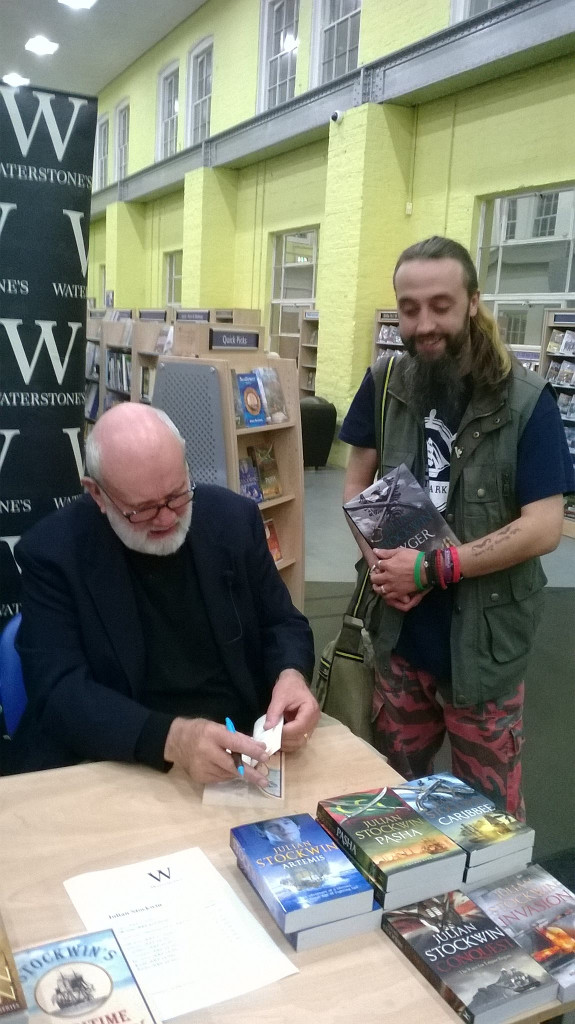
Reader Daniel Mclean
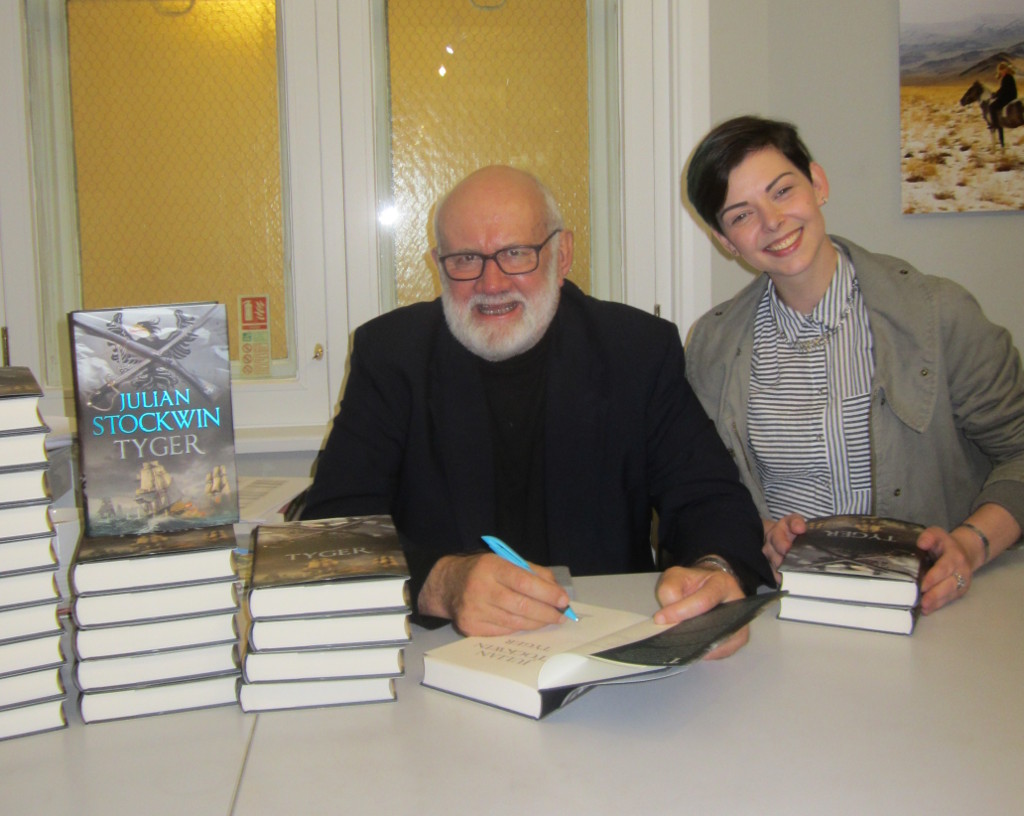
Signing stock at Goldsboro, with bookseller Sam Bradbury
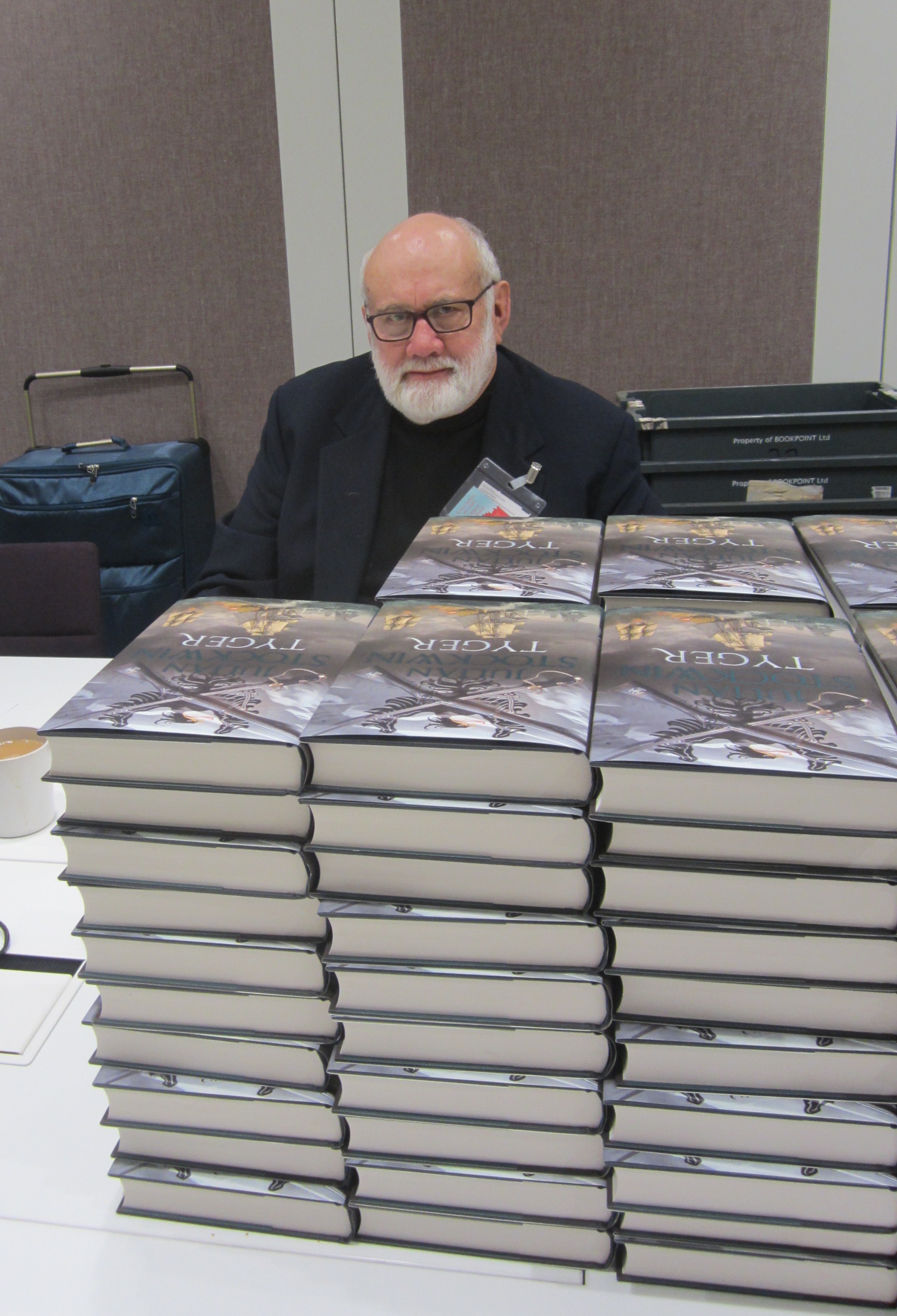
At Hodder headquarters, just a few more hundred or so to sign…
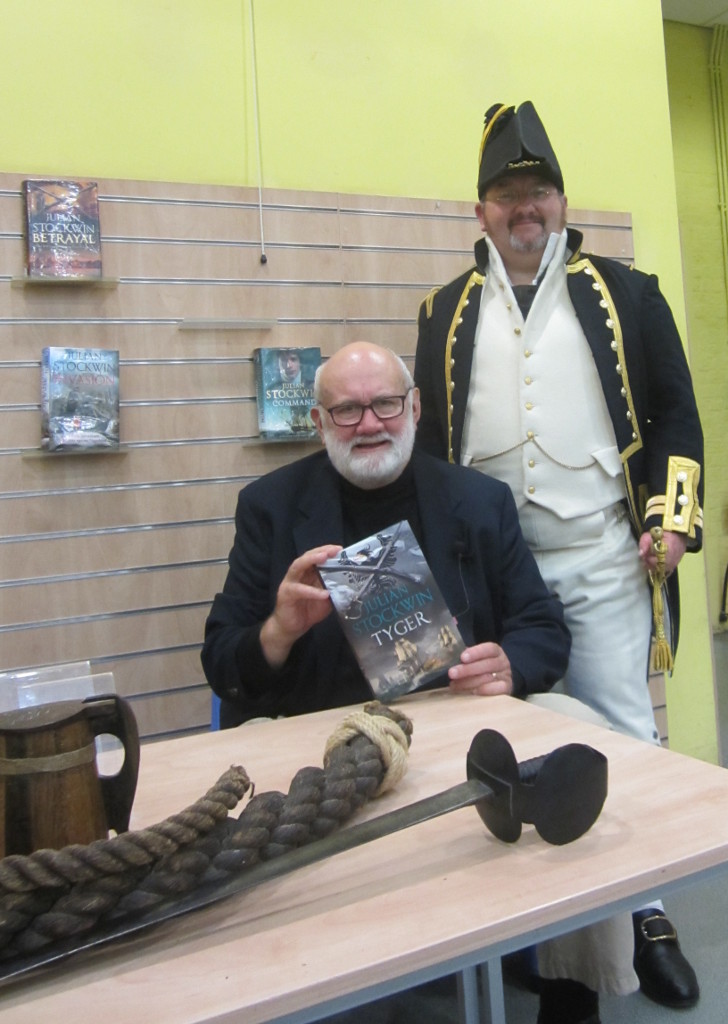
Paul Waite, resplendent in Georgian naval uniform
Listen to an excerpt
Buy the book
To the Kydd Gang!
Posted on October 6, 2015 8 Comments
With the publication this week of Tyger, the 16th Kydd title, Kathy and I will raise a glass (or two…) to all the publishing professionals it’s been our pleasure to work with over the past decade and a half. As my eponymous hero would say, ‘Let’s drink their health in a bumper!’
The Belgian novelist Georges Simenon once complained: ‘writing is not a profession but a vocation of unhappiness’. I certainly haven’t found that to be the case! It’s been one of the most fulfilling times of my life. I’ve met some great people – real and imaginary along the way…
Way back when
But let’s wind the clock back to the late nineties when I’d just completed work on a pretty stressful NATO project. I sank into my armchair and Kathy shoved a tumbler of whisky into my hand. ‘Sweetheart,’ she said, ‘Get a life!’ It was she who started me off as an author – without a single published work to my name, she felt that somehow inside I was a writer (something I didn’t know at the time) and it was she who persuaded me to give away the systems analysis and take a part-time job at the local college. The rest of the time I devoted to learning the nuts and bolts of the craft – and finding a voice.
For me there could be only one subject – the sea. There’s something primaeval, powerful, constantly fascinating about the sea. As far back as I can remember I’ve been mesmerised. Going to a decent grammar school was unfortunately wasted on me: I dreamed all the time, and off to school on the school bus had me staring at these sleek low grey shapes, slipping over the horizon and carrying my imagination with them.
On a wing and a prayer…

Carole Blake, my literary agent
Now Carole and the two of us are friends, as well as having an excellent working relationship. With 52 years in the business Carole is a force to be reckoned with – tardy publishers and errant authors beware!
Nelson’s blood in the board room
I remember the ‘beauty parades’ that Carole organised when an auction for the series started. (That is where the author meets a number of publishers who are keen to buy his book/s.) One thing that impressed us about Hodder & Stoughton was what we saw on the centre of the table when we entered the board room – a bottle of rum! Kathy and I looked at each other and smiled. A pretty good start for what has become a happy long-term relationship.
Oliver & Hazel & Larry

Oliver Johnson, my editor at Hodder & Stoughton
A few books back the decision was taken by Hodder to move to cgi (computer generated image) covers and I’m delighted with the work of Larry Rostant in bringing a fresh and vital feel to the books.
I’ve been extremely lucky in both my agent and in my publishers. There are many people who’ve contributed to the launch of Tyger; space precludes my thanking them all here – but I know I will feel both proud and humbled when I see Tyger in the bookstores this week as I couldn’t have done it without them.
Here’s to the Kydd Gang!
Copyright notices
Carole Blake photograph: Jack Ladenburg
Every effort is made to honour copyright but if we have inadvertently published an image with missing or incorrect attribution, on being informed of this, we undertake to delete the image or add a correct credit notice
Out and About with TYGER!
Posted on September 30, 2015 3 Comments
Hey! Tyger is officially launched in the UK on Thursday October 8 at Chatham Library. I’ll be also signing copies of the book at a number of other venues around the UK.
October 10
Waterstones Drake Circus 1-3 pm 1 Charles Street, Plymouth, PL1 1EA. 01752 669898
October 17
Torbay Bookshop 11:30 am. 7 Torquay Rd, Paignton TQ3 3DU. 01803 522011
If you can’t make it on the day to Waterstones Drake Circus or Torbay Bookshop you can reserve a signed copy by calling the store.
I have a limited number of signed TYGER postcards available on request. Just email julian@julianstockwin.com with TYGER postcard in the subject line. Please include your full postal address. First come, first served!
BookPick: Early Ships and Seafaring, Water Transport Beyond Europe
Posted on September 29, 2015 2 Comments
Although my primary interest is in the Age of Fighting Sail I’m always drawn to books dealing with the engrossing story of man’s exploration and exploitation of waterways and then the sea. In this book, Seán McGrail’s study of European Water Transport (published in 2014) moves out to cover Egypt, Arabia, India, Southeast Asia, China, Australia, Oceania and the Americas. Each chapter presents a convincing picture of ancient boat building and seafaring in that region. The early rafts and boats of those regions were, as in Europe, hand-built from natural materials and were propelled and steered by human muscle or wind power and this volume ranges in time from the prehistoric to today when a number of such traditional craft continue to be built. As a qualified shipwright myself I particularly relate to the extensive and well chosen selection of diagrams and photographs of construction of such craft included in this book.
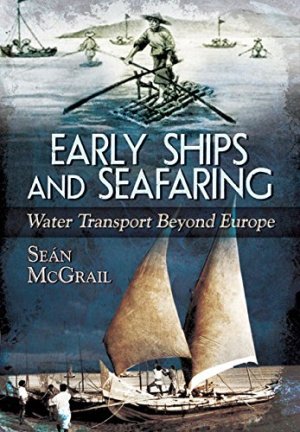 McGrail served in the Royal Navy before embarking on a career in maritime archaeology. He was Chief Archaeologist at the National Maritime Museum, Greenwich and is currently Visiting Professor of Maritime Archaeology at the University of Southampton.
The study of water transport – how early rafts, boats and ships were built and used – is a fairly new and fascinating area of study in archaeology.
In Egypt, not only have accounts, models and illustrations of ancient rafts and boats survived but also a number of the early vessels themselves have been excavated, some dates as early as the 3rd Millennium BC. In regions such as the Americas, on the other hand, few ancient craft have been excavated but we are able to draw on accounts and illustrations compiled from the 16th century onwards by European seamen and explorers.
In most regions of the world a variety of water transport has been built, limited only by the raw materials available. On the island of Tasmania, however, an early rise in sea levels cut contacts with Australia, leaving Tasmanians with simple types of Stone Age water transport that fascinatingly survived in use until Europeans ‘discovered’ them.
McGrail admits that worldwide, much remains to be learnt about early water transport by excavation and by ethnographic studies of those traditional rafts and boats that have survived. I look forward to more discoveries in this compelling field.
Seán McGrail Early Ships and Seafaring Water Transport Beyond Europe
Published by Pen & Sword. ISBN 1473 8255 98
[ my earlier review of Water Transport within Europe ]
 Julian Stockwin