
And a Happy Birthday to the Royal Australian Navy!
Posted on September 27, 2013 13 Comments
[To leave a comment go right to the end of the page and just enter it in the ‘Leave a Reply’ box]
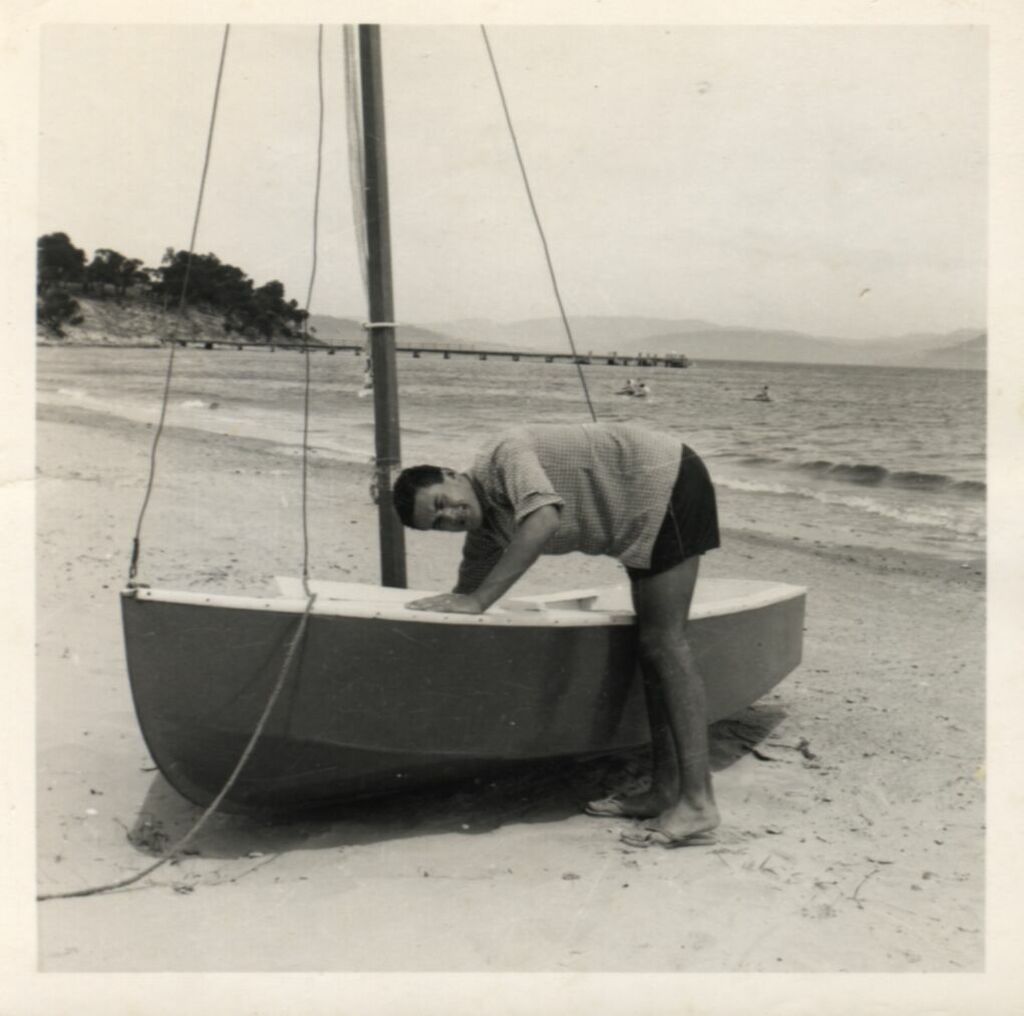
Galah, my first boat
in Tasmania
Next week an International Fleet Review is being held to commemorate the centenary of the first entry of the Royal Australian Navy’s fleet into Sydney.
Prince Harry will attend the festivities on behalf of the Queen.
The event, which promises to be a splendid affair, will commence on 3 October with the arrival of tall ships in Sydney Harbour. This will be followed by the ceremonial arrival of the warships on Friday, 4 October.
The formal review of the assembled ships will take place on Saturday, 5 October, and will culminate in the evening with a Pyrotechnics and Lightshow Spectacular.
On 4 October 1913 the flagship, HMAS Australia, led the new Australian Fleet Unit comprising HMA Ships Melbourne, Sydney, Encounter, Warrego, Parramatta and Yarra into Sydney Harbour for the first time to be greeted by thousands of cheering citizens lining the foreshore.
Sadly, work commitments mean I can’t make it Down Under for the 2013 celebrations but I have a special connection with the Royal Australian Navy, having served there for part of my naval career.
Picture the scene: a 15-year-old, rather unworldly Stockwin has joined the Royal Navy but learns that his parents have suddenly decided to emigrate to Australia. In those days it was easy to move between the two navies with very little paperwork so it was Down Under I went! I remember catching the plane to Sydney – the flight took three days, stopping at then exotic places like Cairo and Karachi and arriving at Darwin where I was stared at over the fence by a bunch of tough-looking Aussies.

On the rantan at Lunar Park in Sydney with chum
engineer apprentice Dave Nothrop
I was based at HMAS Nirimba where I completed my training as a shipwright, some fine instructors there from the old world timber ships and the new one of fibre-glass. Sydney in those days was a sailor’s town and we were always made to feel welcome but I won’t go too much into that… The world-class harbour was as well where I won my colours at sailing, once staying at sea in a full-reefed two masted navy whaler while a proud twelve-metre America’s Cup yacht retired ignominiously.
On leave I would return to my parents’ home in Tasmania and sail the pride of my heart, Galah, my first boat, in the wild south of the island. Little did I know I’d be bringing these memories to my writing of COMMAND, where my hero sails in these waters as one of the very first explorers.
In the RAN we were often at sea for many months at a time. Some of my abiding memories are going ashore for a banyan on some deserted tropical island in the South Seas, the unreal beauty of ashore; and scoring well in the pistol team against the local police in Rabaul in New Guinea…and there are many other wistful memories of a time when I was young and adventuring on the high seas.
There were the darker memories, too. Savage storms at sea when you feel the presence of nature like a wild beast out of a cage; close inshore in a gale when you wonder if a mistake at the helm will end with those black rocks suddenly bursting in.
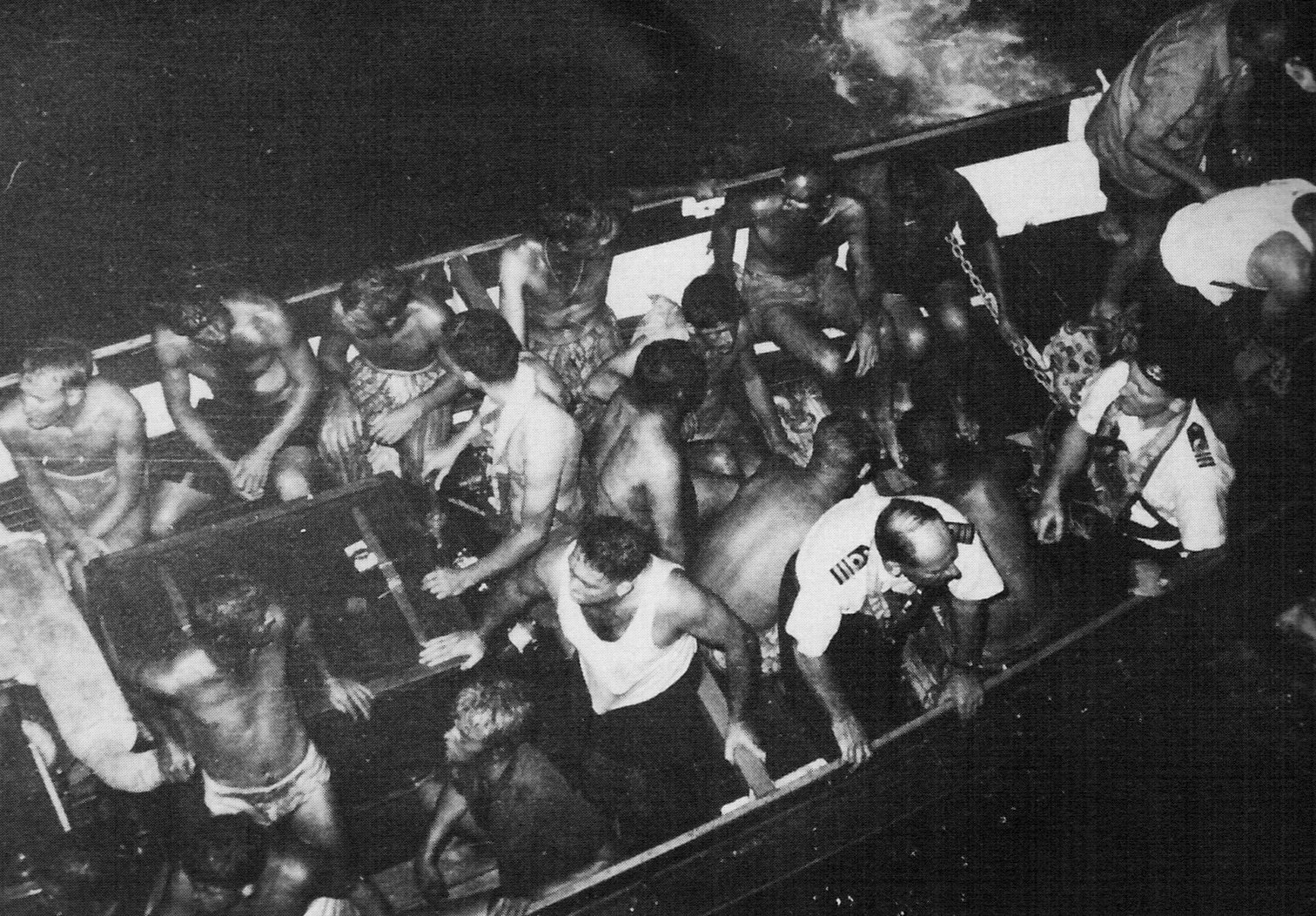
Night of the Voyager
I grew up a lot that night
I saw service for several years in the Vietnam war and was duty watch in the carrier Melbourne the night when we collided with and sank our plane-guard destroyer Voyager – I was out keeping the seaboat afloat with ‘tingles’, copper patches, while we searched for survivors. And later, exhausted, keeping watch on a shored-up bulkhead forward while we made harbour.
I’m ‘Old Navy’ I guess; for a time I even slept in a hammock, and certainly there were no women at sea in the RAN in my day. Now some ships even have individual cabins for the sailors and women ably perform all roles aboard. There was no internet then and once you weighed anchor you were pretty much cut off from life ashore, your world was the universe of your ship, much like my hero Tom Kydd found.
I’m often asked when did I start thinking about taking up writing. This was certainly not something to the fore of my mind in my navy days – and I would go on to have several other careers before putting pen to paper. But my time at sea gave me invaluable insight into the sailor and life at sea; the good times and the bad.
There are many things that have not changed from Nelson’s day – mateship, duty, loyalty. And I’ve had sea experience on both sides of the world and have served on both the lower deck and as an officer, something I called upon when I described Tom Kydd’s transition to the quarterdeck.
I look back on my time with the RAN with great warmth and I will certainly be splicing the mainbrace next week!
Copyright notices
Every effort is made to honour copyright but if we have inadvertently published an image with missing or incorrect attribution, on being informed of this, we undertake to delete the image or add a correct credit notice
Novelists and 18th & 19th Century Sea Battles
Posted on September 25, 2013 17 Comments
[To leave a comment go right to the end of the page and just enter it in the ‘Leave a Reply’ box]
One historical period, the climax of the age of fighting sail (the twenty-two- year period of the French and Napoleonic wars, 1793–1815), has always drawn me irresistibly, as it has done for so many historical naval fiction authors.
I grew up reading C S Forester, the father of the genre, and was at sea in 1966 when he died, still writing his wonderful tales.
I was saddened that no more of his books would come along. But then writers such as Alexander Kent (To Glory We Steer, 1968) and Patrick O’Brian (the first in his Aubrey-Maturin series was published in 1970) began to appear in the bookstores, along with others such as Richard Woodman, keeping alive the story- telling traditions of great deeds at sea and building on what had gone before.
That’s the thing with the genre: it’s constantly evolving, yet staying true to the celebration of man’s special connection with sail. Perhaps I should have lived in the 18th century; to my mind it was a time in many ways more colourful than our modern existence. It was an age of heroes, the like of which we do not see today, certainly not a one-armed, half-blind leader who had the love and respect of all his men from the lowest to the highest, and whose death caused a nation-wide outpouring of grief.

The Battle of Trafalgar
As seen from the mizzen starboard shrouds of Victory
JMW Turner
It was a time when a rock could be commissioned: in 1804 the Royal Navy declared Diamond Rock, a barren pinnacle off the coast of Martinique, a sloop of war and proceeded to become from there such a thorn in the side of Villeneuve that he eventually threw his entire fleet of battleships at the rock. Equally, it did not raise too many eyebrows in 1803 when a duel was fought to the death by a naval officer over a dog!
Of course, there is much more to historical naval fiction than sea battles (I’ll come back to that anon…), but warfare is the testing ground for men and ships alike.
There can be few human experiences more terrifying than being aboard during a barrage of incoming cannon fire
felling masts and sending deadly splinters showering all about. One invisible killer was called ‘wind of ball,’ a form of blast injury that, in the wake of a passing cannon shot, could cause a man to just fall over dead, without a mark on him. This happened to Thomas Hardy’s clerk, Thomas Whipple, standing on the deck of HMS Victory.
During the period of the French and Napoleonic wars there were not many major scale sea battles, but each was unique in its own way.
The Glorious First of June – June 1, 1794
This was the first and largest fleet action between Britain and France during the French Revolutionary Wars. In any series set during the French wars, an author has to bear in mind that it is highly unlikely that any one person would have been present at all of the major battles. Thus, in the Thomas Kydd series, my hero missed this conflict by being under guard as a witness in a court martial, but later took part in the celebrations in Portsmouth. Among the authors who have their hero at the Glorious First of June is Dewey Lambdin in A King’s Commander.
The Battle of St Vincent – February 14, 1797
In this action, a British fleet under Admiral Sir John Jervis defeated a larger Spanish fleet. It was a near-run thing which saw Captain Nelson spring to public acclaim after his boarding and capturing of two enemy ships in a manner that was unique in the history of the Royal Navy. Novels about the Battle of St Vincent include Dudley Pope’s Ramage and the Drum Beat and Jay Worrall’s Sails on the Horizon.
The Battle of Camperdown – October 11, 1797
This was the most significant action between British and Dutch forces during the French Revolutionary wars, and after a remarkably desperate fight, it resulted in a complete victory for the British, who captured eleven Dutch ships without losing any of their own. The battle features in A King’s Cutter by Richard Woodman, True Colours by Alaric Bond, my book, MUTINY, and others.

Battle of the Nile
Whitcombe
The Battle of the Nile – August 1, 1798
To my mind the Battle of the Nile was Nelson’s finest hour. It was a time of titanic global stakes. Had Britain lost, we would have seen a very different world today. It was in this action that the mother of all ship explosions occurred. At about 10 pm, a fire aboard the French flagship L’Orient reached the magazine and she exploded in an incredible spectacle, with blazing parts of the ship hurled high into the air. Incredibly, both sides fell into a stunned silence at the sight for about ten minutes and an eerie light pervaded the scene. Most of L’Orient’s crew, including her captain and his young son, perished. The American poet Felicia Henans would later write the poignant verse:
The boy stood on the burning deck whence all but he had fled…
A number of writers have taken this battle for their subject matter, including David Donachie in Tested by Fate, Alexander Kent in Signal Close Action, and Jay Worrall in Any Approaching Enemy. I wrote about it as well in my book, TENACIOUS.

The young Sub-lieutenant Peter Willemoes putting heart into his men at the Battle of Copenhagen
Christian Mølsted
The Battle of Copenhagen – April 2, 1801
This engagement saw a British fleet under the command of Admiral Sir Hyde Parker defeat a Danish-Norwegian fleet.
Vice-Admiral Horatio Nelson led the main attack. He famously disobeyed Sir Hyde Parker’s order to withdraw by holding the telescope to his blind eye to look at the signals. Three of the novels about this battle are Richard Woodman’s The Bomb Vessel, Alexander Kent’s The Inshore Squadron and Dewey Lambdin’s The Baltic Gambit.
The Battle of Trafalgar – October 21, 1805
This decisive victory against the French was tempered by the tragedy of the loss of Lord Nelson from his wounds.
I have to say that I approached the writing of my book, VICTORY, which deals with Trafalgar, with more than a little trepidation
This battle was, after all, the grandest spectacle in naval history, the subject of hundreds of books, fiction and nonfiction. I wanted to bring a new and fresh treatment to my readers, and I hope I accomplished this by having two vantage points – that of my principal character, Tom Kydd, a newly promoted frigate captain, and that of a midshipman aboard Victory. In an interesting departure for Bernard Cornwell, he wrote Sharpe’s Trafalgar from the point of view of a soldier on board at the time. Other novels about this famous battle include Dudley Pope’s Ramage at Trafalgar and David Donachie’s Breaking the Line.
The Second Battle of Copenhagen – August 16, 1807
Napoleon’s attempt to revenge Trafalgar by forcing the Danish to sail against the English was pre-empted by the crushing bombardment of Copenhagen, which resulted in the surrender of the entire Danish fleet. The courage of Peter Willemoes, a young Dane commanding a floating battery, was especially commended by the British, who have always appreciated bravery wherever found.
Anthony Forest’s novel, A Balance of Dangers, is one of the fictional accounts based on the bombardment of Copenhagen.
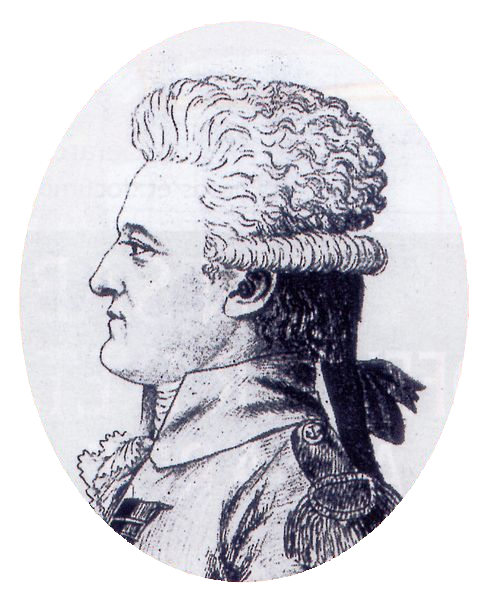
Admiral Villeneuve
Of course, I could not discuss naval battles of the eighteenth and nineteenth centuries by just confining my thoughts to the French and Napoleonic wars. There’s the Battle of the Saintes in April 1782, at which Rodney trounced the French and Spanish and saved Jamaica for a grateful populace. Some argue that this is where the tactic of ‘breaking the line’ was first used. Alexander Kent’s To Glory We Steer focuses on this battle, as does Dewey Lambdin in The King’s Commission.
There’s also the heroic action by Admiral Edward Pellew in 1816 against the slavery practices of the Dey of Algiers, the fraught Battle of Navarino in 1827. And others…
But given the 200th anniversary was just last year, I’d like to conclude with The War of 1812, which began in June and continued for 32 months (which I’m yet to reach in my Thomas Kydd series; I’m only up to 1807) and which has attracted the pen of a fleet of naval writers. As would be expected, American authors have been particularly drawn to the conflict. They include William H White, who wrote a trilogy. Patrick O’Brian’s The Fortune of War describes the fight of Java and Constitution and concludes with a description of the fight between Chesapeake and Shannon, Broke’s ship. O’Brian’s fictional Jack Aubrey boards Chesapeake behind Broke and saves his life after he is struck on the head. The War of 1812 has also attracted Alexander Kent and Richard Woodman.

MUTINY featured the Battle of Camperdown
I said earlier that there’s more to historical naval fiction than battles, dramatic as they are. During the first two decades of the French Wars, approximately 100,000 men in the Royal Navy died, but just 6.3% fell due to enemy action. Shipwreck and natural disaster accounted for 12.2% while 81.5% – the bulk of the fatalities – died from disease or accident.
While engagement with the enemy provides the excitement and drama, the day-to-day life aboard ship, the comradeship of the lower deck and the fellowship of the officers, all speak of a special bond. It was a unique world within wooden walls, one denied those ashore.
The specifics of the battle formations and outcomes of 18th- and 19th-century battles are fascinating to read, but to me it is often the individual responses of common seamen and officers to warfare wherein the most interesting stories lie. Courage, humour, creativity, man management, stoicism: almost the whole range of human emotions. And it is portraying these, I believe, that is both the most challenging – and the most satisfying – task for the historical novelist.
= A version of this article first appeared in the Historical Novel Review, Issue 64. =
Copyright notices
Turner, Battle of Trafalgar: Public Domain via Wikimedia Commons; Battle of the Nile, Thomas Whitcombe [Public Domain], via Wikimedia Commons; Willemoes: By Christian Mølsted [Public Domain], via Wikimedia Commons; By Amiral_villeneuve.jpg: derivative work: Frédéric MICHEL (Amiral_villeneuve.jpg) [Public domain], via Wikimedia Commons
Every effort is made to honour copyright but if we have inadvertently published an image with missing or incorrect attribution, on being informed of this, we undertake to delete the image or add a correct credit notice
BookPick: The Transformation of British Naval Strategy
Posted on September 24, 2013 Leave a Comment
[To leave a comment go right to the end of the page and just enter it in the ‘Leave a Reply’ box]
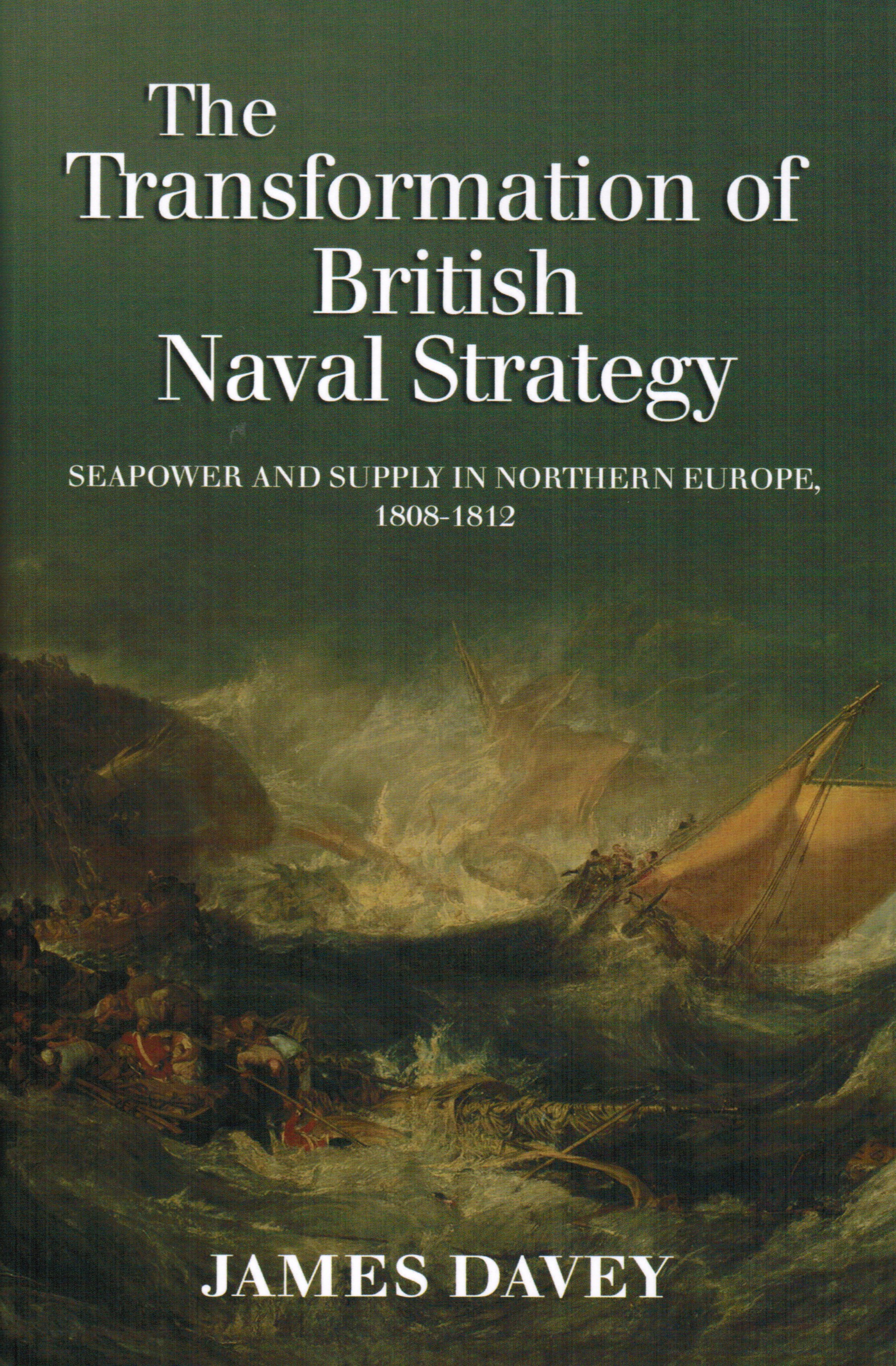
The Transformation of British Naval Strategy
Seapower and Supply in Northern Europe 1808-1812
After the Battle of Trafalgar, the Royal Navy continued to be the major arm of British strategy in the war against Napoleon, yet as late as 1807 fleets were forced from their stations due to an ineffective provisioning system.
Each man afloat was entitled to a daily ration of a pound of bread, a gallon of beer (or equivalent), a pound of meat on six of seven days and supplies of oatmeal, pease, butter and cheese. When you consider that at the height of the Napoleonic War there were over 140,000 men aboard the Navy’s ships at any one time the vast amount of supplies required just to feed them becomes very clear!
This book tracks the sweeping administration reforms of 1808-1812 that established a highly effective logical system which successfully enabled a fleet to remain permanently on station.
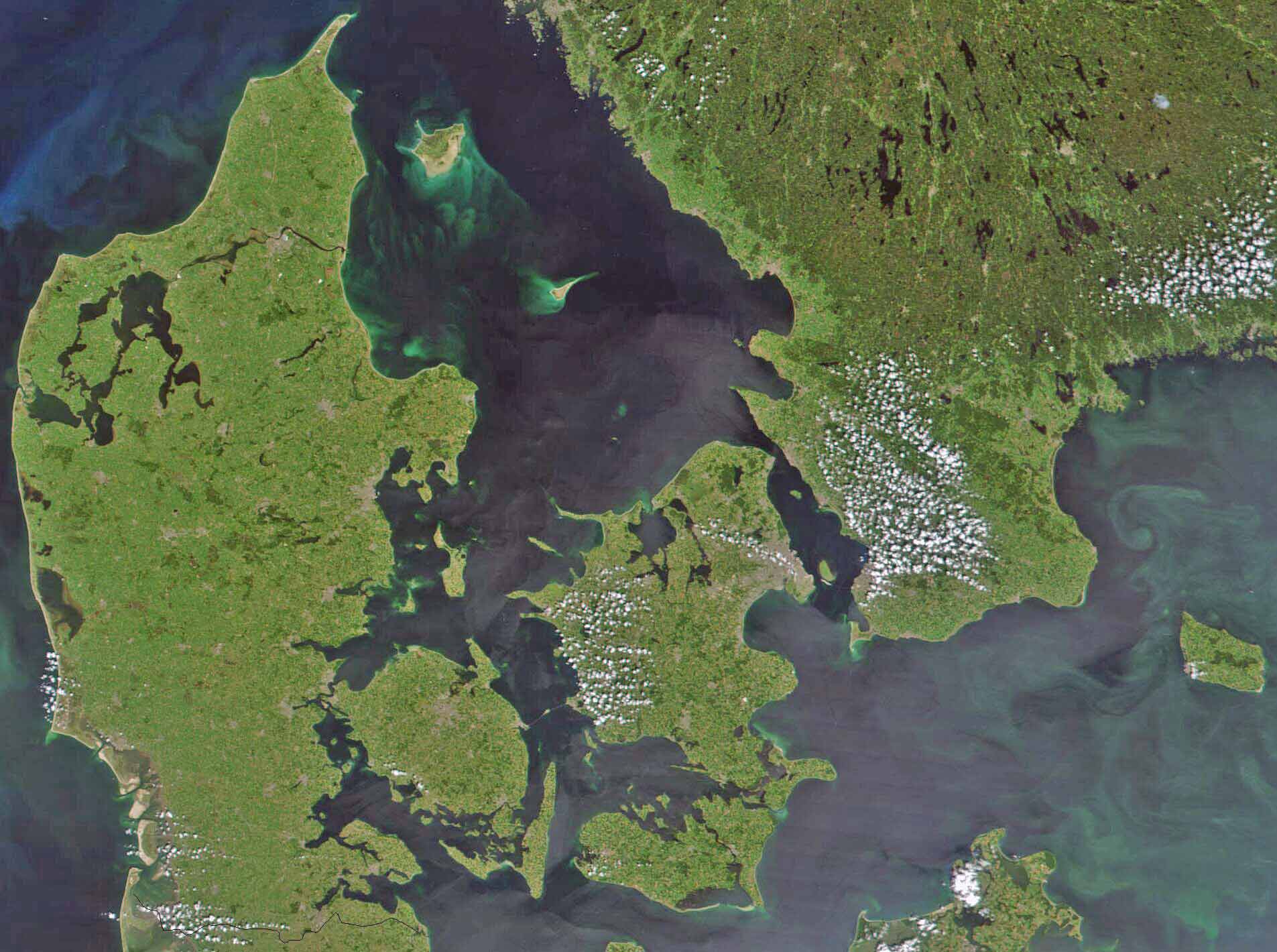
The Great Belt was a formidable navigational challenge
One of the related problems specifically addressed in this book is the lack of adequate hydrographic information of Baltic waters that faced the Royal Navy at the turn of the nineteenth century. The Great Belt is the largest and most important of the three straits of Denmark that connect the Kottegat to the Baltic Sea and was of particular concern for mariners.
An extensive bibliography at the end of the book provides pointers to additional reading on this fascinating topic.
The author James Davey is Curator of Naval History at the National Maritime Museum. He has authored or co-authored a number other books –Admiral Sir James Saumarez: The Private Correspondence; Navy, Nation and Nelson, 1688–1815; and Broadsides: Caricature and the Navy.
Copyright notices
map: Public Domain via Wikimedia Commons
Every effort is made to honour copyright but if we have inadvertently published an image with missing or incorrect attribution, on being informed of this, we undertake to delete the image or add a correct credit notice
Summoning the Maritime Muse
Posted on September 16, 2013 12 Comments
[To leave a comment go right to the end of the page and enter it in the ‘Leave a Reply’ box]
One of the questions I’m often asked is where does the inspiration for my sea tales come from.
In writing the Thomas Kydd series I draw on many things – my personal experiences serving in the navy, the historical record of our rich maritime history, music, physical connections with the past and art.
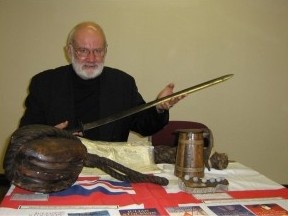
With some sea artefacts
I’m ‘Old Navy’ – I initially trained as a shipwright and am quite at home with tools that would be very familiar to the Georgian Navy – adze, whipsaw etc. I even slept in a hammock in my early days at sea!
In this country we’re spoiled by an unsurpassed collection of historical maritime records – as well as the material in the National Maritime Museum and others, there are fantastic digitised records now available on line. Over the years I’ve built up an extensive personal library, too, which includes actual documents from Kydd’s day.
Although I can’t write and listen to music (both demand full attention, so it’s either, never both) there are wonderful pieces about the sea that I find very inspiring to play before I begin work. One of my favourites is the Berceuse from Sibelius’ Tempest, so evocative of an 18C voyage of exploration, the ship stealing into the stillness of beautiful islands not yet discovered…

Lt Julian Stockwin
In my study, I’ve a treasured collection of genuine eighteenth-century sea artefacts – a fathom‑long piece of hawser, a sea service cutlass from 1805, a gun tackle block and some 200‑year old musket balls, identical to the one that killed Nelson.
The cutlass was the chief weapon used for boarding enemy ships and cutting out and repelling boarders. The one in my collection was issued to a man‑o’‑war in the year of Trafalgar, 1805, and was used by seamen serving in His Majesty’s Navy at that time. I know this one must once have been bright with enemy blood: little nicks on the cutting edge have been ground away – a testimony to the fact that this cutlass was certainly used in combat and returned by a victorious combatant!
My 10‑inch gun tackle block was one of those each side of a chest‑high 32‑pounder cannon, the standard big gun of a line‑of‑battle ship. Men hauled on the tackle to run out the cannon which weighed three tons and had to be run out again using this block after every broadside. These guns could send a ball as big as a man’s head through three feet of solid oak at a distance of a mile. The sheaves in the block are hewn by hand from lignum vitae, an iron‑hard Caribbean wood.
As it’s tarred, the piece of eight‑inch cable-laid rope is standing rigging, and was probably used for the fore‑shrouds. It still reeks of 200 years of tar and the sea, and is one of my favourite items.
A ship o’‑the‑line needed vast quantities of rope and cable, and stretched end to end, would extend over twenty miles!
The tankard is a faithful copy; it was made by a cooper of today but using eighteenth-century shipwreck timber to the exact specification of an ancient tankard of the times. Seamen would have drunk small beer in this, and when the beer had run out after some time at sea, a half pint of rum would be issued each day.
Another treasured item in my study is a genuine Times newspaper of Friday 8 February 1793, printed the day Tom Kydd was press‑ganged.

Victory in pursuit of Nelson
by John Chancellor
On many walls of our Devon home are prints of artworks by some of the great maritime artists. Fortunately my wife Kathy shares my love of sea art! There is a print of John Chancellor’s magnificent ‘Victory in Pursuit of Nelson’ hanging over the fireplace in our living room. I must admit I have to stand with legs firmly apart when I look at it, so realistic is the feeling that I’m back at sea.
It’s hard to say which of these varied sources of inspiration is more important to me but certainly the work of the great maritime artists brings a dimension of its own to the creative process when I am writing.
Several years ago I was honoured to be invited to speak at the Royal Society of Marine Artists. I chose as my topic the differences and similarities between the artist and the novelist dealing with moments in the great age of fighting sail.
Both are obviously involved in doing their best to bring the past to life but whereas the artist chooses a certain pivotal moment in time, the writer constructs a series of vignettes, linked by a story line. I might add that it’s quite humbling for a writer to look on a great canvas where everything the artist is trying to convey is recorded in one image: that costs me 100,000 words!
It takes me about six months’ writing time to complete one of my books, after I have done the research and planning. Until I became a writer I didn’t give much thought to the amount of time involved in the process of creating a painting. One artist, whose work I greatly admire, when asked what was the secret of his fine canvases, replied, ‘It’s the 850 hours they take to paint.’

The frigate Artemis in the Great Southern Ocean
by Geoff Hunt
I often refer to paintings to confirm some aspect or other that I’ve researched. Although I have an extensive reference library, quite often seeing for example, the set of sails on a certain tack or the characteristic curve of a full drawing sail’s shadow on another, gives me the urge to make this come alive without sounding a bit like a sailing manual.
I have a huge admiration for the giants of the past such as Charles Brooking, Peter Monamy and Dominic Serres and of course, for sheer atmosphere, Turner. They provide a contemporary window on the world of Thomas Kydd. And as I look on them I can sense some of the wonder the ordinary man of those times would feel on seeing what was then the most complicated machine on the planet.
But just as a number of the novels from the eighteenth century can seem hard going for the modern reader, I feel some of the modern interpreters of the age of sail bring a vitality and freshness to the scene that is not always found in the old masters.
The first nine covers of my Kydd series were based on specially commissioned original paintings by Geoff Hunt RSMA.
The cover of ARTEMIS, which is probably my favourite, wonderfully conjures up the drama of the Great Southern Ocean every time I look at it
Maritime art is such a rich reference source of minute detail – life aboard, rigging, sea conditions, the look of the sky. But also, with the finest exemplars of the genre, it is a stimulation of something fundamental in man’s psyche, and evokes a deep emotion for the sea that holds as true today as it did centuries ago.
Hats Off to Clayton!
Posted on September 11, 2013 4 Comments
[To leave a comment go right to the end of the page and just enter it in the ‘Leave a Reply’ box]

Vasa herself in the museum in Stockholm
Over the years I’ve bought several model kits but sadly never got around to finding the time to build them – and in the end I gave them away. Perhaps this is something I can take up when I retire from writing books! Hopefully a little while hence, though…
I have great admiration for the patience and dedication of people who make models, especially scratch modellers.
One such is U.S.-based Clayton Johnson who undertook the heroic task of recreating a 1:50 scale model of the Swedish ship Vasa as she was on the day she was lost on her maiden voyage, August 10, 1628.
Vasa was to be the mightiest warship in the world, armed with 64 guns on two gundecks. Her cost had been equivalent to 10 percent of her country’s annual harvest. And she heeled and foundered just 90 meters from shore…
She was discovered in 1956, and following a massive marine archaeological recovery programme she broke the surface of Stockholm harbour in 1961 after 333 years on the sea bottom. Now the vessel is the stunning centrepiece of the Vasa Museum in Stockholm.
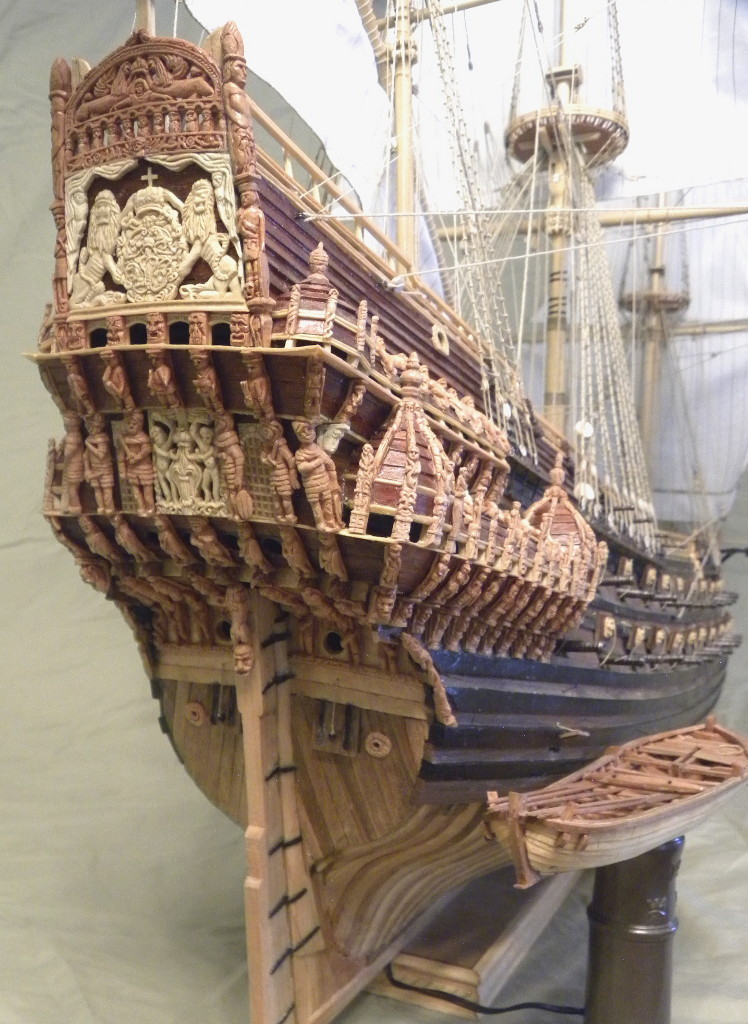
Stern view of Clayton’s model of Vasa
Clayton was keen to have his model of Vasa in all her splendour on the day she was lost (hundreds of sculptures and ornaments decorated the ship; she blazed in bright colours of gold, green, red and blue.)
The model took him over seven years to complete!
Clayton takes up the story: ‘The origins of the Vasa model go back to when I was a very young child, probably of eight or nine, and my fascination with historic ships began. My father was an enlisted man in the U.S. Navy for a time and my grandfather spent a whole career in the U.S. Navy. There were always books lying around the house that were nautical in nature.

Clayton Johnson
Even though I had never gone to sea, and spent my youth as a farm boy, my interest was sparked. One particular book called Men, Ships, and the Sea contained a compilation of nautical articles from National Geographic. One of these explained some aspects of the archaeology of Vasa. I was fascinated and remember to this day the very inaccurate, although still impressive, painting that represented Vasa in the introduction.
This book was produced before they had started to put Vasa back together in 1973. I remember pictures of the head diver on the Vasa project, Per Edvin Falting eating 333-year-old butter which inflamed his mouth! Also giving me inspiration was the fact that my father built several plastic ship models of clipper ships such as Cutty Sark and Thermopylae. I started building ship models around the age of 10 and have continued ever since.’
I’m proud to have a little piece of Clayton’s work in my home. When one of my readers, John Thomson, built and then presented me with a wonderful model of Kydd’s first command, Teazer, I found out the intricate little figurehead had been carved by Clayton.
Clayton’s certainly not rested on his laurels. He has crafted firearms models, including a matchlock musket after one from Vasa in .62 caliber; carved Streiff, the royal warhorse of the Swedish King Gustavus Adolphus – and completed many other projects.
Clayton’s website
Vasa website
SEAFLOWER and CARIBBEE
Posted on September 8, 2013 11 Comments
[To leave a comment go right to the end of the page and just enter it in the ‘Leave a Reply’ box]

A salute from one author to another.
Cheers, Mr Fleming!
More than a decade ago, in SEAFLOWER, Thomas Kydd and Nicholas Renzi were in the Caribbean as sailors before the mast in an old line-of-battle ship. Now, in CARIBBEE, Kydd, a storied hero of Trafalgar, holds the glory of being post-captain of a 32-gun frigate.
Kathy and I had over three weeks in the Caribbean on location research for SEAFLOWER and I knew Kydd would be returning there at some point in his career. We took hundreds of photographs and extensive notes – so I wasn’t short of material for CARIBBEE. I also have a full set of Navy electronic navigation charts of those waters.
I can only speak for myself as a writer, but I feel it’s necessary, wherever possible, to visit the locales I write about to really get a visceral feel of a place and how it would have been two hundred years ago. There are also the small things – the colours, smells and sounds which you just can’t get from travel books.
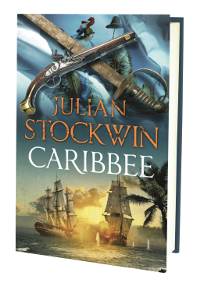
CARIBBEE, out next month!
On our Caribbean location research we studied in depth four countries – Jamaica, Antigua, Guadeloupe and Barbados.
In Kydd’s time, the British Navy’s presence was broadly divided into the Leeward Squadron (whose main role was protecting the sugar islands against the French) and the Jamaica Squadron (who concentrated on anti-piracy and countering the Spanish).
The Leeward Island Squadron used the dockyard facilities at Antigua and St. Johns, to the north of the island, as an administrative base. Watering was mainly done in Barbados, which was handily upwind of everywhere.
After a long flight from the UK we landed in Jamaica and first based ourselves at Strawberry Hill in the Blue Mountains, making the 15 mile trip down to various research facilities in Kingston each day (on a very precipitous, narrow road).

SEAFLOWER
Henry Morgan’s Port Royal (reputedly once the wickedest city on earth) slid into the sea a century before Kydd arrived, but the bones of the dockyard still exist near Kingston.
One of the interesting side trips I did was to the mountain hideaway of Ian Fleming, where he wrote “Dr No”.
Then we took a light aircraft to Antigua, and set off for English Harbour, a fascinating Georgian dockyard that Kydd worked in, and an important careenage in the eighteenth century.
Next stop was Guadeloupe, gathering background on the French presence, then it was off to Barbados, a colony they say was more English than England in the eighteenth century!
Many months before we leave on such trips Kathy and I work out, in a general sense, what material we need, what things to see, who to contact. Then she sets about lining up appointments, checking museum opening times and hiring translators if necessary.

No rest until the day’s notes are done!
Once we arrive in a location, the first stop is always the museums and libraries, plus historical studies departments of the university, and any other local experts we have identified. We also spend some time getting a feel of the place, especially in terms of local food, customs etc.
Quite often, one research lead will point us in the direction of another. As well as being planned, you have to be quite flexible. For example, we tracked down one eminent academic in the middle of an eighteenth century archaeology dig in the field! It is from people such as these that you get the real insights and local colour that you just can’t get any other way.
There were many highlights of the trip. Among the special moments – setting up deckchairs at the edge of the ocean at the end of a long day and just watching the glorious sunset; looking out across the bay at Antigua to the angry, spuming steam of the Montserrat volcano, not more than ten miles away; and being an old Navy man, of course visiting Mount Gay Distilleries, the world’s oldest rum distillery!

At the careening capstan
English Harbour, Antigua
The Caribbean islands have an incredible variety of culinary delights. The cuisine was definitely a wake-up call for Kydd’s and Renzi’s tastebuds after their plain ship-board fare. There’s callalloo (a sort of spinach, popular at breakfast with green banana); black crab pepperpot (pepperpot is thought to have arrived from South America with the Amerindians; it’s a delicious, spicy stew) and sangaree (a refreshing long drink made with madeira, sugar, water and grated nutmeg on top). There’s also ackee, really a fruit but eaten as a vegetable and resembling scrambled egg in appearance; bammy (a local bread) and jerk hog.
Rum production was well underway in the Caribbean by 1703, plenty of time to perfect this for rum punch recipe:
One of sour (lemon or lime juice)
Two of sweet (sugar or syrup)
Three of strong (dark rum)
Four of weak (water)
Grated nutmeg to taste
Serve well chilled with plenty of ice! But be warned; they’re quite addictive…
CARIBBEE is published next month, in hardback and ebook format
An Author’s Day Off
Posted on September 5, 2013 3 Comments
[To leave a comment go right to the end of the page and just enter it in the ‘Leave a Reply’ box]

Lilac has beautiful grey and white markings
Ever wondered what authors do on their days off – mope around missing the work-in-progress, drown writing woes at the pub, play golf? Well, I can’t speak for other scribes but when I down tools, so to speak, I like to do something completely different to refresh the brain.
Yesterday must rank as one of my most enjoyable days off ever! (One of the pluses of having given up the day job is that Kathy and I can take a break mid-week if the spirit moves. Glorious sunny weather yesterday had a lot to do with it, too.)
So what did we decide to do? Go to The Cat Cafe in Totnes, of course…

Glee lives up to her name
Totnes, a market town at the head of the River Dart, Devon, is not far from where I live. It’s got a colourful history, said to be where Brutus of Troy, the mythical founder of Britain, first came ashore on the island. When he stepped from his ship he declaimed, ‘Here I stand and here I rest. And this town shall be called Totnes.’ (!!)
But I digress. The Cat Cafe in Totnes was opened earlier this year, the first of its kind in the UK. (Taiwan and Tokyo started the ball rolling a few years back.)
Kathy and I spent much of the morning there in the company of six delightful rescue felines – Rolo, Lilac, Glee, Jet, Felix and Mango. Each has a very different personality (as all cats do!). All the cats belong to cafe founder Liz Dyas and live in their own bespoke accommodation attached to her house, complete with outdoor aerial walkways.

Totnes Cats Cafe
As well as bringing joy into people’s lives cats are known to be therapeutic, and the cafe welcomes visitors from the Stroke Association, the Deaf Society and other groups. It can accommodate wheelchairs, and apparently the cats are particularly fascinated with them!
I’ve heard there’s been some criticism of the cat cafe from animal welfare groups but I have to say that all I saw yesterday was very contented and unstressed cats – and very smiley visitors.
Totnes Cats Cafe is open from 10am to 4pm, Tuesday to Saturday, 51C Fore Street, Totnes TQ9 5NJ. There is no entrance charge; sale of refreshments and souvenirs funds the non-profit operation. (There is a no children policy.)
From Two Advance Readers of CARIBBEE
Posted on September 1, 2013 3 Comments
[To leave a comment go right to the end of the page and just enter it in the ‘Leave a Reply’ box]
CARIBBEE, out next month!
Earlier my publishers made available some advance review copies of CARIBBEE as contest prizes. I’ve had some wonderful feedback on this book from the winners – and I’d like to share two of their comments.
‘Thank you for your advance copy of this superb book, I enjoyed it immensely and it was the perfect companion during a recent mini cruise to Guernsey.
The book is, as always, written with an obvious empathy to the quirks of the Royal Navy, which I am proud to admit that I served for 24 years. The author clearly understands the traditional barriers that exist between the upper and lower decks, and the isolation of command and weaves them into the many threads and plots that carry the reader from flat calm to Force 9 action with seamless continuity that makes it very hard to put down.
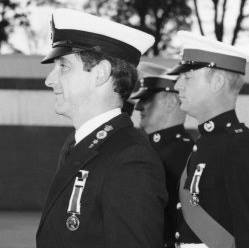
David Stelmach, at Commando Training Centre Royal Marines receiving LS and GC medals
In this episode of Kydd’s adventures, he sails from disaster in the South Atlantic to the Caribbean, where he experiences disaster and victory with his companion and soul brother Renzi. A side plot entails the rescue of his valet, Tysoe, from slavery, and such deviation from the main plot enriches the reader experience, rather than distracting them from the excitement of the chase.
It is Kydd’s task to save the Caribbean Sugar industry from destruction as reports are received of the French intercepting the valuable cargos en route to England in the Caribbean. The chase is on and Renzi’s intelligence role is called upon to determine the location of the French HQ.
This is not the only plot, and, at one point Kydd is, apparently, discredited by another captain and then accused of his murder. Will Renzi be able to save him from the noose?
Please write quicker!!! I’m already missing Kydd!!’
–David Stelmach
——–

John Evans in the cockpit of a Swordfish, Royal Navy Historic Flight Centre
I’ve now read my proof copy of CARIBBEE three times; excellent, it progresses Kydd’s career as I hoped it would.
Although not a professional sailor, this son of a Royal Navy chief engine room artificer grew up amidst the Royal Navy of the 1950s and 60s and has been steeped in the best of naval literature ever since he learnt to read. Julian Stockwin’s ‘Kydd’ novels stand at the highest level in the fiction category. His plots hold the reader’s attention admirably, particularly as they are based on well-researched historical facts and his personal knowledge and experience of naval life. Forester and O’Brian were great authors but Stockwin was a seaman and naval officer and it shows: his ships manoeuvre and fight with a realism that can’t be faulted no matter how hard one tries, and his descriptions of the geography in which his characters operate evoke a sense of place that is palpable.

Over 20 authors taking part
Latest in the series is CARIBBEE. Kydd’s beloved frigate L’Aurore has escaped from the River Plate and hurried north under orders to seek assistance for his commanding officer Home Popham. The sunlit Caribbean could not be a greater contrast with the dismal mudflats and tortuous channels of the Plate, and Kydd and his great friend Renzi are happy to be returning to the scene of their adventures as seamen years before when they served in the cutter Seaflower – but dangers from nature and man very soon have both of them stretched to the limit of their abilities. Perhaps beyond . . .
Now for the all-too-long wait for the next ‘Kydd’, which will test the patience greatly.’
– John Evans
——
Watch out for some great contests and features in the lead-up to the publication of CARIBBEE next month.
And – coming soon – I’m participating in a Nautical Blog Hop!
‘Sink Me the Ship, Master Gunner!’
Posted on August 31, 2013 7 Comments
[To leave a comment go right to the end of the page and just enter it in the ‘Leave a Reply’ box]

Sir Richard Grenville
This day 422 years ago Sir Richard Grenville in the galleon Revenge, and separated from the rest of the English fleet off the Azores, began one of the most epic ‘last stands’ in naval history.
For fifteen hours, from three o’clock in the afternoon of 31 August 1591 until dawn the following morning, Revenge stood against a fleet of 53 Spanish warships, sinking two of them outright.

Last hours of an heroic fight
At one stage Grenville ordered his own ship to be sunk rather than see her go to the enemy crying, ‘Sink me the ship, master gunner!’ However, implored by his officers not to do so, he relented, on condition that the Spaniards spare the lives of his crew.
Grenville, who had been gravely wounded in the fight, died aboard the Spanish flagship several days later.
This extraordinary action of courage and fighting spirit gripped the imagination of Elizabethan England and began the traditions that in the centuries to follow made these islands the greatest maritime power.
In 1878 Alfred Lord Tennyson immortalised the action in his poem, ‘The Revenge: a Ballad of the Fleet’
- And the pikes were all broken or bent, and the powder was all of it spent
But Sir Richard cried in his English pride
‘We have fought such a fight for a day and a night
As may never be fought again!
We have won great glory my men!
And a day less or more
At sea or ashore
We die – does it matter when?
Sink me the ship, Master Gunner – sink her, split her in twain!
Fall into the hands of God, not into the hands of Spain!’
You can read the full version here

World-War II battleship that proudly carried the famous name
In a twist of fate, less than a week after the battle, Revenge, with a 200-man Spanish prize crew aboard, was lost with all hands in a violent storm.
The name Revenge would become one of the most renowned in naval history, proudly carried by a number of Royal Navy ships. The most recent Revenge was a Polaris submarine launched in 1969 and decommissioned in 1992.
As an aside, Grenville’s father Roger was captain of the ill-fated Mary Rose and drowned, along with most of those aboard, on 19 July 1545.
Copyright notices
Grenville: Public Domain via Wikimedia Commons; Revenge: Public Domain via Wikipedia; WWII battleship: By Royal Air Force official photographer : Devon S A (Mr) [Public domain], via Wikimedia Commons
Every effort is made to honour copyright but if we have inadvertently published an image with missing or incorrect attribution, on being informed of this, we undertake to delete the image or add a correct credit notice
Kydd’s Home Town
Posted on August 28, 2013 6 Comments
[To leave a comment go right to the end of the page and just enter it in the ‘Leave a Reply’ box]
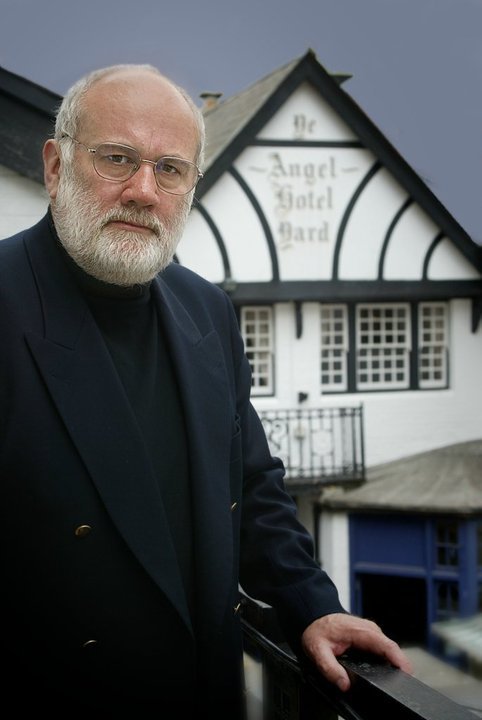
The Angel Posting House, last of its kind
One of the most enjoyable aspects of writing the Kydd series has to be going on location research! (I know how lucky I am to be able to earn my living this way…)
This has taken the Stockwins all over the world – America, Canada, Australia, South Africa, the Caribbean, Europe. But, of course, quite a lot of location research is in the UK – and for Guildford, Kydd’s home town, I already knew the locale well, having lived there for a number of years before we moved to Devon. In fact I wrote the first three books in the Kydd series there.
Guildford has a long and proud history. It was founded by Saxon settlers shortly after Roman authority had been removed from Britain. The site was chosen because the Harrow Way crosses the River Wey at this point, via a ford. This gave rise to the second half of Guildford’s name; the first half, I’ve been told, probably came from the golden coloured sand at the bank of the river.
In some research locations that we visit it’s quite hard to peel away the layers of modernity but much of Kydd’s Guildford remains to this day; great inspiration for a novelist – and a treat for anyone interested in history.
You just have to walk up the cobbled High Street and you come to Holy Trinity Church and churchyard, which dates to medieval times, although the present structure was completed in classical style in 1763, thirty years before Tom Kydd was spirited away by the Press Gang. The graveyard was a useful source of Georgian names for me: a weathered and tilting marker with the name Tewsley carved into it gave me inspiration for ‘a lined, middle-aged lieutenant,’ aboard Duke William.
A magnificent black-faced clock, trimmed in gilt, projects out from the façade of the Guildhall, high above street level. The building was refronted in 1683 and contains a sixteenth-century courtroom and a seventeenth-century council chamber. It was near here that I placed the Kydd wig shop.
Just down the hill from the Guildhall is the Angel Posting House. The inn was a popular place of lodging for naval officers en route by coach from London to Portsmouth. Lord Nelson is said to have spent his last night in England in the Angel, writing a final letter to Emma Hamilton, before embarking aboard HMS Victory for Trafalgar and immortality. The Angel has a special connection for me for it was there that I first learned I was to be a published author! Kathy and I were having a drink in the bar when we got THE call from our agent Carole Blake… Cheers, Carole!
There are many other historical attractions in Guildford, including the ruins of a medieval castle. For centuries its stone walls and tower have kept a silent vigil not far from the River Wey. Kydd would have played there as a boy and Cecilia and Renzi inspected the Keep together.
Guildford has featured in a number of the Kydd books and will certainly do so in the future!
Copyright notices
Every effort is made to honour copyright but if we have inadvertently published an image with missing or incorrect attribution, on being informed of this, we undertake to delete the image or add a correct credit notice
 Julian Stockwin