
Ask BigJules: Recreational reading
Posted on January 22, 2014 5 Comments
[To leave a comment or reply go to box at the end of the page]
Randy S. Veronesi, a 52 year old Ex US Navy vet now living in Sydney, emailed:
Many thanks for your wonderful works. I’m an avid fan of the age of sail and the career of Kydd & Renzi has given me many hours of pure enjoyment. I re-read the series every time a new book comes out. I even own all the your books in audio to listen to on my phone. You are number one in my list of favorite authors still writing today along with Dewey Lambdin, W E B Griffin, Allan Mallinson, Ian Gale, John Wilcox, Peter Smalley, Seth Hunter, James L. Nelson and Sean Thomas Russell. I provide this list to ask: what favorite authors do you read for pleasure?

Memoirs like this of the ‘pre box-boat’ days are among my favourite recreational reads
When I do get some down time, so to speak, I particularly enjoy memoirs of merchant mariners who served before the time of the ‘box-boats’. In their days, ere the shipping revolution brought about by containerisation, cargo handling was a very labour intensive – and skilled – business. Also, because cargo needed to be hoisted out, load by load, a ship could be weeks in port (modern container ships turn around in hours only). This meant that much of the life of these pre-boat box sailors would be familiar to Kydd. With time to kill, the crew went on the rantan ashore in foreign ports, often returning somewhat the worse for wear.
It was still the age of natural fibre so there was a need for skilled splicing and old seamanship. Modern ships have polypropylene or wire ropes that are never spliced but metal moulded together.
And before the era of satellite communications, once in Neptune’s realm only the radio operator knew what was going on beyond the world of their ship. It made for a close-knit community.
Under a Yellow Sky is a colourful memoir from Simon Hall who went to sea at a time when the British fleet was still one of the greatest in the world and the Red Ensign a common sight in almost every large port. He writes of the shipboard camaraderie and wild jaunts ashore in exotic places. As he tramped around the backwaters of the world he discovered the magic of the sea and encountered people from across the whole spectrum of human behaviour. Hall’s Scotland-based publisher, Whittles, has brought out a number of such books that I commend for evoking a maritime world now gone.
Do you have a question for ‘Ask BigJules’ – fire away! I’ll answer as many as I can in future posts…
ARTEMIS: Sailing seven seas
Posted on January 19, 2014 27 Comments
ARTEMIS is the second book I wrote – what a change for Thomas Kydd, no longer in the old line-of-battle ship Duke William, he finds himself on the deck of a crack frigate – and rated a full able seaman! Renzi, Stirk, Doud, Doggo, Pinto and Wong join him as replacement for prize crew.
What were the challenges in writing a follow-on to Kydd?

Signing the book!
As ARTEMIS was the second in a series I also had to make sure I’d got the continuity right. Historical time, character consistencies and development, descriptions. Also, looking ahead to succeeding books I had to make sure I hadn’t shot myself in the foot with some incident that would later come back to haunt me.
Actually there was no time for hanging around worrying. As soon as I submitted the manuscript of ARTEMIS Kathy and I were off working on the next book. We were in the Caribbean on location research for SEAFLOWER when we heard from Roland Philipps, my then editor at Hodder & Stoughton, that he’d just finished reading the manuscript and he loved the book – and planned a special launch somewhere he thought I’d approve!
April 4, 2002 was an evening to remember – with friends and people from the book world toasting my second book and knowing that just outside, proudly standing in all her glory was HMS Victory.
It was a magnificent party at the McCarthy Gallery in the Royal Naval Museum, Portsmouth. Around 70 friends and guests from the publishing world came from as far afield as the United States and Denmark, as well as all over the UK. The Royal Navy was well represented, with five captains and a commodore present!
One of the highlights of the evening was a special viewing of the original painting by Geoff Hunt RSMA that was commissioned for the cover art of ARTEMIS. You can buy limited edition prints of the covers Geoff painted. (Just as an aside: Artemis is my favourite!)
When you wrote this book how far into the future did you plan?
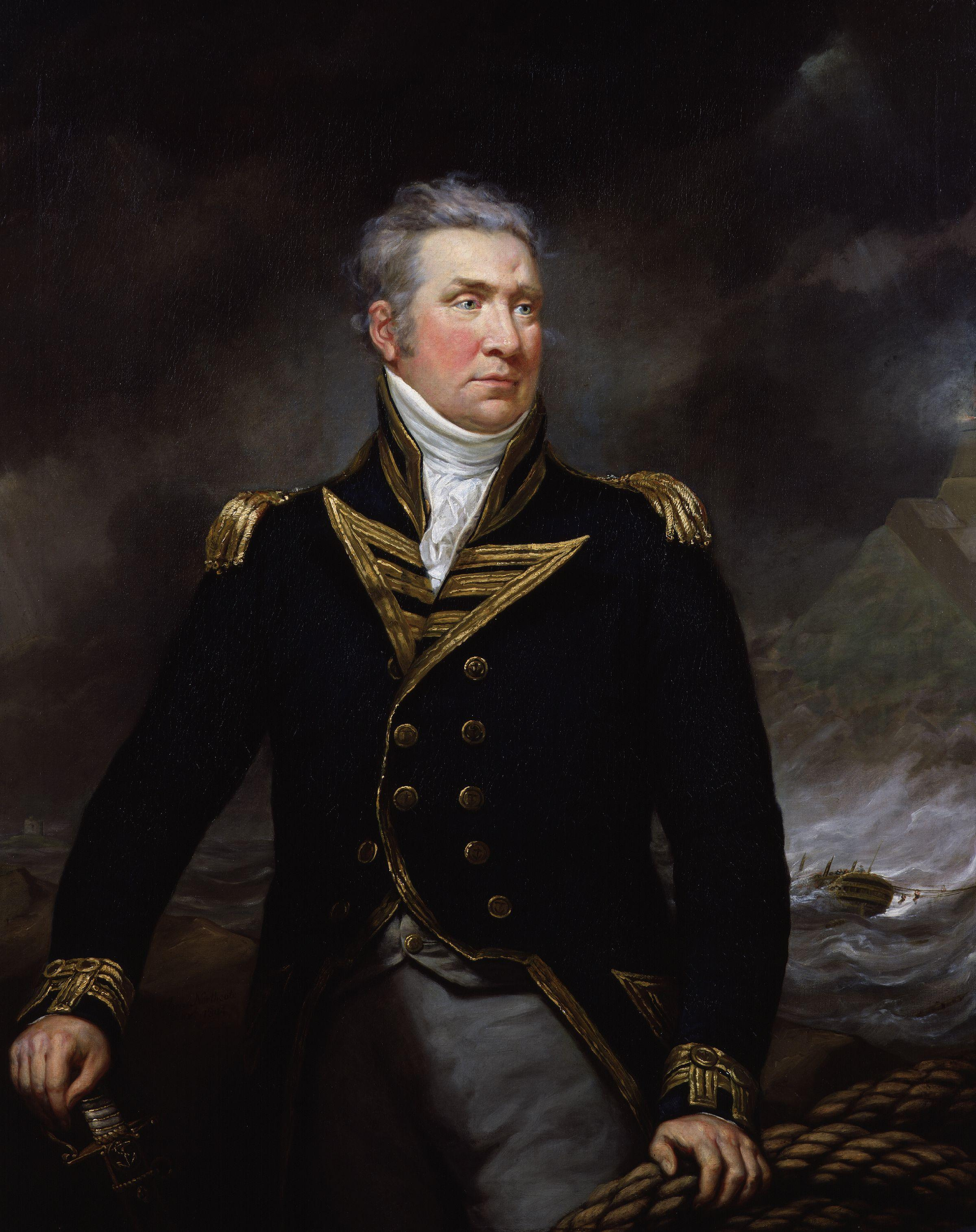
Edward Pellew, on whom Black Jack Powlett was based
Are any of the characters based on individuals from your time at sea?
When I first went to sea I met some pretty tough Old Salts. On the surface often really hard men but a number were also quite sentimental and protective of young boy sailors like me. I drew on these memories in creating my characters; some are composites of sailors I’d come across in my time in the Navy, others are creations of my imagination, but based on extensive historical reading and research.
How true to the factual record is this book?
As in all my books, I go to great lengths to stay true to history. The desperate frigate action in ARTEMIS is based on that of Nymphe and Cleopatre. Maillot’s (Mullon’s) gallant act did take place, but in fact it was the captain’s own brother, Israel Pellew, who personally laid and fired the fatal carronade shot that turned the tide.
Kydd has his first sexual encounter of the series in this book. Was it hard to write?
Well, Kydd is a young red-blooded man… and in writing my books I wanted to show not just life at sea but what happened ashore. In ARTEMIS Kydd has several relationships with the female of the species. First, there’s Sarah in Macau – and his torment over deciding whether it would be right or not to marry her. Later, Tamaha comes on the scene… I must admit when I’d written the Macau scene I was a little concerned what my mother-in-law might think! Sadly, she passed away a few years ago but she always loved my books and was one of my greatest fans.
Any particular highlights of your location research?
I had already as a sailor visited the countries mentioned in this book – Philippines, China, Macao – and as well we had lived in the Far East and could call on these memories and photographs of my voyages. The Christmas scene on the beach was inspired by an actual Christmas Kathy and I had on a remote island in the Philippines. I remember the pit roasted pig to this day! And the warm tropical sun, such a contrast to cold Christmases in England.
How did you feel when Bob Squarebriggs presented you with a half model of Artemis.

Canadian reader Bob Squarebriggs presented me with this splendid half model of Artemis
Copyright notices
Pellew image: By James Northcote (died 1831) [Public domain], via Wikimedia Commons
Every effort is made to honour copyright but if we have inadvertently published an image with missing or incorrect attribution, on being informed of this, we undertake to delete the image or add a correct credit notice
BookPick: England’s Medieval Navy
Posted on January 17, 2014 Leave a Comment
[To leave a comment or reply go to box at the end of the page]
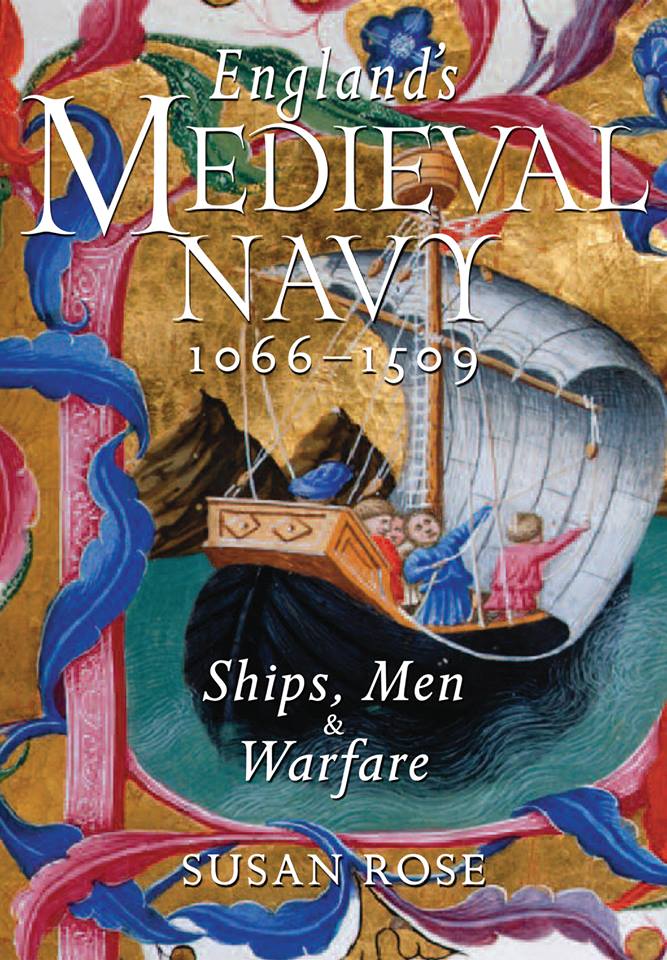
England’s Medieval Navy
Deploying a wide range of sources, the author of this fascinating publication from Seaforth, Susan Rose, looks at how English kings after the Norman Conquest learnt to use the Navy of England, a term which at this time included all vessels whether Royal or private and no matter what their real purpose – to add to the safety and prosperity of the kingdom.
The design and building of ships and harbour facilities, the development of navigation, ship handling, and the world of the seaman are all described, while comparisons with the navies of England’s closest neighbours, with particular focus on France and Scotland, are usefully made. Notable battles including Damme, Dover, Sluys and La Rochelle are included to explain the development of battle tactics and the use of arms during the period.
Rose shows how the real aim of successive monarchs was to begin to build ‘the wall’ of England, its naval defences, with a success which was to become so apparent in later centuries.
Useful extras in the book include a bibliography, a timeline and additional notes on each chapter. Extensive illustrations, many from contemporary sources, enrich the text.
Ask BigJules: The Big Guns
Posted on January 13, 2014 16 Comments
[To leave a comment or reply go to box at the end of the page]
P J Duncan emailed:
‘I have a question concerning the big guns on navy ships in Kydd’s day. There seems to be any number of different ones. Can you explain which were used on what type of ship and what is the difference between a carronade and a cannon.’

The carronade, a game changer!
Thanks for the question, P J.
Basically, the classification of the big guns came from the weight of the solid round shot (cannon ball) fired – 42 pounder, 32, 24, 12, 9 and 6 pdr. (Ashore the standard army cannon was only a 6 pdr.)
HMS Victory’s armament at Trafalgar was 30 x 32 pdrs, 28 x 24 pdrs, 44 x 12 pdrs, 2 carronades.
The 24 and 32 pdr were the standard gun in ships of the line; they were never found in frigates.
Frigates carried 12 or 18 pounders and smaller, plus carronades. Sloops and smaller ships had 9 pounders and 6 pounders with their carronades.
Carronades were game changers – they could fire up to 68 pound shot but could be carried on small ships and even boats. A carronade was a short lightweight gun that fired a heavy shot at a low velocity over a short range. Unlike a cannon, it was mounted on a carriage fitted with a sliding block to take recoil. They could be reloaded very quickly. Because of its destructive power at short range the carronade was known as the ‘smasher’ by Jack Tar. The name carronade comes from the Carron Iron Company in Scotland, where the gun was originally developed. It was first introduced into the Royal Navy in 1779.
So successful were they that several ships were fitted only with carronades, no long guns, notably the Glatton, which commanded by William Bligh of Bounty fame, fought heroically at Copenhagen under Nelson.
Do you have a question for ‘Ask BigJules’ – fire away! I’ll answer as many as I can in future posts…
A Kydd Family Tradition
Posted on January 10, 2014 1 Comment
[To leave a comment or reply go to box at the end of the page]
I’m always delighted to hear from readers. Over the years I’ve had emails and letters from male and female Kyddites ranging from children/teenagers to octogenarians! Some have special connections with the sea; others enjoy engaging with the colourful characters of the Georgian period. Many tell me they just like an engrossing, page-turning historical novel… Whatever the reasons for reading my books I plan quite a few more titles to come!
Following on from the charming Cuban Grandmother in December, the January Reader of the Month is Ethan Morley-Olabarria.
Ethan, eleven, recently started secondary school and is getting high grades in his English assessments – which his father Andy puts down to the Kydd books!

Father and son Kydd readers Andy and Ethan, with Ethan’s favourite title
Andy first picked up a Kydd when he was in the British Army stationed out in Namibia and told me the tales gave him an escape from the stresses of army life. He says he was hooked from day one and Tom Kydd has since travelled all around the world with him.
He started sharing his love of the series with Ethan when his son was just five by reading the stories to him. ‘As he was so young I would have to explain quite a lot of the context but he soon learnt to follow the tales with excitement.’ Now they read the books to each other! A lovely father and son tradition.
Ethan says: ‘I’ve learnt a lot of history about the Navy. I have also learnt to read out loud and to be confident when reading.’ His favourite book is Conquest, which is the first book he read from cover to cover without his father helping.
Ethan says he would like to go to sea when he grows up – but not in the Navy; he plans to become a marine biologist.
Would you like to be a candidate for Reader of the Month? Just get in touch with a few sentences about your background and why you enjoy the Kydd series. Each published Reader of the Month will receive a special thank-you gift
KYDD, My First Book
Posted on January 7, 2014 57 Comments
Looking back at this, the debut novel in the Kydd series, it hardly seems that a decade has passed since I very nervously submitted a proposal to write a series about a young man press-ganged into the Royal Navy, who eventually goes on not only to cross the great divide between the lower deck and the quarterdeck, becoming not only an officer, but eventually to make admiral!

The book’s cover was commissioned as an original oil painting by Geoff Hunt RSMA
The agent to whom I sent my little package (it wasn’t done by email in those days…) was Carole Blake. Kathy and I had made up a long list of agents we planned to approach. Although we both believed in the series with all our hearts we were realistic enough to know that it would be highly unlikely to find an agent willing to take the project on at our first attempt – and we were starting with one of the country’s very top agents…
However, the patron saint of writers must have been looking down on me and Carole came back very positively and suggested a meeting. We liked each other and it went from there – auctions both sides of the Atlantic, foreign translation deals, audiobook contracts…
As it is my first book, KYDD will always hold a special importance for me. My first contract was for four books, which seemed a huge undertaking – even though as a computer systems man I had mapped out outlines and plots for the first twelve titles (that’s now expanded to over 20!). When I decided to see if I could write about the great age of fighting sail I took the big step of giving up full-time work and accepting a half-time position lecturing in computing at a local college. (Kathy was still working full-time.) In stages I gave up the day job and then Kathy joined me so we could work as a full-time creative team.
Favourite scene? Probably Kydd’s first night aboard when he finds solace deep in the bowels of the ship thanks to a kindly boatswain – and a little warm, furry creature…
Why choose a wig-maker for your hero?
I wanted to have someone not at all connected with the sea, taken against his will into His Majesty’s Royal Navy but who grows to love the life and find a natural ability as a seaman. I chose to have him as a wig-maker somewhat on a whim but also as this was an occupation facing many challenges with changes in society at that time and through this I could also reflect the Georgian age ashore.
Where did his name come from?
Ah! I thought long and hard about this, wrote down hundreds of possible names from the period, wandered through numbers of graveyards looking at tombstones. I knew I wanted something manly, of the time, but also with a modern ring. Princess Diana’s mother’s name was Frances Shand Kydd. ‘Kydd’ somehow rang a bell and when I checked I confirmed it would certainly have been found in Georgian times.
Spotted on TV – with the Blake expedition up the Amazon
What was the hardest thing you encountered in writing this book?
That’s easy – adjusting to having Kathy critique my work! In the early stages she was kind but very firm. I would look at the proverbial blue pencil marks (she is an ex magazine editor-in-chief) all through my lovingly crafted work and resent every change she suggested. But in a fairly short time I realised she has superb editorial judgement, and I trust her unconditionally now.
How much of your own naval career was brought to bear?
For me, it has to be said that having served in the Navy has proved invaluable in my writing. I know the traditions of the sea, many of which have not changed even to this day. And quite a few of the characters in my books are based on actual mariners I have known. I was not pressed but I served both as a common seaman and as an officer.
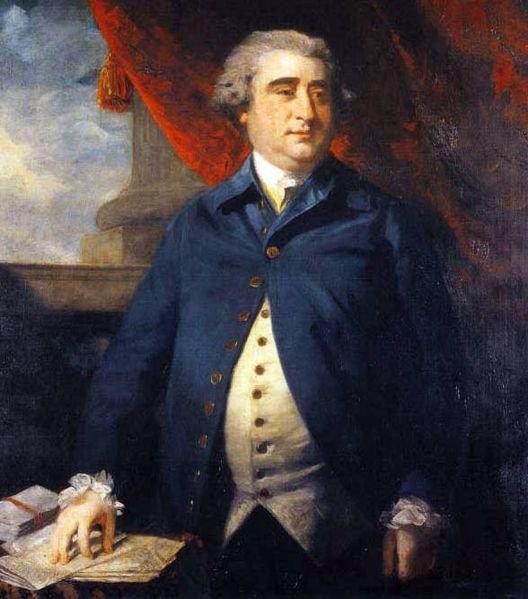
Charles Fox, larger-than-life Georgian politician
Why did you kill off Bowyer?
That was very hard and in fact upset me writing it but there were two reasons behind it. First, I wanted to show that the sea is and always will be neither cruel nor malevolent but simply indifferent to we insignificant mortals. Second, I had to make way for the forging of a friendship between Kydd and Renzi.
How much research did you have to do for this book?
Well, location research initially was very little as I lived in Guildford and knew Portsmouth and Sheerness very well from my Navy days. By that stage I had amassed a quite considerable library on the Napoleonic period but I needed to flesh that out with information from museums, libraries and talking to various experts. In all I probably put in about six months’ research time.
Copyright notices
Fox: Image: By Joshua Reynolds (1723-1792) (worldroots.com/brigitte/royal/royal17a.htm) [Public domain], via Wikimedia Commons
Every effort is made to honour copyright but if we have inadvertently published an image with missing or incorrect attribution, on being informed of this, we undertake to delete the image or add a correct credit notice
BookPick: British Naval Power in the East
Posted on January 4, 2014 1 Comment
[To leave a comment go right to the end of the page and just enter it in the ‘Leave a Reply’ box]

Ward British Naval Power in the East
When war broke out with France in 1793, the threat of a renewed French challenge to British supremacy in India arose again. This was compounded when the valuable Dutch trade route and Dutch colonies in the East Indies fell under French control.
The formidable task of securing British interests in the East fell to Admiral Peter Rainier, commander of the Royal Navy in the Indian Ocean and the East from 1794 to 1805, a period when far away a distracted Britain faced imminent invasion by Napoleon Bonaparte.
Author Peter Ward provides a fascinating account of the enormous difficulties Rainier faced. The book outlines his career, explaining how he carried out his role with exceptional skill; how he succeeded in securing British interests in the East – whilst avoiding the need to fight a major battle; how he enhanced Britain’s commanding position at sea; and how, additionally, in co-operation with the governor-general, Richard Wellesley, he further advanced Britain’s position in India itself.
Historical Fidelity, A Reader’s View
Posted on January 1, 2014 6 Comments
[To leave a comment go right to the end of the page and just enter it in the ‘Leave a Reply’ box]
One of the aspects of writing my Kydd tales that I particularly enjoy is bringing real-life historical personages to life; some have quite large roles, others just cameo appearances. I feel that the writer of historical fiction has a duty not to betray the figures of the past either by distortion or exaggeration. It is important, too, not to impose modern-day judgement on the Georgian period, but to try to present those who strode its stage as they would have been seen then. This takes quite a deal of research, even for just a short appearance on the page, but it is very gratifying when readers let me know that they have enjoyed seeing them come to life in my books and feel they are transported back in time to an age where the people were in many ways very similar – yet in some ways so very different.
One such is Robert Fliss:

Horatio Nelson
‘The “intelligent, manipulative, gifted, and controversial” Commodore Sir Home Riggs Popham has cut a dash in several of your novels, including BETRAYAL.
I went back to my reading log and noted that I made this comment after finishing BETRAYAL:
“In an afterword, Stockwin promises more of Popham … Historic naval fiction being what it is, it makes sense to pair one’s hero with an inveterate risk-taker for a commander.”
One of the great pleasures of the Kydd series is the way you handle cameos from historical characters. For example, I thought your depiction of William Carr Beresford in BETRAYAL was dead-on. Not a dashing combat leader but a solid professional with fine organisational skills.
Being a Yank, I also appreciated your portraits of the gruff but honest Thomas Truxtun in QUARTERDECK along with Robert Fulton in INVASION, suffering the frustration that inevitably goes along with genius.
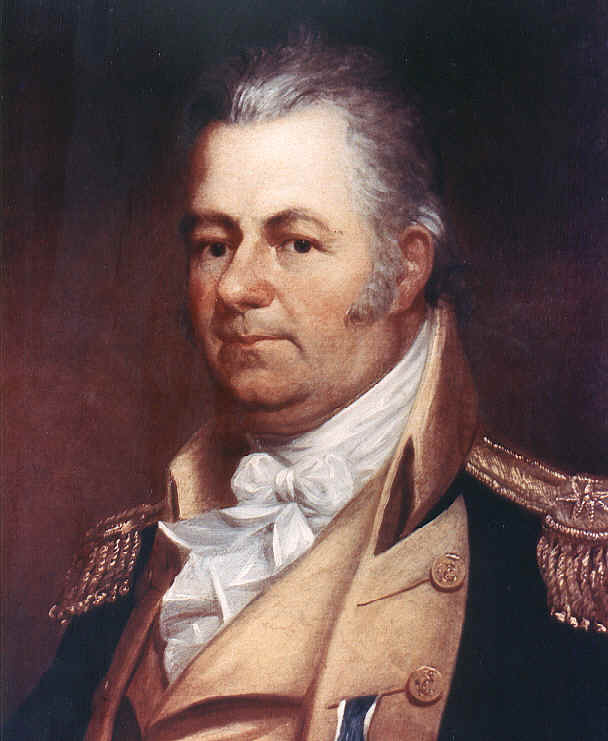
Captain Thomas Truxtun, USN
But the best cameo of all may have been in VICTORY, when Kydd deduces that his promotion to command L’Aurore likely came through Nelson’s influence. Nelson was a great judge of talent, and though Kydd served under him only briefly, it seems in character that Nelson would be looking after him.
Rescuing the mercurial Commodore Popham from obscurity is a real tour-de-force. Ditto for Sidney Smith. I enjoyed the fact that Kydd gets to serve under these two senior officers whose undoubted professional competence was matched only by their propensity for rubbing some of their contemporaries the wrong way!
The surprise factor is essential in making historical cameos work. Along this line, I might mention Kydd’s brief encounter with Captain Charles Austen in INVASION.
But the best cameo of all may have been in VICTORY
A large share of the fun in historical fiction is matching your own knowledge against the author’s research. Certainly, standards of historical fidelity have risen, which I credit in large part to George Macdonald Fraser. Bernard Cornwell is a worthy successor.
But I can name two aspects of the Kydd novels that beat Fraser and Cornwell.
First, the series is being presented in a reader-friendly straight time line. It’s hard to build a character when you’re constantly jumping around in the chronology, not to mention the high likelihood of continuity glitches. Cornwell fans often comment that the three Sharpe novels set in India were like a new series. That’s not necessarily a bad thing but a straight timeline is a better way to hook the reader for good. I read all the Kydd novels in the correct order and wouldn’t have done it any other way.
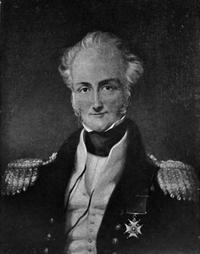
Sir Charles Austen
Second, Tom Kydd is one of the more approachable, human-scaled heroes in current genre fiction. Flashman the dashing rogue and Sharpe the fighting machine are both in their own ways a little over the top, not that the novels are any the less entertaining for all that. Tom Kydd reminds me a little of John Buchan’s Richard Hannay, a hero whose defining qualities are not superpowers or eccentricities but professional competence combined with basic decency.
Those are traits pretty much absent from current literary fiction, which values the perverse and psychotic above all. Non-heroes are acceptable, anti-heroes preferred. But there seems to be no place for the traditional virtues.’
I welcome other comments.
Lots more blog posts coming in 2014, including Reader of the Month, a special focus on each of the Kydd titles and a regular feature on the colourful language of the Georgians.
Happy New Year to you all!
Copyright notices
Nelson: Public domain via Wikimedia Commons; Truxtun: By Bass Otis (d. 1861[1]) (Portrait of Thomas Truxtun) [Public domain], via Wikimedia Commons; Austen: Public Domain via Wikimedia Commons
Every effort is made to honour copyright but if we have inadvertently published an image with missing or incorrect attribution, on being informed of this, we undertake to delete the image or add a correct credit notice
Christmas at Sea
Posted on December 23, 2013 25 Comments
[To leave a comment go right to the end of the page and just enter it in the ‘Leave a Reply’ box]
Christmas ashore is a jolly time of fun and festivities where families and friends get together to eat and drink and exchange gifts. But having a number of salty Yuletides under my belt I know it can be a poignant time for seafarers and their loved ones.
Robert Louis Stevenson’s poem ‘Christmas at Sea’, although perhaps a little OTT in terms of Victorian sentimentality, brings home the sadness of separation at this time.
Christmas at Sea
The sheets were frozen hard, and they cut the naked hand;
The decks were like a slide, where a seamen scarce could stand;
The wind was a nor’wester, blowing squally off the sea;
And cliffs and spouting breakers were the only things a-lee.
They heard the surf a-roaring before the break of day;
But ’twas only with the peep of light we saw how ill we lay.
We tumbled every hand on deck instanter, with a shout,
And we gave her the maintops’l, and stood by to go about.
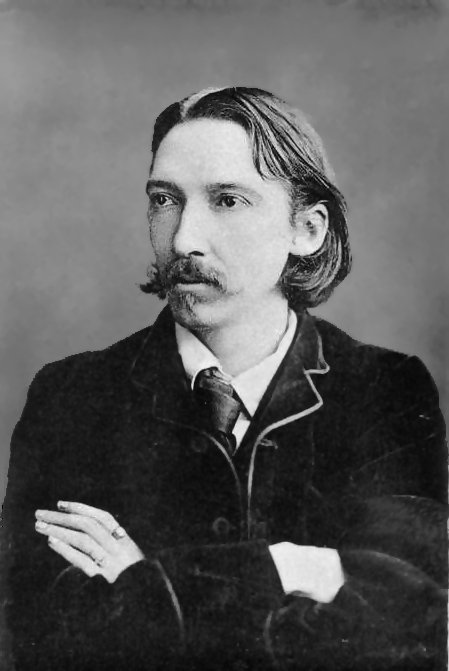
Robert Louis Stevenson
All day we tacked and tacked between the South Head and the North;
All day we hauled the frozen sheets, and got no further forth;
All day as cold as charity, in bitter pain and dread,
For very life and nature we tacked from head to head.
We gave the South a wider berth, for there the tide-race roared;
But every tack we made we brought the North Head close aboard:
So’s we saw the cliffs and houses, and the breakers running high,
And the coastguard in his garden, with his glass against his eye.
The frost was on the village roofs as white as ocean foam;
The good red fires were burning bright in every ‘long-shore home;
The windows sparkled clear, and the chimneys volleyed out;
And I vow we sniffed the victuals as the vessel went about.
The bells upon the church were rung with a mighty jovial cheer;
For it’s just that I should tell you how (of all days in the year)
This day of our adversity was blessed Christmas morn,
And the house above the coastguard’s was the house where I was born.
O well I saw the pleasant room, the pleasant faces there,
My mother’s silver spectacles, my father’s silver hair;
And well I saw the firelight, like a flight of homely elves,
Go dancing round the china-plates that stand upon the shelves.
And well I knew the talk they had, the talk that was of me,
Of the shadow on the household and the son that went to sea;
And O the wicked fool I seemed, in every kind of way,
To be here and hauling frozen ropes on blessed Christmas Day.
They lit the high sea-light, and the dark began to fall.
“All hands to loose topgallant sails,” I heard the captain call.
“By the Lord, she’ll never stand it,” our first mate Jackson, cried.
…”It’s the one way or the other, Mr. Jackson,” he replied.
She staggered to her bearings, but the sails were new and good,
And the ship smelt up to windward just as though she understood.
As the winter’s day was ending, in the entry of the night,
We cleared the weary headland, and passed below the light.
And they heaved a mighty breath, every soul on board but me,
As they saw her nose again pointing handsome out to sea;
But all that I could think of, in the darkness and the cold,
Was just that I was leaving home and my folks were growing old.
But I have warm memories of my Christmases at sea. Captains, whenever operations permitted, went out of their way to both honour the spiritual elements of this time of year and make sure there was some relaxation of normal work and discipline.
I remember the traditional fun and games. In the Royal Navy (and a number of others) it has long been a tradition to change roles, the youngest crew member finding himself ‘captain’ and fining the real commanding officer a bottle of rum or some such for an ‘indiscretion’. This dates well back to pagan times when, during certain festivals, masters would wait on the slaves, who in turn assumed their lordly roles.
Up to the introduction of modern victualling methods individual messes provided their own Christmas fare. On Christmas morning the mess tables would be groaning with edible luxuries. The captain, accompanied by his officers and preceded by the ship’s band, made a customary tour around the mess decks. Stopping briefly at each mess, he exchanged the compliments of the season and partook of various delicacies from proffered plates, which was sacrilege to pass without due recognition.
One wit describing such an event wrote: ‘A captain would require the digestion of an ostrich and the capacity of an elephant if he even sampled all that he feels it incumbent on him to accept. Yet it all disappears to some mysterious place known only to a captain – and perhaps his coxswain.’
Before rum was abolished in the Royal Navy in 1970, several months before Christmas a much-loved ceremony occurred as each ship made a giant batch of Christmas pudding mixture. Supervised by the ship’s cooks,the captain and crew added a goodly amount of rum to the mix, which was stirred with a wooden paddle.
The merchant service also holds this time of the year special. In 1928 the purser of ‘Garthpool’ wrote a warming account of the passing of Christmas on one of the last voyages ever made to the Antipodes by a British square-rigger:-
‘At midnight, preceded by a boy with a lanthorn, Father Christmas called at every cabin with carols and presents. He then went forrard with gifts for the crew and Christmas peace settled over the dark ship. Christmas Day was honoured with carefully shaved faces, neat ties and white shirts. There was festive yarning, Christmas toasts and a game of deck quoits preceded the Christmas dinner which included soup, tongue, plum duff and brandy sauce, cheese, nuts, sweets along with paper hats and crackers.’
One of Tom Kydd’s special memories of Christmas is of one spent ashore in the Philippines [ARTEMIS].
Do you have special memories of a Christmas at sea? Do share them.
Copyright notices
Stevenson image: By Rls-pc1.jpg: Knox Series derivative work: Beao (Rls-pc1.jpg) [Public domain], via Wikimedia Commons
Every effort is made to honour copyright but if we have inadvertently published an image with missing or incorrect attribution, on being informed of this, we undertake to delete the image or add a correct credit notice
Ghost Ships
Posted on December 20, 2013 12 Comments
[To leave a comment go right to the end of the page and just enter it in the ‘Leave a Reply’ box]
Ghosts and ghost stories are a long-established Christmas tradition. In A Christmas Carol Charles Dickens has miserly Ebenezer Scrooge encountering Yuletide spirits past, present and future.
But ghosts are not confined to dry land – spectral vessels and their crew ceaselessly roam Neptune’s Realm.
On a moonless night I dare you to go down to the sea and peer out into the dark void. You may just see a ghostly apparition sailing by…
And it’s not just under the cloak of darkness that such maritime wanderers have been spotted.
Are there too many sightings to just dismiss them out of hand as superstition or delusion? I wouldn’t like to put money on it either way.
Consider these three:
The Flying Dutchman
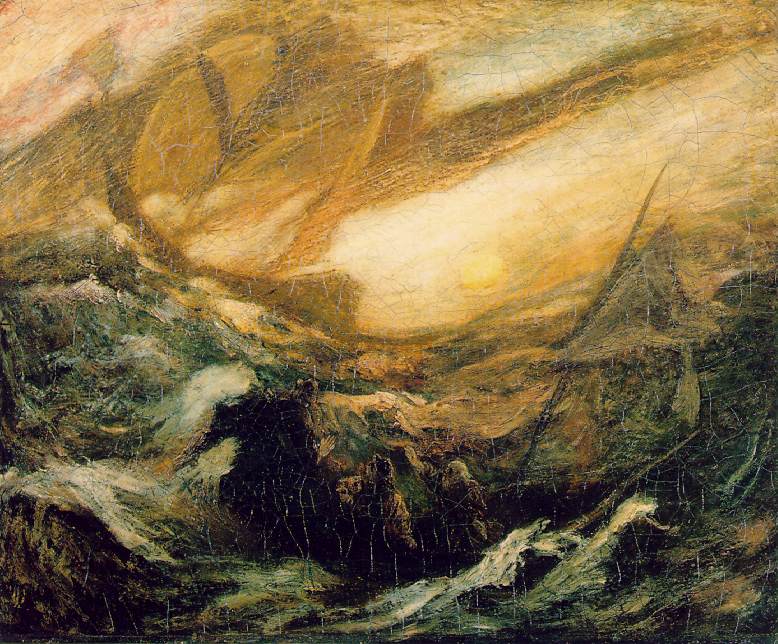
Captain Vanderdecken paid a terrible price
Probably the most famous ghost ship is the ‘Flying Dutchman’.
A certain Captain Hendrik Vanderdecken was sailing around the Cape of Good Hope heading for his destination of Amsterdam. A terrible storm arose and Vanderdecken refused to turn the ship back despite desperate pleas from the crew who grew more and more anxious for their lives.
Their captain ignored them, raged and blasphemed at the tempest and began drinking heavily. In despair, several of the crew mutinied. Vanderdecken shot the lead mutineer and threw his body overboard.
Then the clouds parted and a celestial figure descended on to the deck chastising him for his action. Vanderdecken made aim to fire at it but the pistol exploded in his hand.
Then a terrible curse was pronounced on Vanderdecken: ‘You are condemned to sail the oceans for eternity, with a ghostly crew of dead men. Bringing death to all who sight your spectral ship, and to never make port or know a moment’s peace. Furthermore, gall shall be your drink, and red hot iron your meat.’
Ghosts are not confined to dry land – spectral vessels and their crew ceaselessly roam Neptune’s Realm
There have been numerous sightings of the Flying Dutchman, including one by the future King George V. When a young midshipman in the Royal Navy serving aboard HMS Inconstant he reportedly wrote:
“At 4 am the Flying Dutchman crossed our bows. She emitted a strange phosphorescent light as of a phantom ship all aglow, in the midst of which light the mast, spars and sails of a brig 200 yards distant stood out in strong relief as she came up on the port bows, where also the officer of the watch from the bridge saw here, as did the quarterdeck midshipman, who was sent forward at once to the forecastle, but on arriving there was no vestige nor any sign whatever of any material ship to be seen even near or right away to the horizon, the night being clear and the sea calm.”
It did not end there. According to Admiral Karl Doenitz, U Boat crews logged sightings of the Flying Dutchman on their tours of duty.
Young Teazer

Preserved for posterity – a beam from Young Teazer
Young Teazer (no relation) is a ghost ship which blazes, explodes and then vanishes around the coast of Nova Scotia. Usually seen at sunset or moonset her appearance is a darkling forerunner of storms.
The original Teazer was an American privateer schooner under command of Frederick Johnson preying on sea trade of the British empire off the coast of Halifax. She was a fast vessel and took many prizes. Eventually she was captured and destroyed by the Royal Navy. The seamen were imprisoned and her officers paroled awaiting prisoner exchange. As part of the parole the officers gave their word that they would not take part in privateering again.
Johnson violated this and set sail in Teazer’s successor, Young Teazer.
She was chased by three British naval ships and trapped in Mahone Bay, west of Halifax. It was 27 June, 1813. Boarding parties were mustered but before they could reach her the ship exploded in a wall of flame. Preferring death to capture Johnson has put a firebrand to the magazine powder. Only a handful of the crew survived.
Soon after the tragic event, there were eye witness reports that Young Teazer had reemerged from the depths as a fiery spectral ship. The following year, on June 27, inhabitants of Mahone Bay were startled to see an apparition sailing into the same water where Young Teazer had been destroyed. As it came nearer they recognised it as the privateer, and then it vanished in a huge puff of flame and smoke.
Lady Lovibond
This ghost ship appears at fifty-year intervals.
On February 13, 1748, the schooner Lady Lovibond was on her way from London to Oporto in Portugal carrying a load of general cargo – and a wedding party. The groom was the skipper, Simon Reed, and he was accompanied by his new bride Annette and their guests.
The first mate John Rivers had long been in love with the captain’s wife and in a fit of jealousy, so the story goes, smashed in the skull of the helmsman with a belaying pin and then turned the ship into the notorious Goodwin Sands, graveyard to hundreds of ships over the centuries.
The wedding party below was having too much fun to notice the change in course until it was too late and they all perished.
By the next day the infamous Sands had swallowed up the ship and all souls in her.
Fifty years later to the day, two ships witnessed a phantom Lady Lovibond sailing in the vicinity of the Goodwin Sands, then disappearing.
Further sightings were recorded, with sounds of female voices coming from below deck, always at fifty year intervals.
If you want to experience Lady Lovibond you’ll have to wait until February 13, 2048!
A local folk song tells this tragic tale:
The captain’s wife she looked above
And met the eyes of her ex-love
And all too late she recognised
The burning hatred in his eyes
His heart ablaze with jealousy
‘If I can’t have her, nor will he’
He sput the wheel out of his hands
And ploughed her on the dreaded
Goodwin Sands

Want to read more briny beliefs and superstitions? I have a copy of STOCKWIN’S MARITIME MISCELLANY up for grabs. Just add a comment below to go into the hat!
Deadline: December 22
— † —
Copyright notices
Remains of Teazer: By Hantsheroes (Own work) [CC BY-SA 3.0 (http://creativecommons.org/licenses/by-sa/3.0)%5D, via Wikimedia Commons
Flying Dutchman image: Albert Pinkham Ryder [Public domain], via Wikimedia Commons
Every effort is made to honour copyright but if we have inadvertently published an image with missing or incorrect attribution, on being informed of this, we undertake to delete the image or add a correct credit notice
 Julian Stockwin