
BookPick: British Campaigns in the South Atlantic 1805-1807
Posted on May 5, 2015 1 Comment
This non-fiction book covers the subject matter of Conquest and Betrayal and would be of interest to readers of those titles whose curiosity is piqued and wish to delve deeper, as well as students of military history in general. Between 1805 and 1807 the British mounted several expeditions into the South Atlantic aimed at weakening Napoleon’s Spanish and Dutch allies. The targets were the Dutch colony on South Africa’s Cape of Good Hope, which potentially threatened British shipping routes to India, and the Spanish colonies in the Rio de la Plata basin, now parts of Argentina and Uruguay.
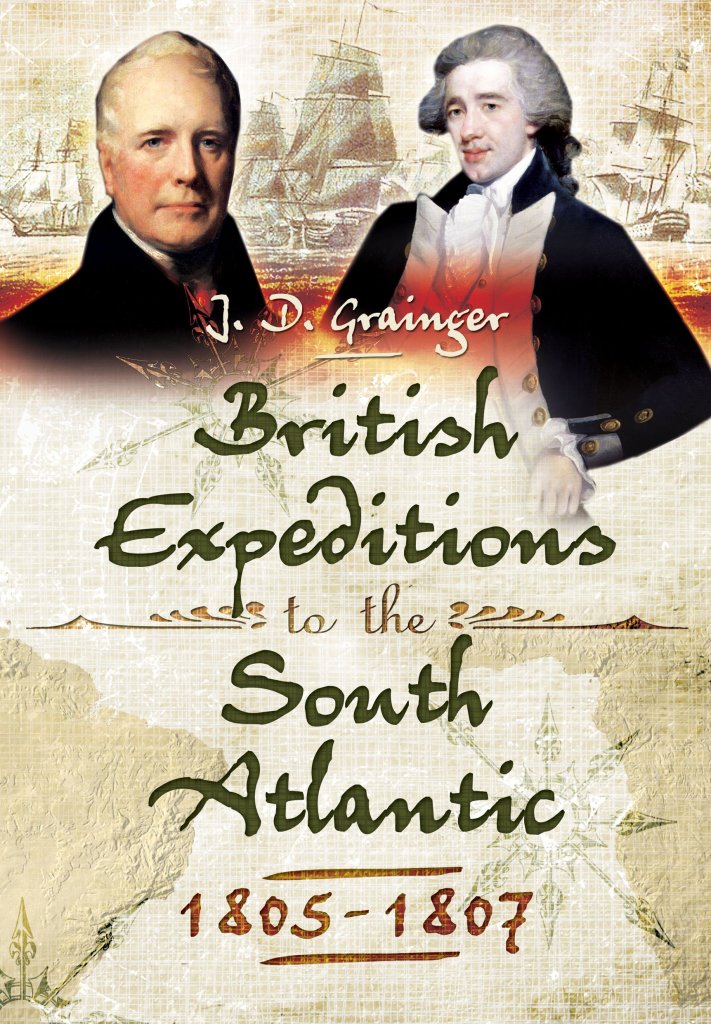 In 1805 an army of around 6,000 men was dispatched for the Cape commanded by General David Baird. They were escorted and assisted by a naval squadron under Commodore Home Riggs Popham. The Cape surrendered in January 1806. Popham then persuaded Baird to lend him troops for an attack on Buenos Aires. The city was taken in July but the paltry British force (around 2,400 men) was then besieged and forced to surrender in August. Popham was later court martialled for exceeding his orders.
In Feb 1807 Montevideo was taken by a new (officially sanctioned) British force of 6,000 men. Whitelocke, the British Commander then attempted to retake Buenos Aires but was defeated by unexpectedly fierce resistance stiffened by armed creoles and slaves. After heavy losses he signed an armistice, surrendering Montevideo and withdrawing all his forces. He too was court-martialled.
One of the themes of Grainger’s book is the strong Scottish connection – Baird was a Scot, and the 71st Highlanders made up the main force in the Cape and Popham’s adventure. Another is the unlooked-for consequences of these actions. The arrival of Scottish Calvinist ministers in the Cape influenced the eventual development of apartheid, while successful resistance to the British, with little help from Spain, shaped and accelerated the independence movement in South America.
It’s pleasing to see historians undertaking treatments such as this on some of the less well known British campaigns during the Napoleonic wars.
John D Grainger British Campaigns in the South Atlantic 1805-1807
Published by Pen & Sword. ISBN 1783463643
Copyright notices
Every effort is made to honour copyright but if we have inadvertently published an image with missing or incorrect attribution, on being informed of this, we undertake to delete the image or add a correct credit notice
BookPick: Nelson’s Victory, 250 Years of War and Peace
Posted on April 7, 2015 5 Comments
The publication of this title, written by Brian Lavery, is very timely as next month sees the anniversary of the launch of HMS Victory from Chatham Dockyard. Sumptuously illustrated, the book tells the story of the ship since she first took to the waters in May 1765. It contains what may be surprises for many readers: that she was almost wrecked on her launch; that diplomacy conducted onboard her played a crucial role in provoking Napoleon’s invasion of Russia in 1812; and that in 1914 Kaiser Wilhelm set the First World War in motion at a desk made from her timbers
 Organised in twelve chronological chapters, the book, not surprisingly, devotes one of these to the young Nelson (promoted to captain at the age of just 20). Nelson was born a few weeks before his most famous ship was ordered, and his career paralleled hers in many ways.
Although it deals with the Battle of Trafalgar in some detail, perhaps the most interesting sections of the book cover the other lives of the ship, which at different times was a flagship, a fighting ship, a prison hospital ship, a training ship for officers and boys, a floating courtroom, a signal school in the early days of radio, tourist attraction and national icon. Lavery shares with the reader how Victory was seen through many eyes, including Queen Victoria, admirals, midshipmen and ordinary seamen – and Beatrix Potter who visited as a girl!
As would be expected from a historian of the calibre of this author, there is a detailed Bibliography and Notes Section included.
Legions of books have been written about Lord Nelson and HMS Victory, many of which I consulted when I wrote my novel Victory. Despite the abundance of titles already published I was impressed with this beautifully produced book and it certainly warrants a place in my personal library.
A special exhibition, which Lavery curated, is running at Chatham until 31 May.
Brian Lavery Nelson’s Victory, 250 Years of War and Peace
Published by Seaforth Publishing. ISBN 978 1 84832 232 5
Copyright notices
Every effort is made to honour copyright but if we have inadvertently published an image with missing or incorrect attribution, on being informed of this, we undertake to delete the image or add a correct credit notice
World’s First Factory Assembly Line
Posted on April 2, 2015 2 Comments
The name of the great Victorian engineer Isambard Kingdom Brunel is widely known for his heroic engineering feats but we should also raise our glasses to his father, Marc Brunel, born this month in 1769 – for it was he who gave us the first factory assembly line ‑ and something that was of great importance to Britain’s continuing naval dominance in Kydd’s day
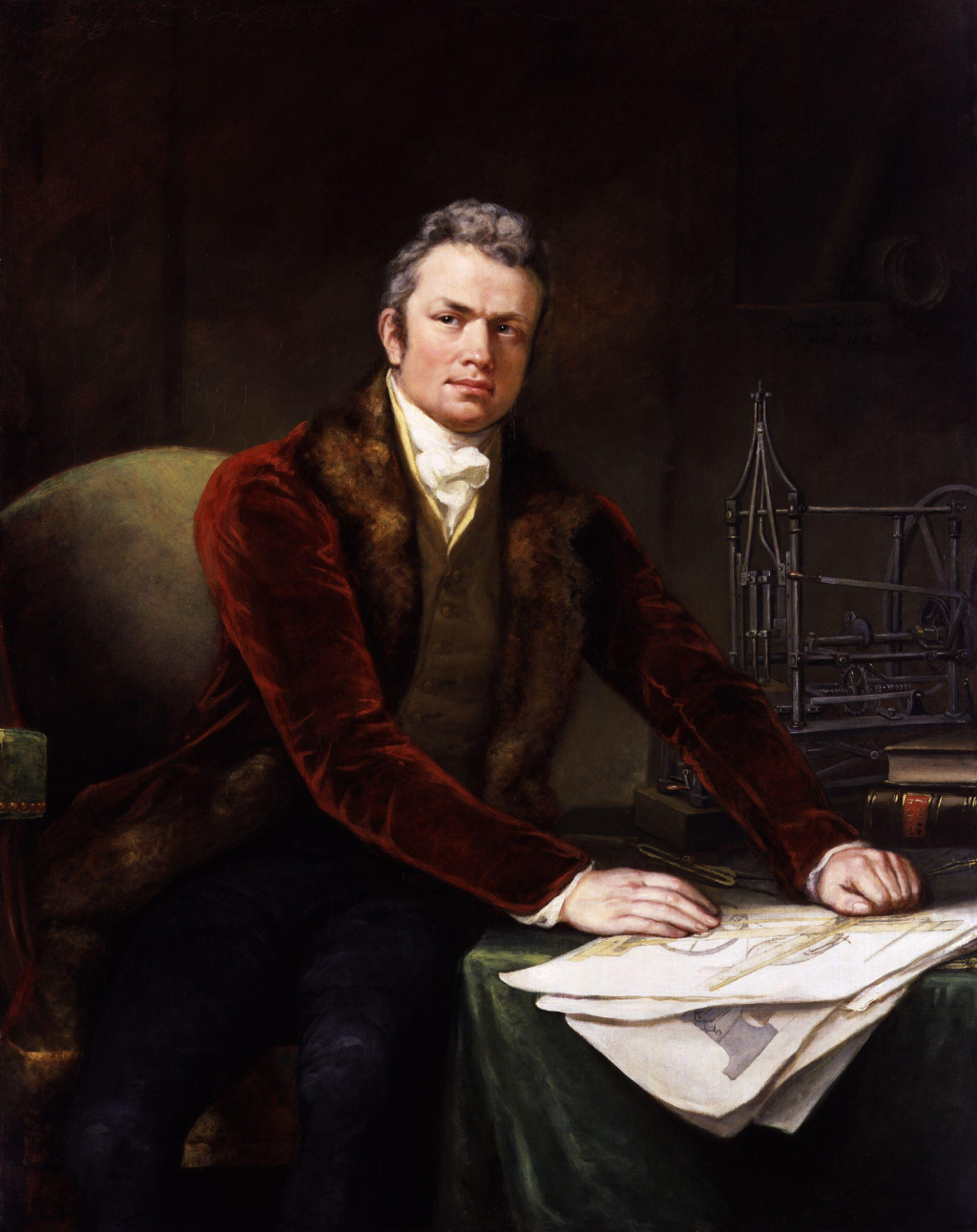
Marc Brunel
A sailing man‑o’‑war in Kydd’s day typically needed up to 25 miles of rope, much of which was used to raise and lower the sails with the help of wooden pulley blocks. Blocks were also needed to work the great guns and for a variety of other functions throughout the ship – anchors and their associated gear, ship’s boats and storing ship. In total, sometimes 1000 blocks were required for a ship. HMS Victory carried 768 blocks (the largest being 26 inches long, the smallest six inches) for her rigging and 628 for her guns.
At the end of the eighteenth century blocks were all made by hand by a firm called Taylor Walker in Southampton. The Navy ordered more than 100,000 of these a year.
Brunel’s scheme required the services of a highly skilled mechanic and he approached Henry Maudslay. The story goes that Brunel was so impressed with the precision screw that Maudslay had displayed in the window of his premises in Wells Street that he took in a drawing of one of the 26 machines that he had designed to have him make a small prototype. Brunel was anxious to keep his invention secret until he was sure he could trust Maudslay.
A week later when Brunel went back to see his work he showed Maudslay a second drawing who immediately grasped what he had in mind and exclaimed, “Ah! Now I see what you’re thinking of; you want machinery for making blocks.”
Brunel and Maudslay collaborated on building models of the machines, some of which have been preserved in the Maritime Museum in Greenwich. Then they went ahead and built the full‑size machinery and set up the world’s first production line in the block-making house in Portsmouth.

Portsmouth Dockyard Block Mills today
By about 1807, Brunel’s block-making machines met the Royal Navy’s entire requirement and some were still in operation for the D-day landings.
The machines attracted an enormous amount of interest from the time of their installation, ranging from Horatio Nelson to the Princess Victoria, who was shown them as part of her education.
During the course of the Napoleonic War there was a steady stream of foreign dignitaries and military men wishing to see the machines for themselves. They were also described and illustrated in a number of contemporary encyclopaedias.
They became such a popular tourist attraction that Brunel urged Bentham to erect a fence around the mill to keep visitors at bay.
Some of the actual block making machines from Brunel’s day are now on view at the Science Museum, London.
Copyright notices
Brunel: James Northcote [Public domain], via Wikimedia Commons; Brunel Block mill : By Comlay (Own work) [CC BY-SA 3.0 (http://creativecommons.org/licenses/by-sa/3.0)%5D, via Wikimedia Commons
Every effort is made to honour copyright but if we have inadvertently published an image with missing or incorrect attribution, on being informed of this, we undertake to delete the image or add a correct credit notice
BookPick: A Visitor’s Guide to Jane Austen’s England
Posted on March 17, 2015 2 Comments
Now that Thomas Kydd finds himself mingling at the highest levels in English society his horizons have changed immeasurably from those of the humble wig-maker who was press-ganged into the Royal Navy in 1793. Sue Wilke’s book is a very readable eye-witness guide to Kydd’s new world.
 Packed with detail, and anecdotes, the book is an intimate exploration of how the middle and upper classes lived in the Georgian era. The author skilfully conjures up all aspects of daily life within the period, drawing on contemporary diaries, illustrations, letters, novels, travel literature and archives.
The book is divided into seven chapters – travelling, gracious living, the latest modes, money matters, shopping and leisure, the perfect partner and health concerns.
From the chapter on travelling: ‘All roads lead to London, the bustling centre of the nation’s trade and fashion. Unless you have your own carriage, you’ll travel by stagecoach or mail coach, post-chaise or hired horse, breaking your journey where necessary at an inn.
‘One of the best views of London is from Shooter’s Hill on the Dover Road. You’ll see the River Thames winding through rich green meadows against a backdrop of gently rolling downs: a bristling forest of ships’ masts…
Visitors coming from the opposite direction, that is from the west, enter the metropolis via the Great West Road at Hounslow. From Brentford you’ll find that it’s now almost one continuous street to London…’
An extensive bibliography is included as are a number of interesting black and white illustrations.
This book is a very readable and complementary addition to the rich body of reference works available on Georgian life ashore.
Sue Wilkes A Visitor’s Guide to Jane Austen’s England
Published by Pen & Sword. ISBN 178159264 1
Poetry of the Sea: Part 2
Posted on March 10, 2015 8 Comments
They that go down to the sea in ships, and occupy their business in great waters. These men see the works of the Lord; and his wonders in the deep…
— Psalm 107
Some of the English language’s finest poetry has been written about the sea. Here’s some more of my favourites, some are excerpts due to length. And thank you for all your posts and emails about sea poetry that has touched you in some way! Keep ’em coming…
— ♥ —
The Kiss of a Seaman 17th Century
- When first I chanc’t to be among them
I was belov’d of divers young men
And with a modest mild behaviour
That did intreat my love and favour
But this I learned from my mother
The kiss of a Seaman’s worth two of another
Blare gentlemen of rank and fashion
That live, most richly in the nation
Have woo’d and su’d, as brave as may be
That I might have been a pretty lady
Love’s fiery beams I cannot smother
The kiss of a Seaman’s worth two of another!
Shipwreck by William Falconer
- Again she plunges! hark! a second shock
Bilges the splitting vessel on the rock;
Down on the vale of death, with dismal cries;
The fated victims shuddering cast their eyes
In wild despair; while yet another stroke
With strong convulsion rends the solid oak;
Ah Heavens! —behold her crashing ribs divide!
She loosens, parts, and spreads in ruin o’er the tide
The Boy stood on the Burning Deck (Casabianca) by Felicia Dorothea Hemans
- The boy stood on the burning deck
Whence all but he had fled;
The flame that lit the battle’s wreck
Shone round him o’er the dead.
Yet beautiful and bright he stood,
As born to rule the storm;
A creature of heroic blood,
A proud, though childlike form.
The flames roll’d on…he would not go
Without his father’s word;
That father, faint in death below,
His voice no longer heard.
He call’d aloud…”Say, father,say
If yet my task is done!”
He knew not that the chieftain lay
Unconscious of his son.
“Speak, father!” once again he cried
“If I may yet be gone!”
And but the booming shots replied,
And fast the flames roll’d on.
Upon his brow he felt their breath,
And in his waving hair,
And looked from that lone post of death,
In still yet brave despair;
And shouted but one more aloud,
“My father, must I stay?”
While o’er him fast, through sail and shroud
The wreathing fires made way,
They wrapt the ship in splendour wild, The boy stood on the burning deck
Whence all but he had fled;
The flame that lit the battle’s wreck
Shone round him o’er the dead.
Yet beautiful and bright he stood,
As born to rule the storm;
A creature of heroic blood,
A proud, though childlike form.
The flames roll’d on…he would not go
Without his father’s word;
That father, faint in death below,
His voice no longer heard.
He call’d aloud…”Say, father,say
If yet my task is done!”
He knew not that the chieftain lay
Unconscious of his son.
“Speak, father!” once again he cried
“If I may yet be gone!”
And but the booming shots replied,
And fast the flames roll’d on.
Upon his brow he felt their breath,
And in his waving hair,
And looked from that lone post of death,
In still yet brave despair;
And shouted but one more aloud,
“My father, must I stay?”
While o’er him fast, through sail and shroud
They caught the flag on high,
And stream’d above the gallant child,
Like banners in the sky.
There came a burst of thunder sound…
The boy-oh! where was he?
Ask of the winds that far around
With fragments strewed the sea.
With mast, and helm, and pennon fair,
That well had borne their part;
But the noblest thing which perished there
Was that young and faithful heart.
On the Sea by John Keats

John Keats
- It keeps eternal whisperings around
Desolate shores, and with its mighty swell
Gluts twice ten thousand caverns, till the spell
Of Hecate leaves them their old shadowy sound.
Often ’tis in such gentle temper found
That scarcely will the very smallest shell
Be moved for days from whence it sometime fell
When last the winds of heaven were unbound.
Oh ye! whose ears are dinned with uproar rude
Or fed too much with cloying melody –
Sit ye near some old cavern’s mouth, and brood
Until ye start, as if the sea nymphs quired!
Roadways by John Masefield
- Roadways by John Masefield
One road leads to London,
One road leads to Wales,
My road leads me seawards
To the white dipping sails.
One road leads to the river,
And it goes singing slow;
My road leads to shipping,
Where the bronzed sailors go.

John Masefield
To salt green tossing sea;
A road without earth’s road-dust
Is the right road for me.
A wet road heaving, shining,
And wild with seagull’s cries,
A mad salt sea-wind blowing
The salt spray in my eyes.
My road calls me, lures me
West, east, south, and north;
Most roads lead men homewards,
My road leads me forth.
To add more miles to the tally
Of grey miles left behind,
In quest of that one beauty
God put me here to find.
Ye Mariners of England by Thomas Campbell
- Ye Mariners of England
That guard our native seas;
Whose flag has braved a thousand years;
The battle and the breeze!
Your glorious standard launch again
To match another foe
And sweep through the deep,
While the stormy winds do blow
While the battle rages loud and long,
And the stormy winds do blow…
The meteor flag of England
Shall yet terrific burn;
Till danger’s troubled night depart;
And the star of peace return.
Then, then, ye ocean warriors,
Our song and feast shall flow
To the fame of your name,
When the storm has ceased to blow;
When the fiery light is heard no more,
And the storm has ceased to blow.
[ Part 1 ]
Copyright notices
Keats image: William Hilton the Younger [Public domain], via Wikimedia Commons
Masefield image: By Coburn, Alvin Langdon, 1882-1966 — Photographer (NYPL) [Public domain], via Wikimedia Commons
Every effort is made to honour copyright but if we have inadvertently published an image with missing or incorrect attribution, on being informed of this, we undertake to delete the image or add a correct credit notice
The Book ‘n’ Bag Bumper Draw!
Posted on February 25, 2015 3 Comments
I’m delighted to launch a new contest with three special prizes! Each prize will be one signed copy of The Silk Tree or Stockwin’s Maritime Miscellany or Pasha, along with a special tote and a selection of bookmarks and postcards. The first draw will be on March 4, the second on March 11 and the third on March 18. Entry is via email to julian@julianstockwin.com – just write Book ‘n’ Bag in the subject line and please include your full postal address. You only need enter once: all entries will go into the hat for all draws.
The Silk Tree Book ‘n’ Bag Prize
 Julian Stockwin takes this tale and turns it into a fascinating story, full of colour and incident… [The characters] dovetail in perfectly and are totally believable participants in the story. I enjoyed this book very much
– Historical Novel Society
- The Silk Tree is my first standalone novel, an epic adventure to unravel China’s most guarded secret, set in the time of Emperor Justinian.
This prize is A Signed First Edition of The Silk Tree and a fab Union Jack tote, along with postcards and bookmarks.
Stockwin’s Maritime Miscellany Book ‘n’ Bag Prize
 A dip in and come-again book – something for everyone!
– Cruising Association
- Stockwin’s Maritime Miscellany is a little non-fiction tome full of fascinating facts and sea lore from the Golden Age of Sail. It ranges from the heroic voyages of discovery in the fifteenth century through the iconic Napolenic wars to the glorious era of the greyhounds of the sea, the clipper ships. A colourful world we will never see again!
This prize is a signed copy of Stockwin’s Maritime Miscellany and a fab Union Jack Tote, along with postcards and bookmarks.
Pasha Book ‘n’ Bag Prize
 Combining historical accuracy with thrilling action and exotic locales, Pasha is … Kydd’s most exciting adventure yet
– Foreword Reviews
- Kydd is on detachment in a new and dangerous sphere of interest: the Dardanelles, connecting the Mediterranean Sea to the Black Sea and providing a route to India. The French have long coveted this route, knowing that it could be the key to toppling the British Empire in India.
This prize is A Signed First Edition of Pasha and a fab Union Jack tote, along with postcards and bookmarks.
The Year Ahead!
Posted on February 4, 2015 8 Comments

Slaving away for you all…
2015 looks set fair to be another busy year for Team Stockwin. On January 1, I delivered the manuscript of the next Kydd book, Tyger, to my publisher. It will come out in October and I was delighted to hear back from my editor Oliver Johnson:
Another wonderful book. I especially liked the poetic descriptions of the Arctic Seas and the frigate action at the end was engrossing, visceral and brilliant. Bravo!
But there’s no time for resting on one’s laurels, I’m now hard at work on next year’s book.
The publishing calendar for 2015 is shaping up as follows:—
March 1
Pasha Audiobook released in CD format.
The digital download is already available via Audible.co.uk and Audible.com
May 7
Publication of the paperback of Pasha, UK
June 18
The Silk Tree
Publication of the paperback
Publication of the audiobook
Publication of the large print edition
(the next title in this series of books focusing on a pivotal point in history will be out in 2016)
October 1
Publication of the US paperback of Pasha
October 8
Publication of Tyger, the next title in the Kydd Series, in hardback and ebook in the UK. Tyger will also be available as a digital download and in CD format.
December 1
Publication of the hardbook and ebook of Tyger in the US
Copyright notices
image: Jean Le Tavernier [Public domain], via Wikimedia Commons)
Every effort is made to honour copyright but if we have inadvertently published an image with missing or incorrect attribution, on being informed of this, we undertake to delete the image or add a correct credit notice
Poetry of the Sea: Part 1
Posted on January 30, 2015 20 Comments
They that go down to the sea in ships, and occupy their business in great waters. These men see the works of the Lord; and his wonders in the deep…
— Psalm 107
Some of the English language’s finest poetry has been written about the sea. Here’s five of my favourites, some are excerpts due to length.
— ♥ —
Childe Harold’s Pilgrimage by Lord Byron
- Dark-heaving, boundless, endless, and sublime.
The image of Eternity…
Full Fathom Five by William Shakespeare (Tempest)
- Full fathom five they father lies;
Of his bones are coral made;
Those are pearls that were his eyes;
Nothing of him that doth fade,
But doth suffer a sea change
Into something rich and strange.
Sea nymphs hourly ring his knell;
Ding dong.
Hark! Now I hear them –
Ding dong, bell!
Crossing the Bar by Lord Tennyson

Alfred Lord Tennyson
- Sunset and evening star,
And one clear call for me!
And may there be no moaning of the bar,
When I put to sea
But such a tides as moving seems asleep,
Too full of sound and foam,
When that which drew from out the boundless deep
Turns again home
Twilight and evening bell
And after that the dark!
And may there be no sadness of farewell
When I embark
For tho’ from out our bourne of Time and Place
The flood may bear me far
I hope to see my Pilot face to face
When I have crost the bar
Sea Fever by John Masefield
- I must down to the seas again,
to the lonely sea and the sky
and all I ask is a tall ship,
and a star to steer her by;
And the wheel’s kick and the wind’s song
and the white sails shaking,
And the grey mist in the sea’s face,
and a grey dawn breaking.
I must go down to the seas again,
for the call of the running tide
Is a wild call and a clear call
that may not be denied;
And all I ask is a windy day
with the white clouds flying,
And the flung spray and the blown spume,
and the seagulls crying.
I must go down to the seas again,
to the vagrant gypsy life,
To the gull’s way and the whale’s way
where the wind’s like a whetted knife
And all I ask is a merry yarn
From a laughing fellow rover,
and quiet sleep and a sweet dream
when ere the long trip’s over
Rime of the Ancient Mariner by Samuel Taylor Coleridge

Samuel Taylor Coleridge
- The fair breeze blew, the white foam flew,
The furrow followed free;
We were the first that ever burst
Into that silent sea.
Down dropt the breeze, the sails dropt down,
’Twas sad as sad could be;
And we did speak only to break
The silence of the sea !
All in a hot and copper sky,
The bloody Sun, at noon,
Right up above the mast did stand,
No bigger than the Moon.
Day after day, day after day,
We stuck, nor breath nor motion ;
As idle as a painted ship
Upon a painted ocean.
Water, water, every where,
And all the boards did shrink ;
Water, water, every where,
Nor any drop to drink.
— ♥ —
Do you have a favourite sea poem? I’d love to hear from you.
Copyright notices
Coleridge image: By Artist unidentified (Google Books) [Public domain], via Wikimedia Commons
Tennyson image: Julia Margaret Cameron [Public domain], via Wikimedia Commons
Every effort is made to honour copyright but if we have inadvertently published an image with missing or incorrect attribution, on being informed of this, we undertake to delete the image or add a correct credit notice
Contest: Win Kydd Series Audiobooks Sets!
Posted on January 22, 2015 2 Comments

Audiobooks are on the up! According to Michele Cobb, President of the Audio Publishers Association, who spoke on a panel at Digital Book World 2015 in New York City recently, the past few years have seen an exponential growth both in audiobook sales and in the volume of titles released into the market.
 On a personal note, Kathy and I are greatly enjoying re-listening to our audiobooks of the Kydd series. We’re working our way through and treat ourselves to but 30 minutes each day of actor Christian Rodska’s superb renditions (or the new book won’t get written…)
There are seven sets up for grabs in this contest. All the Kydd books are standalones in their own right, but each audiobook set prize will comprise two consecutive titles. Click on the link of any individual book below to hear a sample!
And as an extra bonus there’s 20% off all Kydd titles at Whole Story Aubiobooks for the next two weeks. Click on the special Kydd Series Banner and just add the discount code ‘KYDD’ at the checkout.
The contest
 To enter, email Julian saying, in no more than 25 words, why you would like to win a set. Please include your postal address. The seven entries judged the most apt and original will win a set of two audiobooks, chosen at random from the list above.
Deadline: February Feb 5
The Kydd series audiobooks are also available as audio downloads via Amazon UK and Amazon US
More Stockwin Audiobooks coming soon!
The unabridged CD set of Pasha will be available in UK on March 1.
The unabridged CD set of The Silk Tree will be available in the UK/Commonwealth excluding Canada in June.
Building an Age of Fighting Sail Reference Library, Part 1
Posted on January 15, 2015 4 Comments
It’s a question I’m quite often asked – what books do I suggest would be useful to acquire in order to learn more about the period I write about. It was hard to make a selection from the vast range of wonderful titles that have been published over the years, so I’ve decided it warrants several blog posts – here’s the first clutch I plucked from my shelves that I think readers wanting to delve deeper into the fascinating Age of Fighting Sail might find useful. I regret that as some are now out of print they can be pricey.
— ♥ —
Nelson’s Navy; The Ships, Men and Organisation, 1793-1815 by Brian Lavery
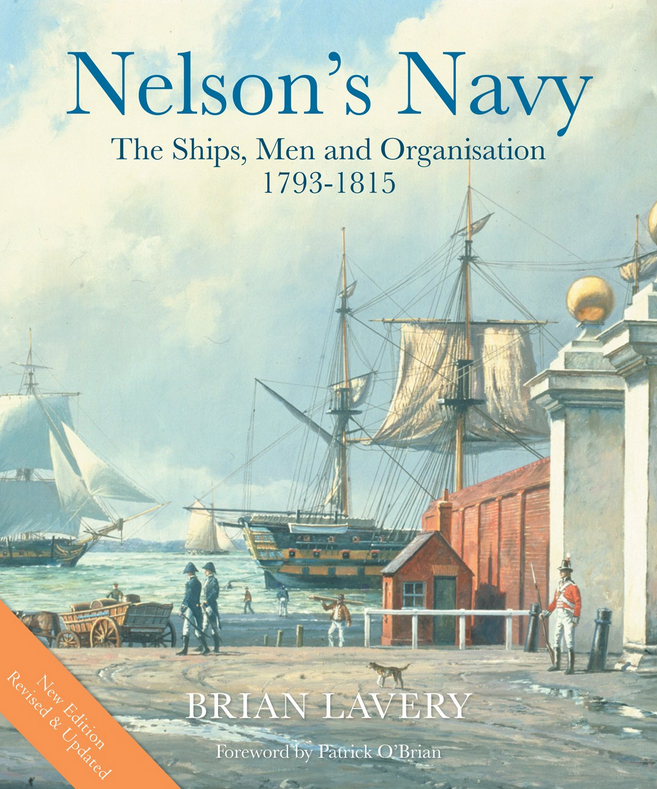 This work, written over ten years ago (and reprinted many times), deservedly remains a classic. Beginning with a background on the wars with France and naval administration, Lavery covers the design and construction of ships, training and organisation of officers and men and life at sea. It is in the latter that Lavery excels in his description of a world far removed from the hardships and cruelty that is often attributed to life on the lower deck.
Seamanship in the Age of Sail by John Harland
 This book partners well with Lavery’s Nelson’s Navy for any serious student of the period. Seamanship in the Age of Sail came out in 1984, and is a classic of its type. Every aspect of handling a man-of-war is detailed and illustrated with superb line drawings by Mark Myers and the book is designed by Geoff Hunt. A definitive guide as to how the ships of Kydd’s day were actually sailed.
Falconer’s Marine Dictionary by William Falconer
 One of the enduring classics that have come down to us from Nelson’s time, wonderfully recreated from the original in its full detail. It contains marine technology, data on technical aspects of shipbuilding, fitting and armaments, and the Navy’s administrative and operational practices.
Empire of the Seas by Brian Lavery
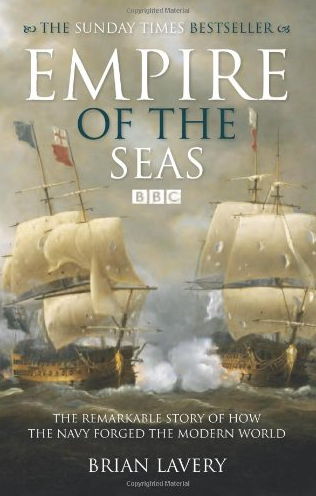 This book, produced to accompany a BBC television series, tells the story of how the Royal Navy expanded from a tiny force to become the most complex industrial enterprise on earth. It explores themes such as the Navy’s relationship with the State and the British people and the tactics and initiatives that created such decisive sea victories.
Jack Tar: Life in Nelson’s Navy by Roy and Lesley Adkins
 A fascinating age of sail compilation from husband-and-wife writing team Roy and Lesley Adkins. With their backgrounds in archaeology they dug deep into the historical archives to find personal letters, diaries and other manuscripts of the times that shed light on their chosen subject matter: the ordinary sailors who manned the ships of the Georgian navy. We see Jack Tar at work and play – through his own words.
The Seafaring Dictionary by David Blackmore
 This book is an alphabetical compendium of more than 9000 nautical terms, some quite short, some more lengthy, covering the earliest days of seafaring right up to the twenty-first century. A useful appendix includes tables that cover such items as wind and wave measurement, date and time notation, phonetic alphabets, maritime signals, navigation rules and the process of boxing the compass. There are a number of nautical dictionaries available; this one gets my thumbs-up for its overall treatment.
 Julian Stockwin