
For Rent, One Pineapple
Posted on August 24, 2013 8 Comments
[To leave a comment go right to the end of the page and just enter it in the ‘Leave a Reply’ box]

Fruit for a King!
Christopher Columbus encountered the pineapple in 1493 on the island of Guadeloupe.
He called it piña de Indes, ‘pine of the Indians’ and brought it back with him to Europe.
No-one knows when the first pineapple first appeared in England but Elizabethan adventurers encountered it and some were probably brought back by them.
Around 1675 Charles II was painted receiving a pineapple from his gardener John Rose , supposedly the first such fruit cultivated on English soil.
The pineapple became a potent status symbol in Georgian England. It could only be cultivated at great cost in a special greenhouse called a pinery, which required a huge amount of fresh horse manure to maintain the temperature required to grow the sought-after item. With the capital outlay for the hothouse and at least three years of constant labour to get the plant to fruit, the tab for producing a single pineapple put the fruit way out of reach to all but the very wealthiest.
One writer describes the scene at a dinner in the eighteenth century hosted by Lord Petre at his Essex estate. After a sumptuous banquet the door of the dining room was majestically flung open and guests were treated to an astonishing sight: a liveried footman carrying a huge pile of pineapples direct from the estate’s hothouses atop an ornate silver tray.
Home-grown pineapples began to appear at all the best society dinners. Because of their great cost they were often not actually eaten, but used as ornamentation at the centrepiece of the table, and were passed on from party to party until the fruit began to rot. If you were not able to grow your own, you could rent a pineapple. The same pineapple would turn up in several houses until it was no longer fit to present.
As the century progressed it became more affordable to actually eat the fruit and while still very much luxury items, if you could not grow your own they became available to buy in exclusive fruit shops.
The pineapple entered the broader Georgian culture in a number of ways. The phrase ‘a pineapple of the finest flavour’ was a metaphor for the most splendid of things. In Sheridan’s popular play The Rivals, Mrs Malaprop exclaims: ‘He is the very pineapple of politeness.’
Pineapple motifs appeared on Georgian furniture and on Chinaware designs. A very striking form of representation of wealth and hospitality was a stone pineapple atop a gatepost, which is occasionally still to be seen.
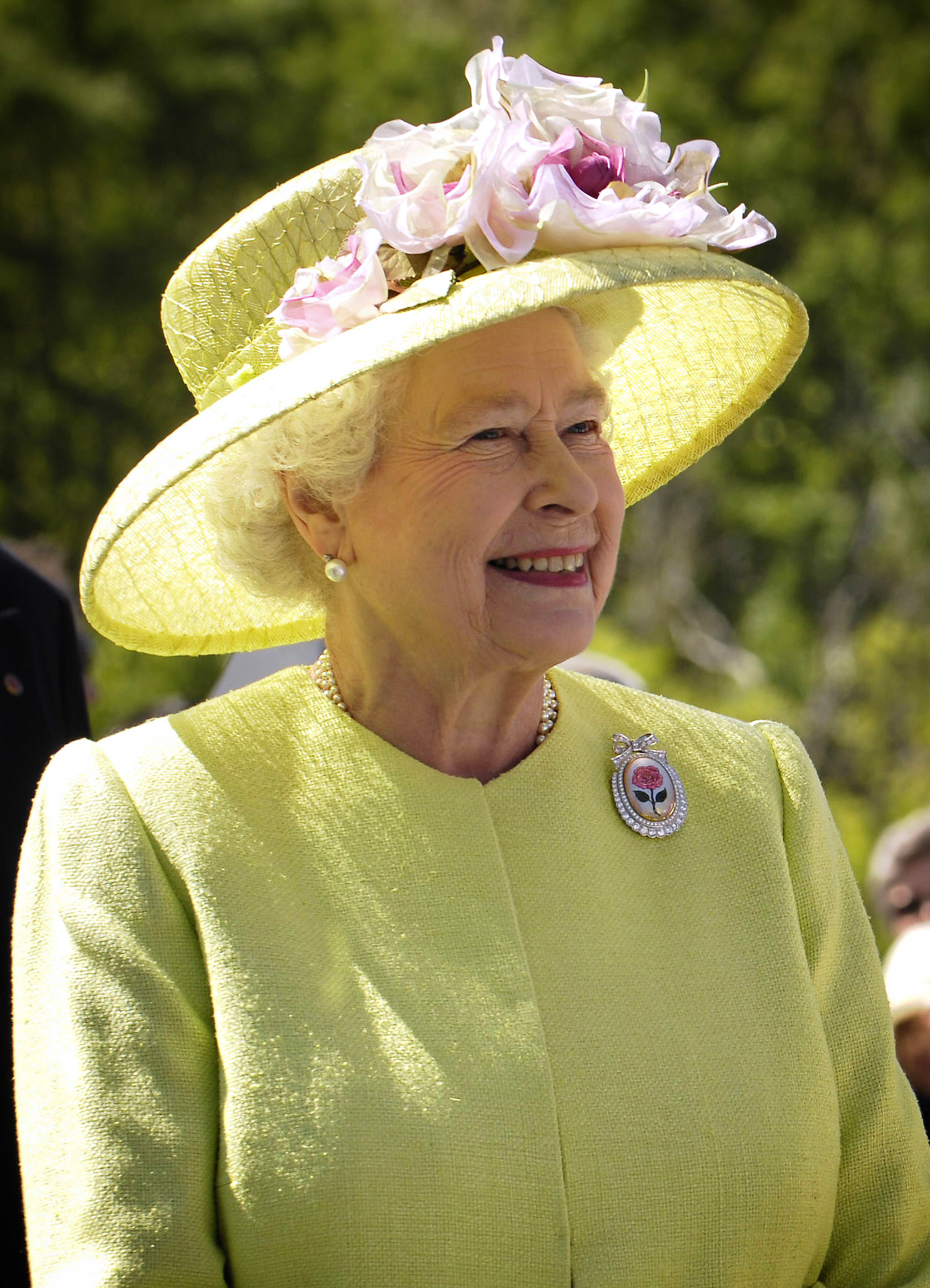
Fruit for a Queen!
And of course the Georgian satirists didn’t miss an opportunity. ‘The Cabinet Dinner or a Political Meeting’ by C. Williams depicts eight cabinet ministers asleep around the dinner table, surrounded by remnants of a lavish meal. Strewn about the room are two pineapples, one only half eaten – a telling symbol of the decadence of the ruling classes…
An original eighteenth-century pineapple pit was discovered at the Lost Gardens of Heligan in Cornwall. In 1997, after much historical research and horticultural effort, the pinery saw its first twentieth century fruit – grown just as it would have been done in the past. In a nod to Charles II, the second pineapple produced there (the first was sampled by the staff …) was delivered to Queen Elizabeth on her 50th wedding anniversary.
Copyright notices
Queen Elizabeth: By NASA/Bill Ingalls [Public domain], via Wikimedia Commons; Presentation of pineapple: Hendrick Danckerts (fl. 1645–1679) [Public domain], via Wikimedia Commons
Every effort is made to honour copyright but if we have inadvertently published an image with missing or incorrect attribution, on being informed of this, we undertake to delete the image or add a correct credit notice
BookPick: The British Navy, Economy and Society in the Seven Years War
Posted on August 22, 2013 1 Comment
[To leave a comment go right to the end of the page and just enter it in the ‘Leave a Reply’ box]

The global operation of feeding the Navy
William Thompson, a former foreman cooper in the Victualling Board, wrote in a work published in 1761:
‘Seamen in the King’s Ships have made buttons for their Jacketts and Trowses [sic] with the cheese they have been served with, having preferred it, by reason of its tough and durable quality, to buttons made of common metal…
Their bread has been so full of large black-headed maggots that they have so nauseated the thoughts of it as to be obliged to shut their eyes to confine that sense…
Their beer has stunk as abominably as the foul stagnant water which is pumped out of many cellars in London at midnight hour.’
‘The British Navy, Economy and Society in the Seven Years War’ provides an important counter to this often-cited picture of the state of victualling Jack Tar encountered aboard ship.
Written in 1999 by Christian Buchet, a leading French maritime historian, the book has now been translated and published in English by The Boydell Press.
Professor Buchet sets out the compelling case that Britain’s success in the Seven Years War was made possible by the creation of a superb victualling system for the British Navy – and discusses how naval supply provided a huge stimulus for British finance, agriculture, trade and manufacturing, and argues that all this together was one of the principal causes of Britain’s later Industrial Revolution.
As well as discussing a wealth of qualitative and quantitative information, the book looks at some of the major players in the global operation of feeding the Royal Navy.
Fascinating reading for anyone interested in the impact of the Royal Navy above and beyond the defence of the realm.
Sermons, a thesis – and a hungry dog…
Posted on August 20, 2013 1 Comment
[To leave a comment go right to the end of the page and just enter it in the ‘Leave a Reply’ box]

Rod Redden & family
Ian Hewes, a Baptist minister in the UK, has used the Kydd tales as inspiration for a number of his sermons!
In Ian’s own words, here’s just one incident that he drew upon: ‘The scene that greeted Kydd and Renzi at dawn at the lifting of the siege of Acre [in TENACIOUS] showed that perseverance in the face of apparently overwhelming odds can bring victory.’
And in Japan, reader Rod Redden not only enjoyed dipping into the salty snippets in my little non-fiction volume STOCKWIN’S MARITIME MISCELLANY, he put the book to use as an academic aid. Rod was recently awarded an MA in TESOL/Applied Linguistics from the University of Leicester.

Stockwin’s Maritime Miscellany
Having said that, Tom Richardson, a captain in the Salvation Army, once told me that his dog Benbow (named after the admiral) had developed a taste for my books – literally – and devoured several chapters!
From a reader drawn to the Arctic
Posted on August 16, 2013 1 Comment
[To leave a comment go right to the end of the page and just enter it in the ‘Leave a Reply’ box]
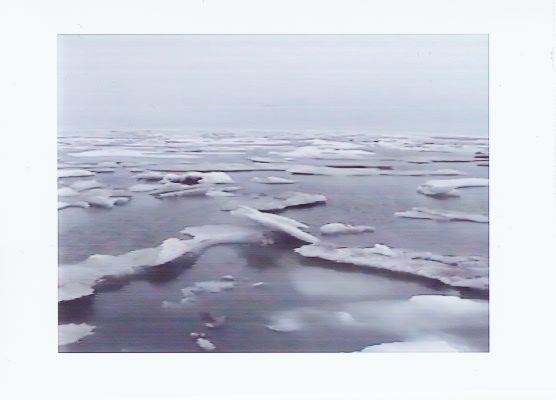
Icefield, Arctic Ocean
One of the joys of being a writer is hearing from readers around the world – and learning a little about their lives.
William de Vaney, a marine historical artist, now living in the States, was raised as a bush Alaskan in the twilight of her days as a territory. He has an enduring connection with Neptune’s Realm and first put his hands on the wheel of a 32 foot wooden limit seiner when he was seven, and wore through his first storm with his father when he was eight.
William also has a special appreciation of ‘the wonderful, sacred expanse of wilderness’ that is the Arctic and spent three years living there, including a couple of seasons kayaqing the Passage.
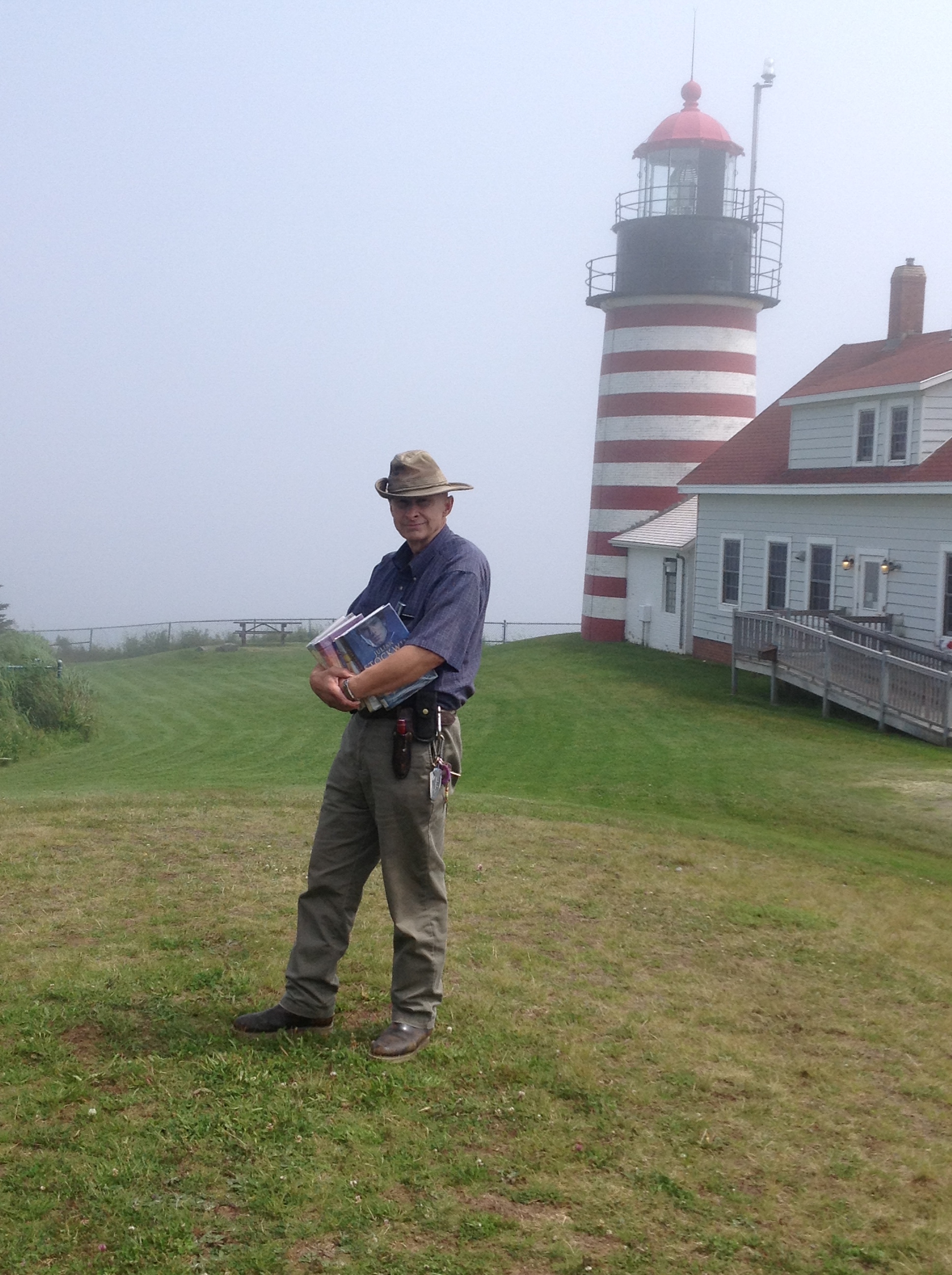
William – with a good book!
The Arctic, William says, ‘cares not a whit for human concerns.’ Encountering an ice storm east of the Prudhoe Bay area a few years back he found himself battling a closing ice pack for over twelve hours. Desperate to find shelter he struggled through cul-de-sacs of shifting, grinding pan ice amidst misting ice-fog and wind before finally coming upon a floe with a small lagoon to shelter in. Later that same trip he had to weather 35 knots+ winds off his port quarter to get to the village of Kaktovik on Barter Island.
William has built a number of native frame kayaqs and is currently working on one now for himself so he and his wife Kim can explore some of the Maine coastal waters together.

Kim de Vaney’s whimsical puffin
William told me: ‘I’ve always been a fan of the very sea that I worked upon (and on occasion has tried to take me out), and I appreciate the hardships of the days of sail. Working a longliner with the decks awash over your knees is a real wake up call (as I’m sure with your time at sea, you understand) – though, I confess, working a small gaff rig sloop to weather in a gale is nothing compared to being aloft in the Age of Sail! I don’t mind heights, but that would be tough. I don’t think anything sailors endure today can compare to it, especially in their type of warfare. What a brutal business.’
I was especially tickled with one photograph William sent me – it was taken at West Quoddy Head Light, which holds the distinction of being the easternmost lighthouse in the US. Look what books he’s holding!
The de Vaneys are not just a couple with a deep appreciation of the natural world. Kim is a talented artist in her own right and William has recently had a novel, ‘Lightship’, published.
He also has his own blog.
Spending a penny at sea
Posted on August 14, 2013 8 Comments
Early warships featured a beakhead on the bow which was used to ram enemy galleys.
Around the 900s platforms for archers were built on either side of this beakhead. Known as ‘heads’, these platforms were slotted to allow drainage from breaking waves and became a convenient way to answer the call of nature. Since then lavatories at sea have been called ‘the heads’ in the British Navy; ‘the head’ in the USN.
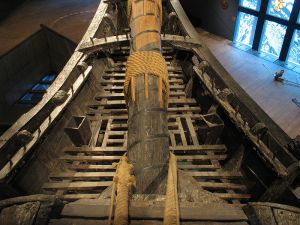
The heads in Vasa
It was good manners to use the lee (down weather) side so that waste fell clear into the sea and the waves sluiced the area.
In Nelson’s day toilet accommodation for commissioned officers in a ship-of-the-line was in the quarter galleries adjoining the cabins in the stern. Some admirals had a personal portable commode, and there were some early adopters who even had primitive flush loos.
Forward there were two small ‘round houses’, cubicles which gave some privacy, on the foremost bulkhead of the upper deck, which were used by petty officers. From 1801 one of these was reserved for the men in the sick berth.
The crew’s facilities were very sparse but it must be pointed out that ashore sanitary conditions were often far from what would be acceptable today; human waste was often just dumped on the streets. At least in a ship it was disposed of into the sea!
In a ship-of-the-line like HMS Victory, 800 or so men had to make do with just a half dozen or so ‘seats of easement’; adjacent seats with holes over a clear drop to the sea. The area was completely exposed to the weather.
Toilet paper was not invented in Britain until the late nineteenth century but officers used old newspaper or discarded paper. The seamen had to make do with scrap fibrous material such as oakum.
Some Georgian navy ships had ‘piss dales’ at the side of the ship. These were a bit like modern urinals, with a pipe leading out into the sea and allowed men on watch to ease themselves without leaving post.
Most captains were fastidious about sanitary arrangements and punished offenders sternly who relieved themselves in inappropriate places.
Now, of course, modern ships and submarines have lavatories very similar to those on land. You just have to be careful not to leave the sea-water valves open…
Copyright notices
Vasa photo: By Peter Isotalo (Own work) [CC BY-SA 3.0 (http://creativecommons.org/licenses/by-sa/3.0)%5D, via Wikimedia Commons
Every effort is made to honour copyright but if we have inadvertently published an image with missing or incorrect attribution, on being informed of this, we undertake to delete the image or add a correct credit notice
BookPick: Anatomy of the Ship
Posted on August 11, 2013 Leave a Comment
[To leave a comment go right to the end of the page and just enter it in the ‘Leave a Reply’ box]
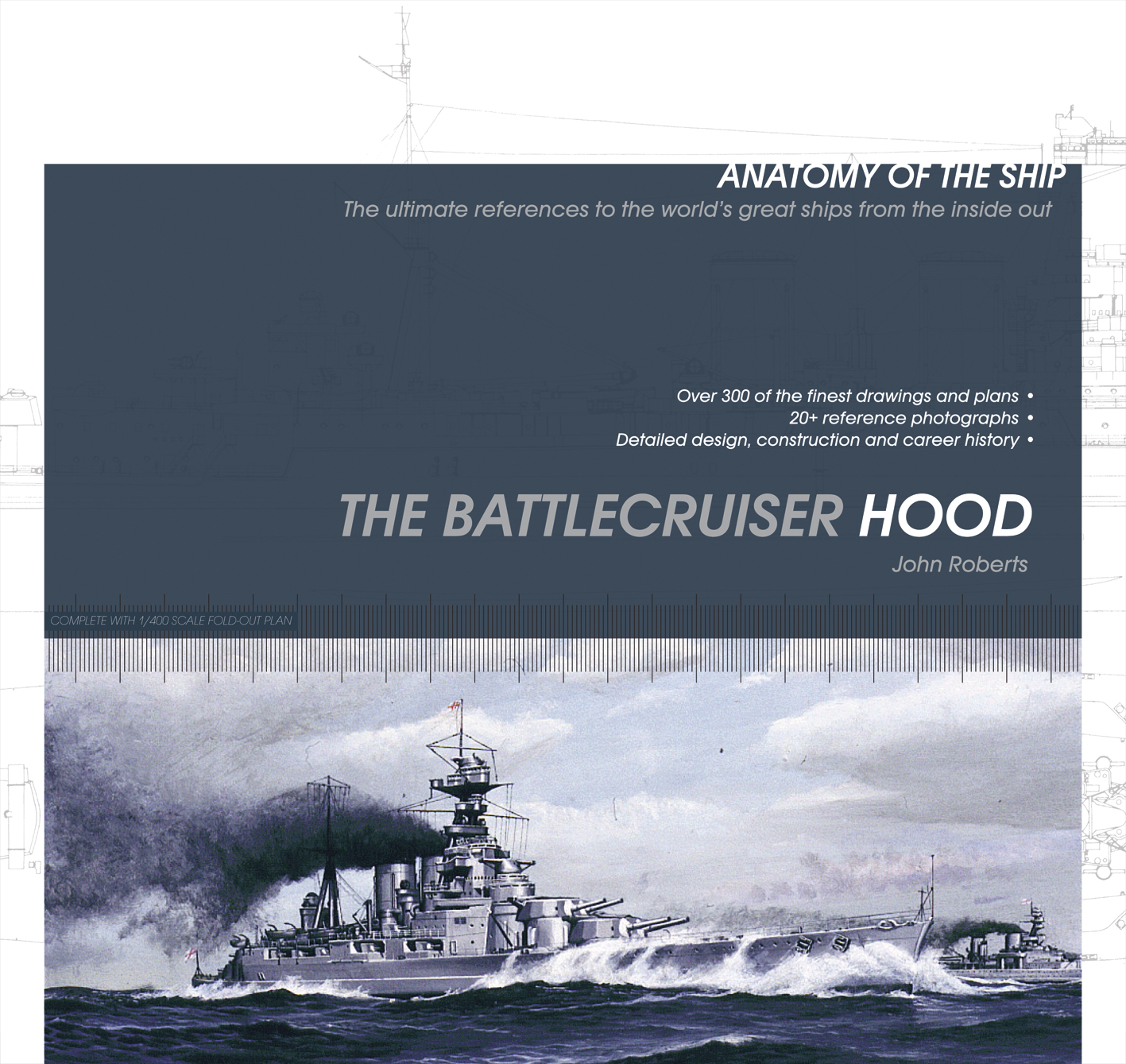
The Mighty Hood
The ‘Anatomy of the Ship’ series was first published by Conway (an imprint of Anova Books) in hardback a few years back and I snatched up (and still regularly consult) all of the excellent Age of Sail titles, particularly the HMS Victory ‘Anatomy’ but also ‘Diana’ the frigate, ‘Alert’ the cutter and many others. These are really first class productions and in my opinion are the last word on layout and rigging of these fine ships.
The series also encompasses some of the iconic vessels of the Age of Steam, providing a fascinating insight into ship development in the twentieth century.
What makes this whole series special is the unparalleled attention to detail in the superb line drawings and ship plans.
Conway is re-releasing the Anatomy of the Ship titles in paperback editions, with text revisions along with large scale plans on the reverse cover.

The first ‘all-big-gun’ battleship
The first two out are ‘The Battleship Dreadnought’ and ‘The Battlecruiser Hood’. Dreadnought was built at Portsmouth in 14 months, a record that has never been equalled! She gave her name to a class of ship that dominated the seas for more than a generation. Hood became one of the most recognisable symbols of the Royal Navy; her destruction in 1941 shocked a nation.
The author of these two volumes, John Roberts, is widely recognized for his contributions to warship literature. He was editor of ‘Warship’ for six years and is the co-author of the standard works on British battleships and cruisers of the Second World War period.
Further Anatomy of the Ship titles will be released later in the year
From a reader with many miles under the keel
Posted on August 9, 2013 2 Comments
[To leave a comment go right to the end of the page and just enter it in the ‘Leave a Reply’ box]
I’ve been very touched by the many wonderful messages I’ve received from readers recently, including this from Charles Eanes:
‘I read with interest one critic who called you “a master of Napoleonic-era atmosphere with rich descriptions of the military, politics and society” and added that your Kydd series was “approaching the level of C.S. Forester’s Hornblower books.” It’s my opinion that you’ve not only surpassed Forester but O’Brian, Lambdin, Kent, Pope and many others I have read.
As for some credence to that opinion, my wife and I have lived aboard our 52 foot ketch for over 20 years with thousands of nautical miles under the keel sailing between North and South America while visiting almost every island in the Caribbean. At 86, I have somewhat settled down on the Gulf Coast of Florida, but your descriptions of sailing at night under a bright Milky Way with phosphorus streaming off the bow brings back so many wonderful memories along with the more frightening ones in Atlantic gales and a few hurricanes.
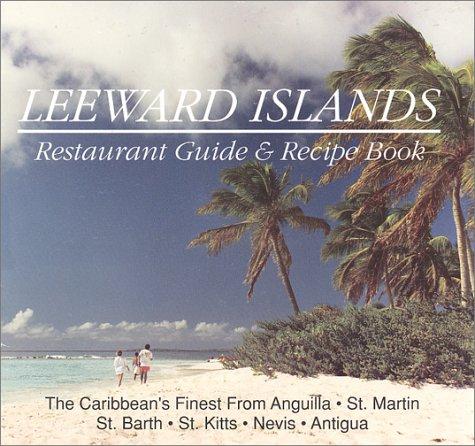
One of the books written by the Eanes
We spent time on Antigua and walked the paths of Lord Nelson in English Harbor and dined under a tree on Nevis where he married Francis Nesbit.
If I believed in reincarnation I would swear I was before the mast during those times and places. However, I can claim a nautical heritage that dates back to the 1400s and a Portuguese ancestor, Gil Eanes, who sailed under Prince Henry the Navigator. He was the first captain to sail beyond Cape Bojador on the coast of Africa which at that time was feared by seamen as the edge of the earth.
Am now just finishing CONQUEST and hoping BETRAYAL will not be the last of Thomas Kydd and Renzi! I thank you for the many hours of naval history and pleasurable escape from today’s world your writing has provided me.’
Copyright notices
Every effort is made to honour copyright but if we have inadvertently published an image with missing or incorrect attribution, on being informed of this, we undertake to delete the image or add a correct credit notice
A Sterling Model!
Posted on August 8, 2013 9 Comments
[To leave a comment go right to the end of the page and just enter it in the ‘Leave a Reply’ box]
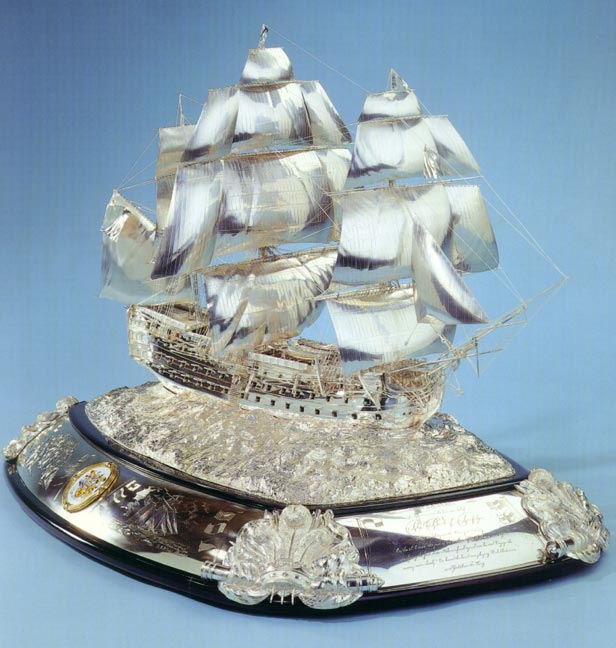
A unique model
After seeing my blog on HMS Victory yesterday Mike Softley emailed me some photographs of a very special model he was involved with.
Mike takes up the story:
‘Victory was my second home for a while in 2004/5. I was making a model of the ship in silver to mark the 2005 celebrations.
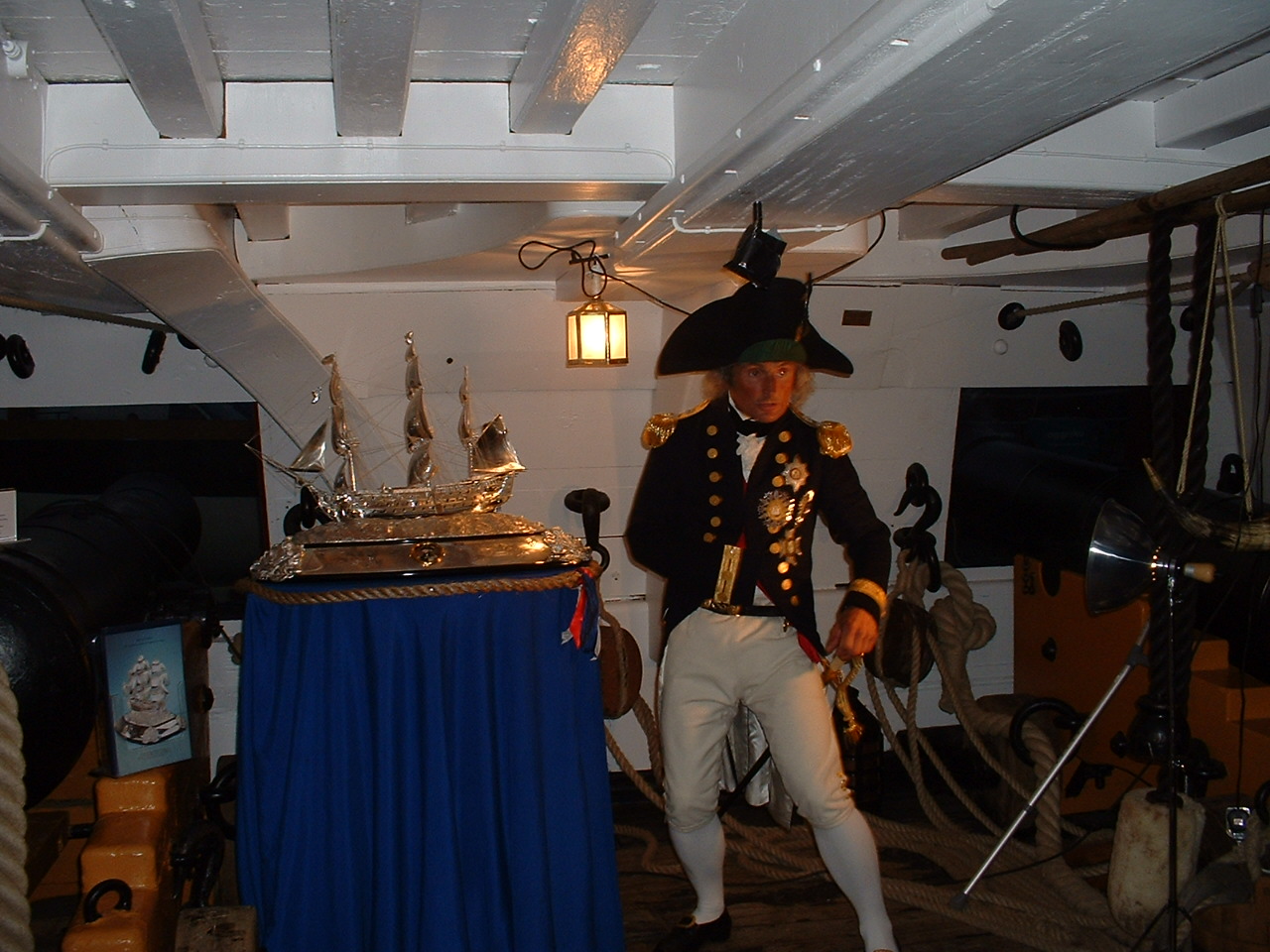
The model aboard Victory with historian Alex Naylor
I was lucky enough to have been on board on the evening of 21st October 2005 with my model and was on the gun deck during the 52 gun broadside; I’m not sure whether I was supposed to have been left there, I was certainly alone when the unexpected noise started and the smoke seeped in!
The model was for a time in the National Maritime Museum at Greenwich; it was later given to HRH the Prince of Wales and is now, I believe, in Clarence House.
On October 21st – Trafalgar Day – the model was exhibited aboard HMS Victory at Portsmouth while Her Majesty Queen Elizabeth attended a commemorative dinner on board. The model was again featured in St Paul’s Cathedral on 23rd October at a special service attended by other members of the royal family.’
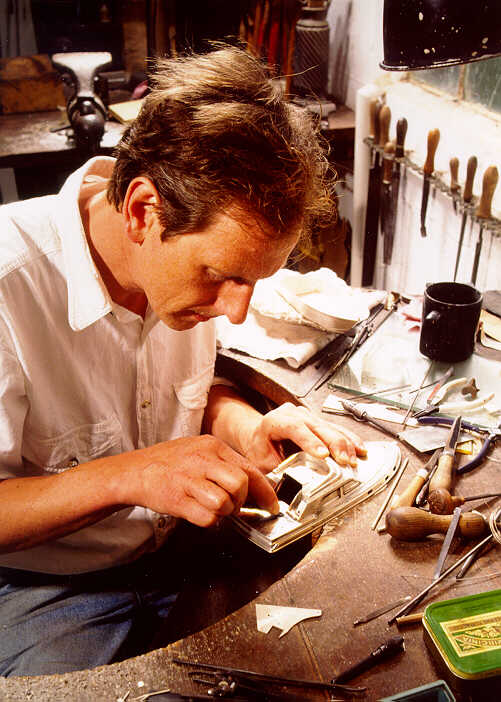
Mike Softley at work
The model depicts HMS Victory just about to engage the enemy, moving slowly with a light following wind on the port stern quarter.
Creating the model took 18 months from conception to completion. There are over 1000 separate pieces in the model with two parts of the ship of particular complexity and detail – the beak and the gallery at the stern. The scale is 1:133.
(Mikes other projects)
Copyright notices
All photographs used with kind permission of Mike Softley
Every effort is made to honour copyright but if we have inadvertently published an image with missing or incorrect attribution, on being informed of this, we undertake to delete the image or add a correct credit notice
HMS Victory
Posted on August 7, 2013 25 Comments
[To leave a comment go right to the end of the page and just enter it in the ‘Leave a Reply’ box]
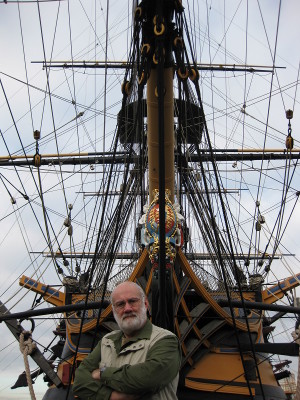
At Victory’s bow
There’ve been many famous ships in Britain’s proud history – Mary Rose, Golden Hinde, Cutty Sark, Trincomalee, Great Britain, Discovery … but one ship stands head and shoulders above the rest – HMS Victory, now currently undergoing major restoration in Portsmouth Historic Dockyard to ensure her preservation for future generations.
England’s – and the world’s – most iconic ship already had a quite a number of years’ service before her most famous role as Nelson’s flagship at the Battle of Trafalgar, October 21, 1805.
In 1797 she returned to England, 32 years old, scarred and battle-weary. Late in that year, considered unfit for service, it was ordered she be converted into a hospital ship and eventual disposal. But fate intervened – as it would several times in her career – and when the first rate Impregnable was lost in Chichester Harbour there was an urgent need for another three- decker for the Channel Fleet. Victory was to be given a new lease of life! Refitting commenced at Chatham Dockyard in late 1800.
Over the course of her active service she was flagship to many famous admirals – Keppel, Hyde Parker, Kempenfelt, Howe, Hood, Jervis, Saumarez – and Nelson.
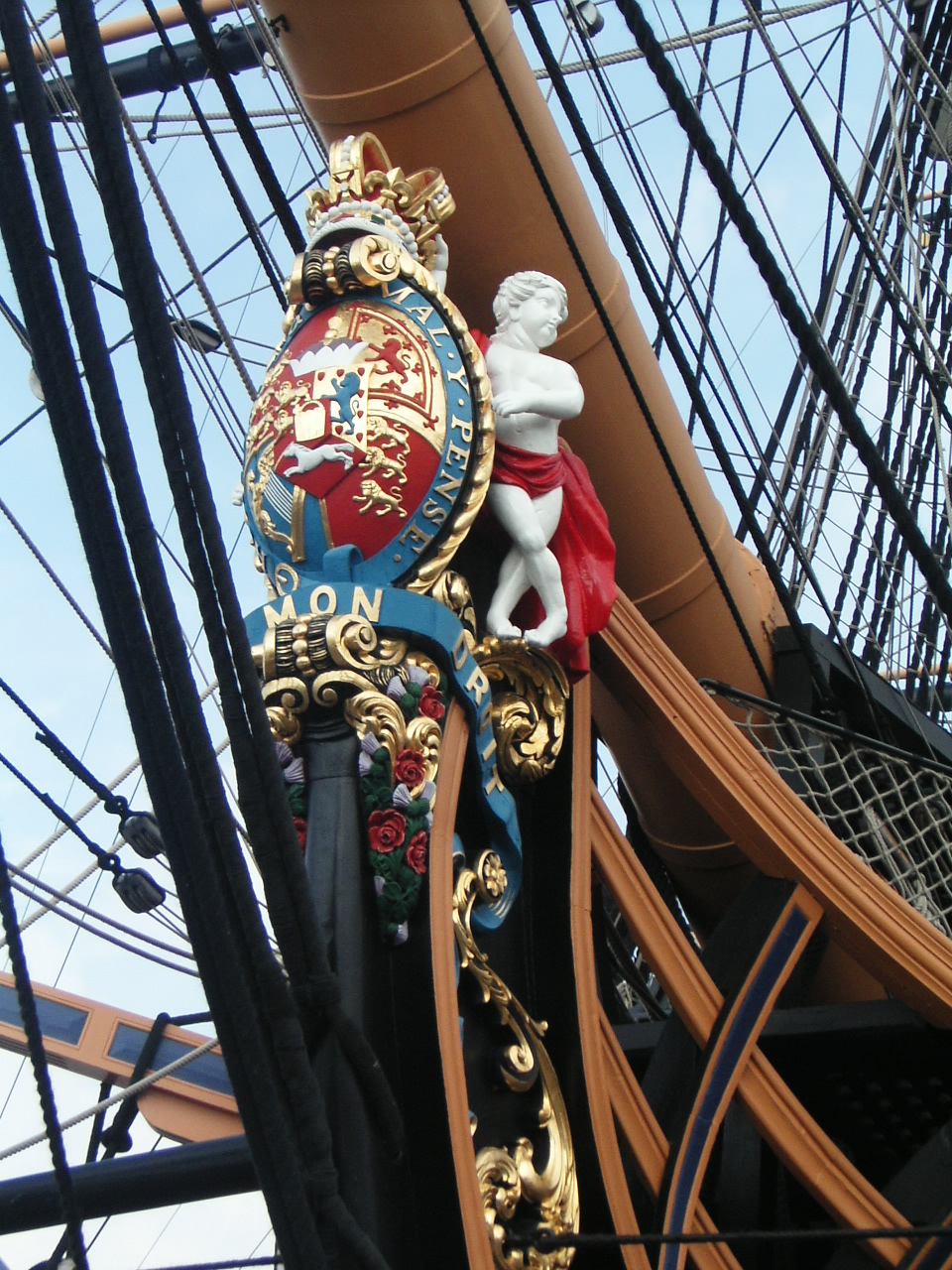
Victory’s figurehead
Her keel was laid at Chatham Dockyard in 1759, the year of victories, annus mirabilis, probably the most significant year in British history since 1066. Admiral Boscawen defeated the French off the southern coast of Portugal; on the other side of the globe Wolfe took Quebec – and Hawke saw a magnificent victory at Quiberon Bay. And in that year a young Horatio Nelson celebrated his first birthday.
The ship was officially christened Victory on 30 October 1760 in recognition of the victories of the previous year, although some had misgivings as the previous ship of that name had been wrecked with the loss of all hands!
A ship of the line like Victory required a great deal of timber for her construction; around 6000 trees were felled for the cause, mainly oak from the Wealden forests of Kent and Sussex. Her statistics are impressive: the vast amount of canvas that could be set meant a maximum sail area a third larger than a football pitch; if laid end for end, cordage used for her rigging would stretch 26 miles.
Despite her age, she once stayed at sea for two years and three months without once entering port.
Victory’s magnificent figurehead is two cupids supporting the royal coat of arms surmounted with the royal crown. The arms bear the inscription of the Order of the Garter: ‘Shame to him who evil thinks.’ The current figurehead is a replica of the original one carved in 1801 at a cost of £50, which was damaged during the Battle of Trafalgar.
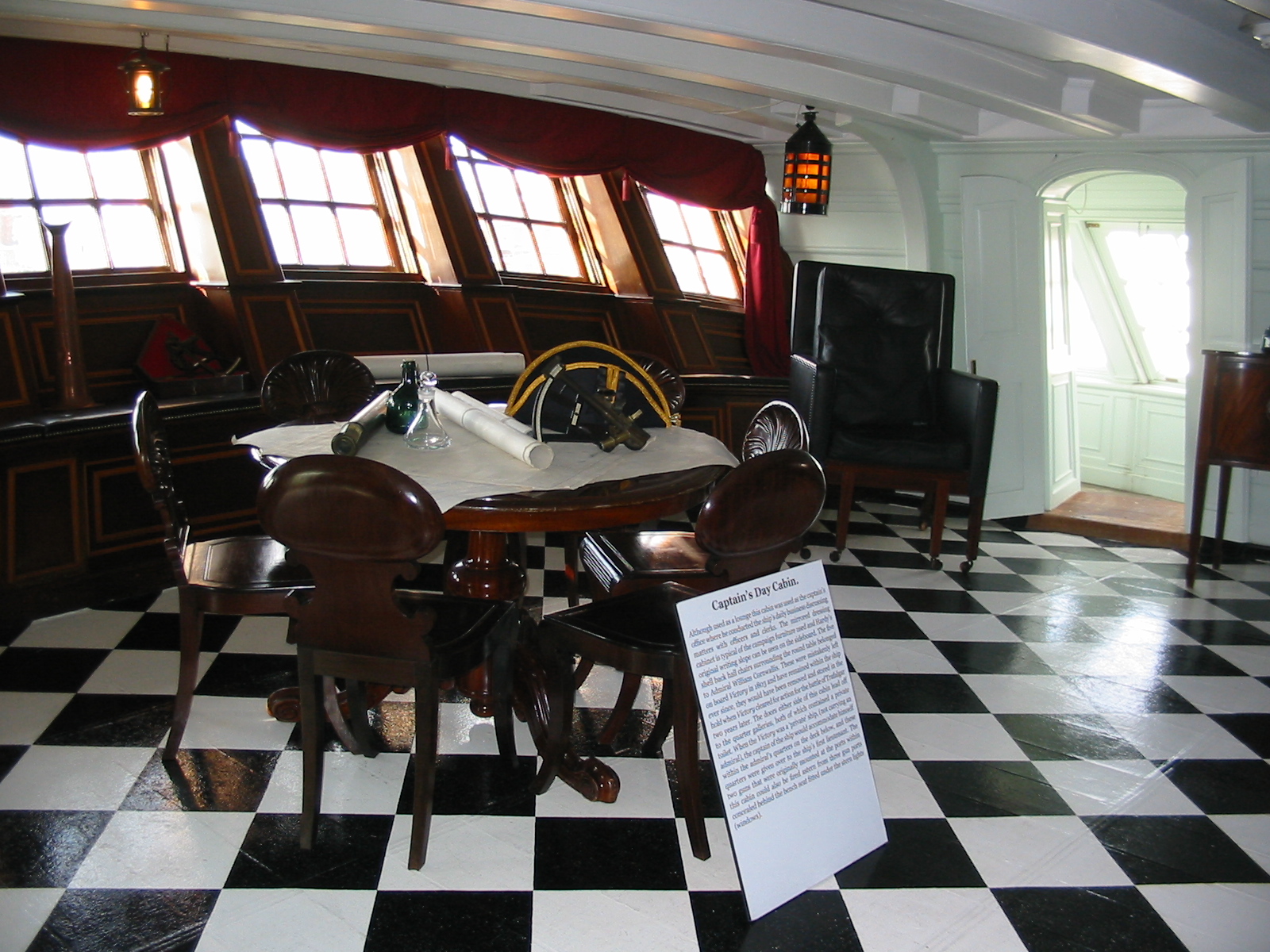
Captain Hardy’s day cabin
When I began writing my Thomas Kydd series I came across some incredible statistics. In the bitter French wars at the end of the 18th century, there were, out of the six hundred thousand or so seamen in the Navy over that time, only about 120, who, by their own courage, resolution and brute tenacity, made the awe inspiring journey from the fo’c’sle as common seaman to King’s officer on the quarterdeck. This meant they changed from common folk; they became gentlemen. And that was no mean feat in the eighteenth century. Of those 120, just over 20 became captains of their own ship – and a miraculous 3 became admirals! After Nelson and Hardy, the two most important men aboard Victory at Trafalgar were cut from this cloth, both originally common seamen – John Quilliam, first lieutenant and John Pascoe, the signal lieutenant.
Nelson was fatally shot at 1.15 pm October 21, 1805 by a French sharpshooter in the mizzen mast of Redoubtable. Victory suffered the highest casualties of the British ships. Including Nelson, 57 were killed and 102 wounded.
The day after Trafalgar, Collingwood summoned Lieutenant Lapenotiere in command of the schooner Pickle, the fastest vessel then at his disposal, and ordered him to sail to Plymouth with dispatches and then with all haste proceed to the Admiralty. Lapenotiere was forced by weather conditions to land at the Cornish port of Falmouth. From there, his journey to London, 425 km, took 21 changes of horses and carriages and his expenses amounted to £46 19s 1d – nearly half his annual salary.
Finally, the coach clattered into the Admiralty courtyard at 1 am in the morning of 6 November, 1805. Most of the officials had retired for the night but William Marsden, secretary to the Navy board, was on his way to his private apartments, having just finished work in the board room. Lapenotiere handed over the dispatches with the simple words, ‘Sir, we have gained a great victory. But we have lost Lord Nelson.’
Victory took Nelson’s body back to England for a state funeral. Myth persists that after he died he was preserved in a cask of rum and that on the way home some of the sailors drilled a small hole in the cask and drank the rum, hoping to imbibe some of his strength and courage. To this day, Royal Navy rum is known as ‘Nelsons blood’.
Nelson had made it clear that he did not wish his body to be committed to the deep. Surgeon Beatty was faced with the task of preserving the body. There wasn’t sufficient lead on board to make an airtight coffin and he had neither the knowledge or equipment for embalming. After cutting a lock of his hair for Lady Hamilton, Beatty placed Nelson’s shirt-clad body in a water leaguer, the largest barrel aboard. He then filled this with brandy, probably taken from a French prize, and lashed the barrel to the mainmast in the middle of the deck, guarded 24/7 by an armed marine.
En route to Gibraltar a sentry got the fright of his life when the lid of the barrel began to rise, no doubt as result of release of internal gases. At Gibraltar Beatty found that the body had absorbed a quantity of the brandy, which was replaced by spirits of wine, a better preservative. The journey, owing to bad weather, took more than four weeks and over the course of it the cask was renewed twice with two parts brandy to one part spirit of wine.
Back in England, Nelson’s body was placed in the L’Orient coffin, then sealed into an ornate outer coffin to lie in state. The L’Orient coffin is one of the most unusual battle trophies of all time. Captain Hallowell of HMS Swiftsure made it from wreckage of L’Orient, the French flagship that blew up at the Battle of the Nile in 1798. He presented it to Nelson with a covering letter: ‘My Lord, herewith I send you a coffin made of part of the L’Orient’s mainmast that when you are tired of this life you may be buried in one of your own trophies – may that period be far distant is the sincere wish of your obedient servant.’
Although his officers were shocked, Nelson was amused and for some time had the coffin standing upright against the bulkhead of his cabin. Subsequently it was stored with his agent. During a brief period of leave just before Trafalgar Nelson instructed that a certificate of authenticity be engraved on the lid adding, ‘I think it is highly probable that I may want it on my return.’ Was this a presentiment of his early death?
Although she was now well over 40 years old, considerably past the normal life span of a ship-of-the-line, Victory went on to further service in the Baltic and other areas. Her career as a fighting ship effectively ended in 1812. Ironically, she was 47 years old, the same age as Nelson had been when he died.

Kydd, Nelson and Trafalgar
In 1831 Victory was listed for disposal but when the First Sea Lord Thomas Hardy told his wife that he had just signed an order for this, Lady Hardy is said to have burst into tears and sent him straight back to the Admiralty to rescind the order. Curiously, the page of the duty log containing the orders for that day is missing.
Victory was permanently saved for posterity in the 1920s by a national appeal led by the Society of National Research.
To this day Victory is manned by officers and ratings of the Royal Navy and now proudly fulfils a dual role as flagship of the First Sea Lord and a living museum of the Georgian navy.
It was my great privilege to have been given virtually unlimited access to the ship when I wrote my book VICTORY. Of course this was by no means my first visit, I must have toured over her a dozen times before!
[ Visit HMS Victory ]
Copyright notices
Nelson portrait: Public domain via Wikimedia Commons; Emma Hamilton portrait: George Romney [Public domain], via Wikimedia Commons; Nelson’s column: By Eluveitie (Own work) [CC BY-SA 3.0 (http://creativecommons.org/licenses/by-sa/3.0)%5D, via Wikimedia Commons
Every effort is made to honour copyright but if we have inadvertently published an image with missing or incorrect attribution, on being informed of this, we undertake to delete the image or add a correct credit notice
Ask BigJules: Sailors’ pay
Posted on August 5, 2013 9 Comments
[To leave a comment go right to the end of the page and just enter it in the ‘Leave a Reply’ box]
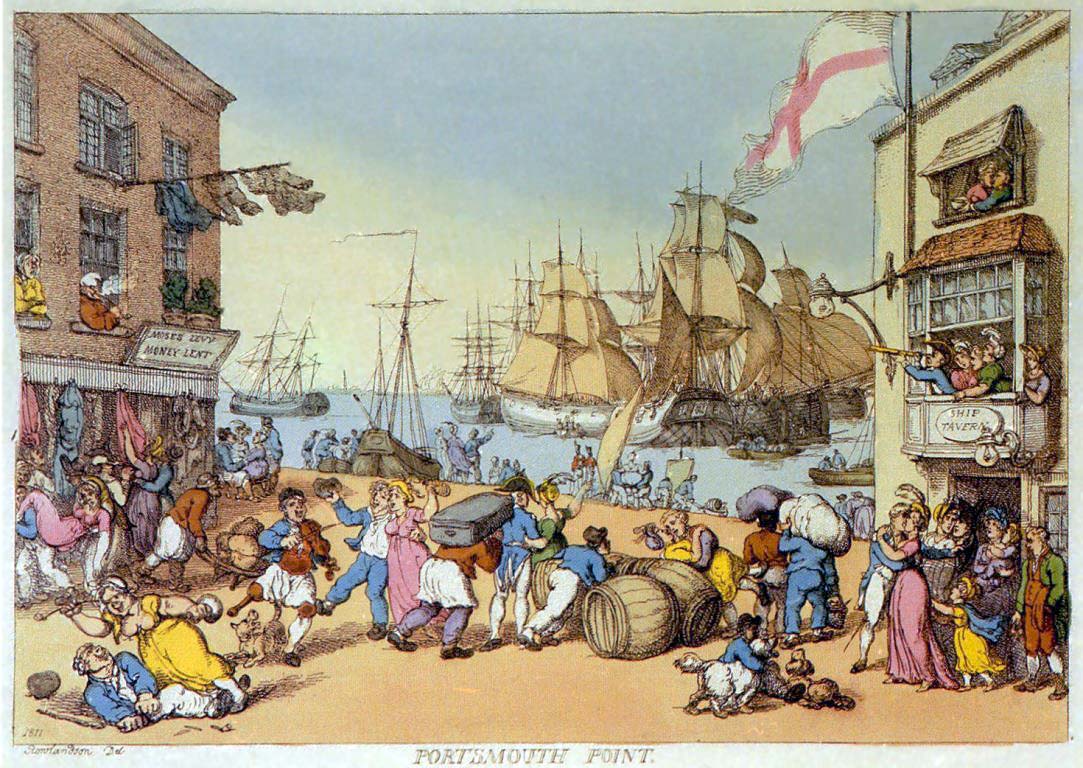
Soon to set sail!
The first Ask BigJules question comes from Pete Dean: ‘In Kydd’s day, the crew were at sea for months at a time. How were the wives paid and supported?’
‘Thanks for the question, Pete. It was a hard lot for many seamen’s wives, especially if they had children to feed and clothe!
Seamen’s wages were paid irregularly, usually six months in arrears (to prevent men from deserting!). Sometimes it was a lot longer, even years, before they had any ‘rhino’ in their pockets. Sailors did have the right (since 1758) to have some of their accrued pay deducted at source once a year and sent to dependants at home – but this was not taken up to any real extent. Jack Tar was probably rightly wary about the money really arriving…
And the pay wasn’t all that high. Until 1797 the common seaman hadn’t had a rise since 1693! A further increase in 1806 brought the monthly pay for an ordinary seaman to 23s 6d, after deductions.
The 1797 Navy Act made it easier for seamen to allot a portion of their wages to their wives and children, or mothers, and the law stipulated that this should be paid every 28 days. For many women, however, collecting this money involved a considerable journey as they had to apply in person to various nominated places.
There was no tax taken out of a seaman’s pay each month but there were other deductions – the cost of slops (articles of clothing) bought from the purser, six pence per month towards Greenwich Hospital, 1 shilling for the Chatham Chest (out of this shilling, four pence was for the chaplain and tuppence for the surgeon).
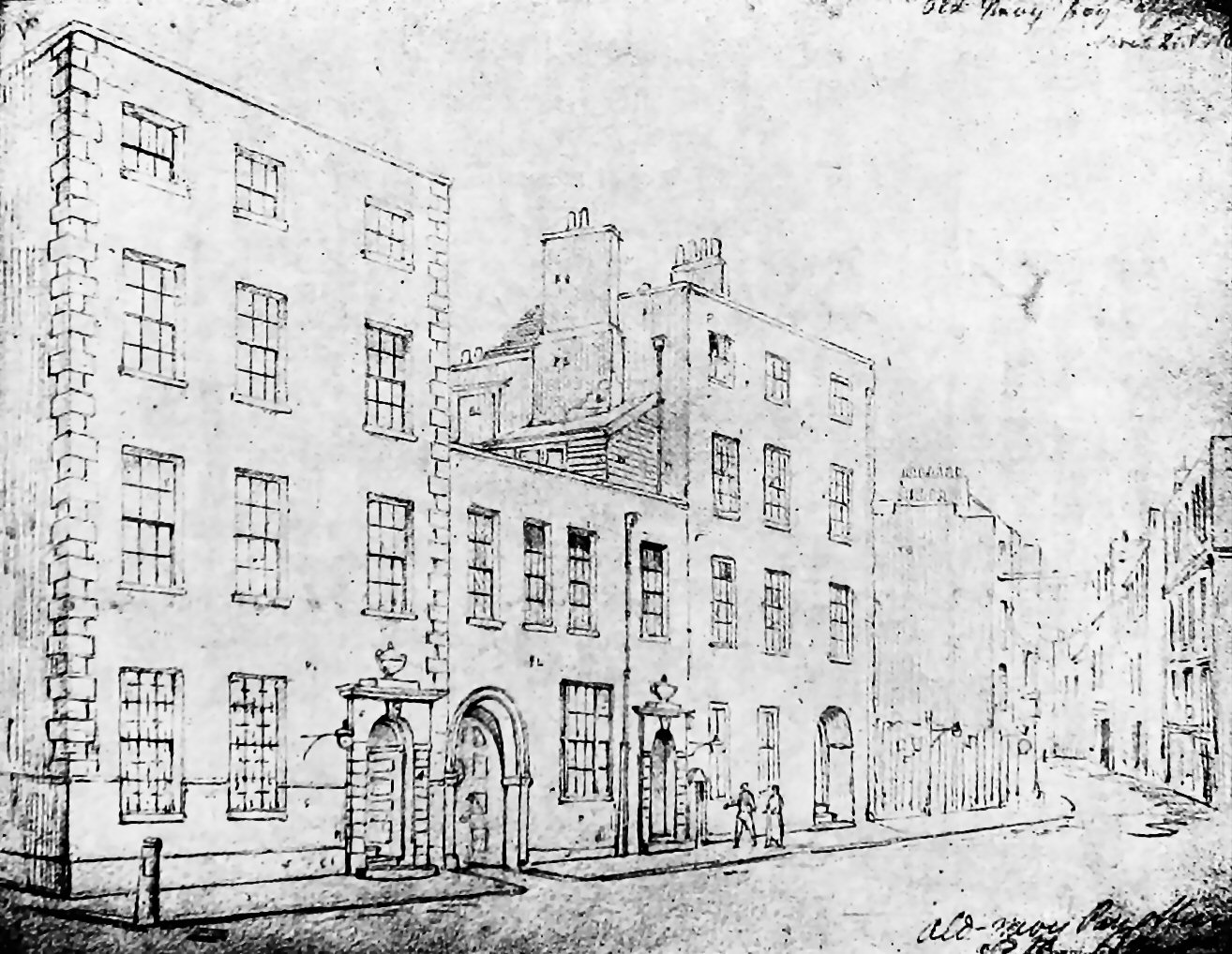
Navy Pay Office, London
Seamen sometimes asked trusted officers to help them send money home to their wives. Admiral Boscawen, for example, was known to transfer money to their wives using his own banker, but this was not common.
Seamen ‘turned over’ (transferred to another ship without any shore leave) were issued with a ‘ticket’ in lieu of wages, which could be signed over to a named individual to be cashed in by the navy or sold to private individuals at a discount. There was a considerable black market in these pieces of paper!
Of course, there was always prize money if you were very very lucky. After the capture of Hermione in 1762 seamen received £485 each! A fortune in those days. But quite a lot of any prize money was spent on rum before it got to the long-suffering wives…
—
Do you have a question for Ask BigJules – fire away via the comments form below. I’ll answer as many as I can in future posts.
Copyright notices
Image: Thomas Rowlandson [Public domain], via Wikimedia Commons
Every effort is made to honour copyright but if we have inadvertently published an image with missing or incorrect attribution, on being informed of this, we undertake to delete the image or add a correct credit notice
 Julian Stockwin